
Mice
Secured control is positioned outside food contact and reviewed against fresh flour tracks.

CLAPHAM JUNCTION · CONNECTED PREMISES
Droppings below and ceiling noise above can describe one mouse route, two separate problems or old evidence. We inspect the bakery store, follow accessible services towards the flat and use monitoring to establish current movement. Food protection starts immediately, while any shared-fabric repair is assigned to the person who controls it.
Secured control is positioned outside food contact and reviewed against fresh flour tracks.
Small insects within flour require sample identification and stock tracing, not rodent treatment.
Larger marks at rear access trigger a separate assessment of waste and lower-level entry.
Warm mixers and wash areas are examined only when spotting or specimens indicate insect harbourage.
The tenant’s night log is matched against bakery cleaning and delivery periods.
Delivery thresholds and bin movement are checked for an independent ground-level route.
LOCAL CONTEXT
Flats over shops are part of the local property mix, but no conclusion follows from that arrangement alone. The bakery controls stock and equipment; the tenant controls living rooms; a landlord may own the ceiling void. Access is planned accordingly. Bakery damage is logged by ingredient, shelf and time, while the flat records droppings or sound in named rooms. Each occupancy is inspected under its own food-safety or household controls. A ceiling connection is tested with monitors and accessible service checks rather than assumed from proximity. The landlord authorises void opening and structural repair. Protected placements remain clear of customers, pets and cleaning. Review keeps upstairs and downstairs results separate, then combines them only when location and timing demonstrate the same route.
Fine food dust makes tracks visible but can also preserve old marks. Freshness and monitor contact determine whether the route remains active.
Seal compromised sacks, protect usable ingredients and photograph the shelf before cleaning. The tenant should leave the relevant sink cupboard accessible. Arrange landlord authority for ceiling panels; neither occupier should drill into an unknown void.
The operator decides with its food-safety duties; pest placements and contamination findings are explained factually.
Remove compromised food from sale, clean under the documented hygiene procedure and call promptly when fresh droppings reach preparation surfaces. Exposed wiring requires separate electrical safety action.
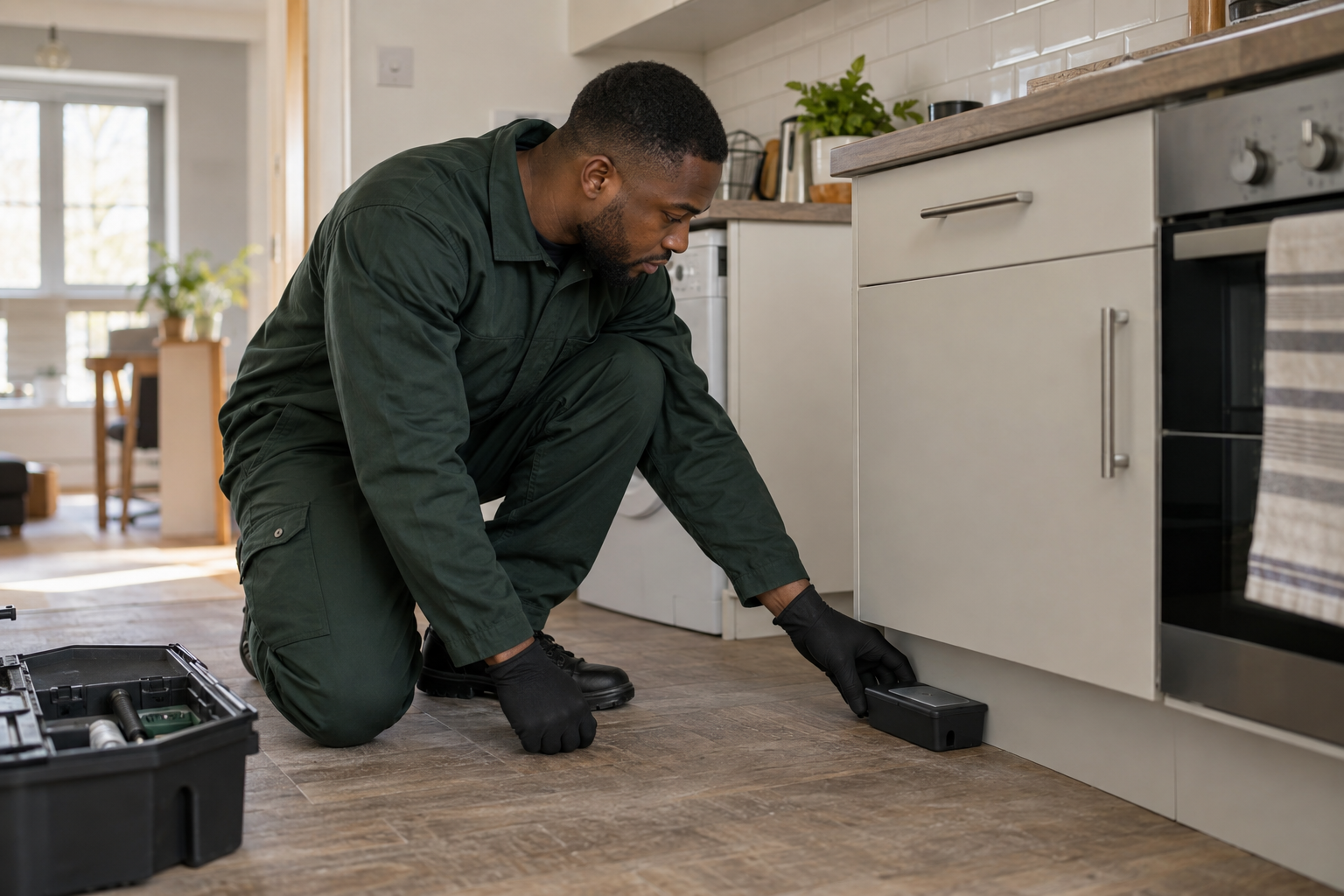
The baker identifies batches, losses and latest fresh droppings.
The tenant locates noise and any kitchen evidence.
Accessible vertical services are compared between floors.
Food-safe restrictions and residential safety shape positioning.
Each gap is assigned to shop, tenant or landlord responsibility.
Flour marks, captures and sound logs are assessed together.
The business reports contamination while the tenant reports sound, with no proof that the signs connect.
Both occupied areas are inspected, monitored points are labelled and food protection begins before structural decisions.
Fresh store marks, upstairs evidence and monitor contact are compared by date. Agreement supports a shared route; divergence keeps the scopes separate and avoids claiming a single treatment solved both.
The quote distinguishes food-premises control, residential access and landlord-authorised proofing rather than bundling unknown void work.
| Service | Starting price | Scope factors |
|---|---|---|
| Pest inspection | From £62 | Property, access and areas inspected |
| Wasp treatment | From £89 | Nest position, height and safe access |
| Rodent control | From £184 | Activity, monitoring and visits |
| Bed bug control | From £204 | Rooms, preparation and method |
| Squirrel control | From £273 | Loft access, visits and proofing |
Final scope can change with access, activity, property size, treatment method, specialist equipment and the number of visits. Confirm the current price and inclusions before booking.
Only relevant areas should be requested, based on the noise position and connected services.
Ownership and fire protection need confirmation before the appropriate contractor completes it.
Track size and pattern help, but droppings or monitor evidence strengthen identification.
Isolate damaged or contaminated stock and follow supplier and food-safety procedures for the remainder.
Placement must prevent contamination and unauthorised contact while intercepting the evidenced route.
Open doors and incoming pallets can change access and explain when fresh signs appear.
Share the freshest droppings, stock damage and ceiling-noise times.
Book a connected-property inspection