
Survey disturbed ground
Burrows and runs are distinguished from loose soil left by recent works.

PUTNEY · INSIDE-OUTSIDE RODENT CHECK
A garden sighting becomes a household pest problem only when evidence shows entry or a persistent risk at the building. We inspect the kitchen threshold, utility services and the disturbed outside area, then decide whether monitoring, rodent control, drain investigation or proofing is proportionate. Children and pets are considered before any placement.
Burrows and runs are distinguished from loose soil left by recent works.
Repeated signs near soil pipes may justify a specialist drain survey rather than speculation.
LOCAL CONTEXT
Putney appointments can involve terraces, apartments and riverside homes. Excavation, decking removal or new planting belongs in the timeline, but it does not establish that a rat entered. The kitchen and utility evidence remains the deciding factor. We map fresh droppings, gnawing or rub marks inside before checking the nearest threshold, service entry and disturbed ground. Outdoor sightings are kept separate unless tracks connect them to the building. Drain involvement is considered only when signs support it, with testing or repair referred to a drainage specialist. Secured control protects children, pets and food areas. Garden contractors handle excavation or structural work after the active route is understood. Review compares fresh indoor evidence and monitors at fixed positions before any opening is closed.
The survey works from the alleged entry point in both directions, comparing interior signs with accessible outside features.
Photograph the garden sign, clear only enough cupboard space for inspection and keep pets away from the suspected route. Do not fill a burrow or seal the kitchen gap before confirming whether activity remains inside. List any bait already used by the landscaping contractor.
No. The investigation relies on signs at the property and does not attribute origin from geography.
Close the affected room if possible, remove people and pets, and call when a rat is trapped indoors or gnawing appears beside power supplies. Do not corner the animal.
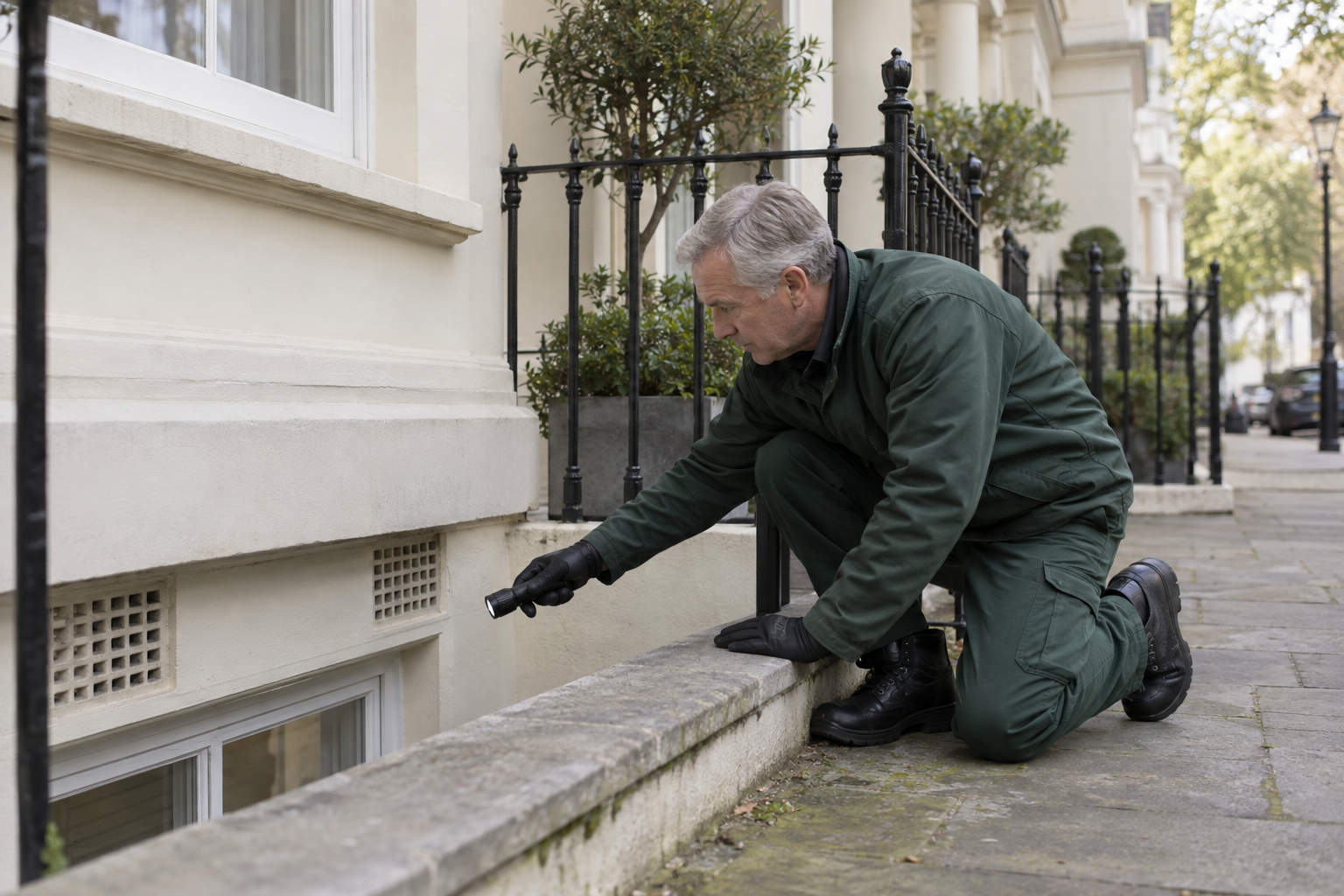
Tamper-resistant control and monitored routes are selected with household safety as the first placement constraint.
Small droppings within units require a different gap and control assessment from an external rat sighting.
Ground or shed flight activity is treated as a separate nest enquiry and never approached casually.
Kitchen trails are followed to moisture and food before bait or exclusion is considered.
The family has one visible garden rat and uncertainty about a mark beside the kitchen.
Interior and exterior signs are compared, monitoring tests the suspected threshold and suitable control addresses active movement.
New tracks, droppings and monitor contact are checked against the original photograph. No fresh interior evidence reduces concern; continued signs direct attention to the remaining route without guaranteeing permanent absence.
Garden works and indoor observations are dated separately.
The technician searches for fresh droppings, tracks and food contact.
Ground signs are matched to doors and service routes.
Protected placements target evidenced movement.
Indicators are recorded for specialist investigation where justified.
Gaps are sealed only in a safe sequence after active control.
The scope may include household inspection, protected control, return checks and separately quoted drain or building work.
| Service | Starting price | Scope factors |
|---|---|---|
| Pest inspection | From £62 | Property, access and areas inspected |
| Wasp treatment | From £89 | Nest position, height and safe access |
| Rodent control | From £184 | Activity, monitoring and visits |
| Bed bug control | From £204 | Rooms, preparation and method |
| Squirrel control | From £273 | Loft access, visits and proofing |
Final scope can change with access, activity, property size, treatment method, specialist equipment and the number of visits. Confirm the current price and inclusions before booking.
Only accessible inspection is assumed; carpentry or broad dismantling needs owner approval and separate planning.
Spilled feed should be controlled because it can support rodents, while the feeder decision remains with the household.
No, dimensions, spoil, tracks and continued use must be considered together.
Animal behaviour may prompt a check but cannot identify the route or species reliably.
Premature closure may trap an animal indoors or divert it towards another weakness.
Recurring internal evidence near drainage, unexplained re-entry or visible defects can justify specialist testing.
Control works best when internal evidence, access, food and structural routes are addressed together.
The distinction helps plan the safest first inspection.
Call about rodent activity