

Rat control · London
Trace rat activity and deal with the source.
Rats can move through drains, gardens, roof spaces and gaps around services. We inspect the signs, identify likely routes and build a practical control plan for the property.
- Inspection of likely routes and harbourage
- Targeted control and monitoring
- Proofing priorities explained clearly
A CLEAR FIRST STEP
Useful answers before any work begins.
A rat sighting should be taken seriously, but the right response starts with evidence. Location, droppings, sounds, damage and time of activity help show whether rats are feeding, nesting or passing through.
When you contact All Pests Gone, start with the simple facts: what you have seen, where it happened, when it started and whether the property is a home or a business. You do not need to diagnose the problem yourself. We use those details to understand the likely risk, decide whether an inspection is needed and explain the next sensible step. This keeps the conversation practical and avoids promises before the property has been properly assessed.
WHAT YOU CAN EXPECT
A service built around the property.
Inspection of likely routes and harbourage
We explain what this means for your booking, what information is useful and what the next practical action should be.
Targeted control and monitoring
We explain what this means for your booking, what information is useful and what the next practical action should be.
Proofing priorities explained clearly
We explain what this means for your booking, what information is useful and what the next practical action should be.
THE DETAILS THAT MATTER
What the service includes
Rat control can include inspection, monitoring, targeted control, advice on food and waste, and practical proofing recommendations. The exact plan depends on access and the layout of the building.
The service is shaped around the building, the level of activity and the way the space is used. A flat above a restaurant may need a different approach from a detached house, an office or a managed block. We look at the areas connected to the problem, not only the first place where activity was noticed. Where useful, we explain treatment choices, access requirements, preparation, likely follow-up and practical work that may reduce the chance of the same issue returning.
What we look for
Common signs include dark spindle-shaped droppings, gnaw marks, greasy rub marks, disturbed waste and scratching after dark. Similar signs can have other causes, so identification matters.
HOW IT WORKS
Simple steps. Clear communication.
Before the visit
Keep affected cupboards, loft edges, bin areas and service routes accessible. Store food securely and tell us about pets, children, drains, recent building work and previous control attempts.
During the visit
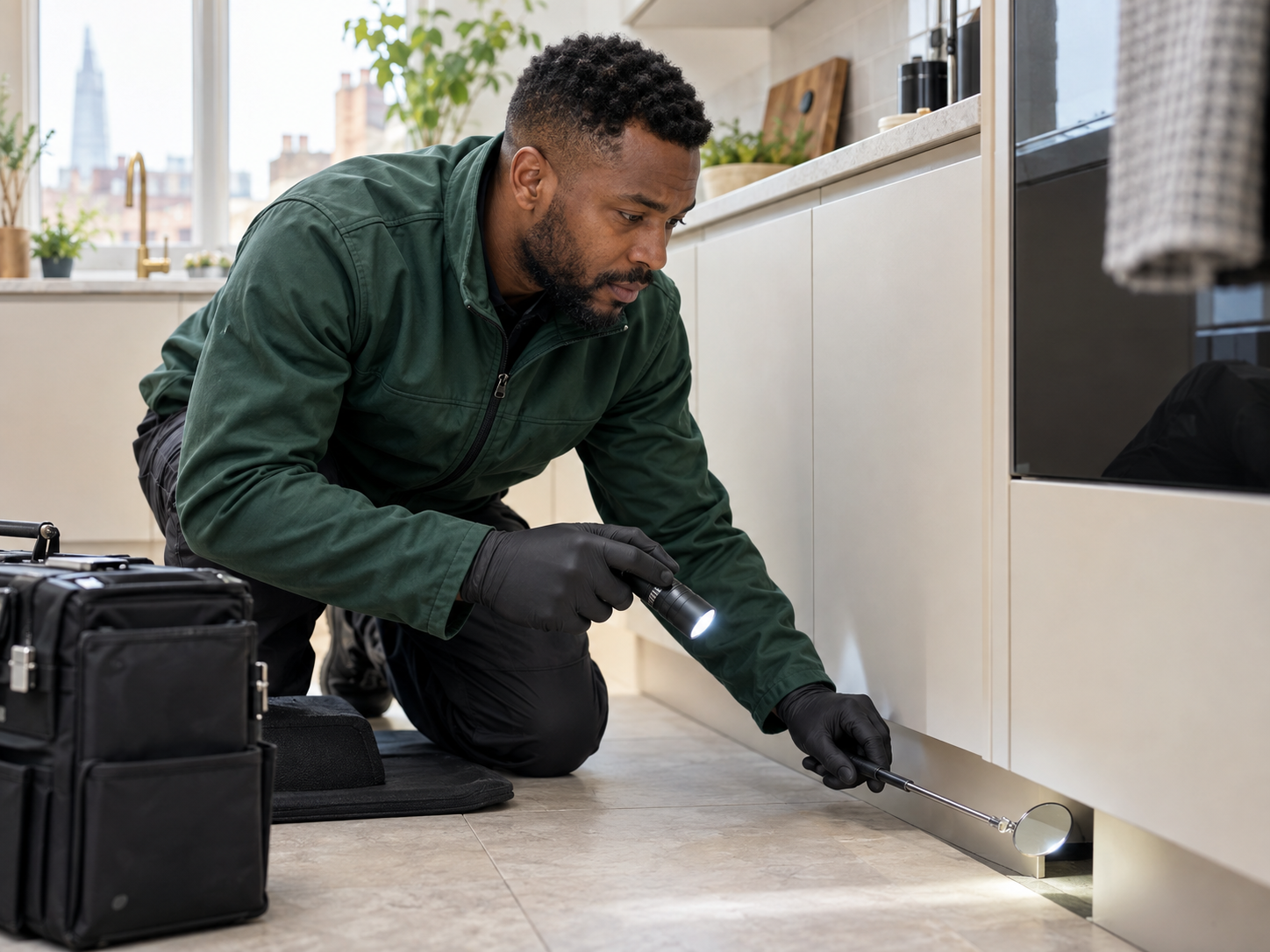
The technician follows the evidence through connected spaces and checks likely entry points. Control points are placed only where appropriate and their purpose is explained.
The service plan
Rat treatment often works best with monitoring and proofing. Removing food and water sources supports the plan, but building routes and neighbouring activity may also need attention.
After the work
Leave monitoring and control points undisturbed. Record fresh sightings or sounds and complete agreed repairs in the correct order. Follow-up may be needed to confirm that activity has reduced.
LOCAL KNOWLEDGE
For London homes and businesses
London rats may move between drains, gardens, basements, commercial waste areas and shared buildings. Responsibility can extend beyond one flat or unit.
London properties often share walls, drains, roof spaces, service routes or waste areas. That means activity may be connected to a neighbouring space or a part of the building that one occupier cannot access. We explain what can be addressed during your visit and what may need permission from a landlord, managing agent, freeholder or neighbouring business. For commercial premises, we can discuss access, customer-facing areas, staff awareness and sensible timing so the response fits day-to-day operations.
CLEAR EXPECTATIONS
Pricing and practical next steps
The price depends on property size, affected areas, access, monitoring and number of visits. Drain investigation, specialist access and proofing may be separate.
The final price depends on the pest, property, affected areas, access, preparation, treatment method and number of visits. We explain the likely scope before work starts and point out factors that could change it. No responsible pest-control company can guarantee that every problem will disappear immediately or that pests can never return. What we can provide is a clear assessment, work based on the evidence and practical advice that helps you make informed decisions about the property.
STRAIGHT ANSWERS
Questions customers often ask.
When should I call?
Call promptly if a rat is inside an occupied room, activity affects food, wiring is damaged or repeated sounds suggest movement inside walls or ceilings. Call promptly if there is a risk to people, food, customers or occupied rooms.
Do I need to identify the pest?
No. Describe what you have seen, heard or found and tell us where it happened. We will ask focused questions and explain whether an inspection is the right first step.
How should I prepare?
Keep affected cupboards, loft edges, bin areas and service routes accessible. Store food securely and tell us about pets, children, drains, recent building work and previous control attempts. Tell us about children, pets, vulnerable occupants and food areas before work begins.
Is one visit always enough?
Not always. The pest, building, level of activity and access determine whether monitoring or follow-up is needed. We explain the expected scope before work starts.
PESTS OUT. PEACE IN.
Talk to the London team.
Tell us what you have noticed and share your postcode. We will explain the most useful next step for rat control.