
Review bag placement
Floor and skirting around the original case position are inspected.

SEVENOAKS · GUEST-ROOM BED BUG CHECK
A bite report after a visit deserves careful inspection, but it cannot identify bed bugs by itself. We examine the guest bed, nearby seating and the original luggage position, then ask how linen and bags moved. Confirmed evidence leads to room-specific preparation and treatment; absent or inconclusive findings may justify monitoring rather than automatic whole-house application.
LOCAL CONTEXT
The Sevenoaks inspection begins with the guest bed, the chair or surface used for luggage and the route taken by linen after the stay. Bite reports and travel dates guide questioning, but diagnosis requires live insects, eggs, cast skins, characteristic spotting or a reliably identified specimen. Mattress seams, frame joints, headboard fixings, nearby skirting and relevant seating form the first boundary. Stored boxes are inspected only where their position or evidence connects them; they are not moved throughout the home as a precaution. The guest luggage now at another address remains outside this property scope and should be assessed there without being brought back. The householder controls access and records laundry movement, while pest control defines preparation only after findings and the intended method are known. Treatment is confined to supported rooms and harbourage. Follow-up examines the same named points and monitors, documenting what is found at that visit without claiming that every stored item or the guest destination is clear.
The technician records where the guest slept, sat and stored bags, then follows the closest likely harbourage in a consistent sequence.
Do not discard the mattress, move stored boxes elsewhere or spray the bed before inspection. Bag used linen inside the room and record where it travelled. Ask the guest to inspect luggage at the current address without returning it untreated merely for this appointment.
No, unnecessary return transport may spread evidence between properties.
Seal a specimen safely, keep the room closed to new guests and request advice. Severe or infected skin reactions need medical attention.
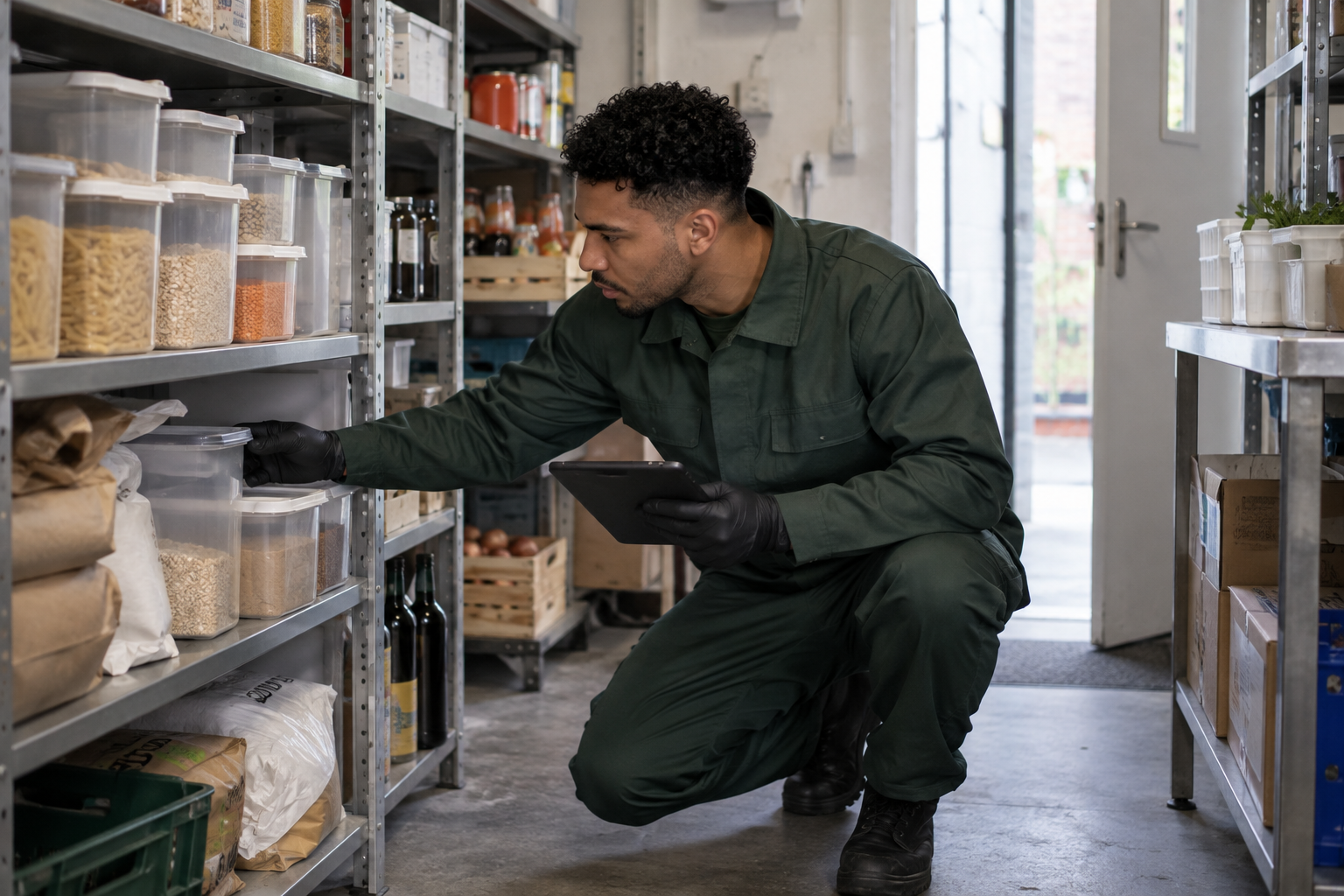
Floor and skirting around the original case position are inspected.
Laundry baskets, washing and storage are mapped to limit unnecessary spread.
Live stages, eggs, cast skins or characteristic spotting support a treatment cycle and follow-up inspection.
Jumping specimens and pet access point towards floor-level host investigation instead.
Larval skins among stored textiles can cause irritation while requiring source cleaning.
Droppings within a quiet guest room are treated as a separate entry and hygiene problem.
Arrival, symptoms and item movement are recorded.
The bed receives a systematic evidence check.
Nearby seating and skirting are assessed.
Findings are described as confirmed, inconclusive or absent.
Only supported rooms and items enter the method.
Named points are rechecked at the agreed interval.
The household has bite reports but no retained insect, and luggage has already left.
The room remains contained while the bed, seating and linen route are inspected; monitoring or treatment follows the actual findings.
Fresh spotting, live stages and interceptors are checked at the recorded points. A clear review documents no evidence found then; it does not guarantee the guest’s other address or every stored item is unaffected.
Human treatment is not a pest-control measure; room scope follows physical signs.
Yes, although changing occupancy alone does not remove concealed insects.
Guest-room scope reflects rooms inspected, furniture complexity, confirmed treatment area and scheduled review visits.
| Service | Starting price | Scope factors |
|---|---|---|
| Pest inspection | From £62 | Property, access and areas inspected |
| Wasp treatment | From £89 | Nest position, height and safe access |
| Rodent control | From £184 | Activity, monitoring and visits |
| Bed bug control | From £204 | Rooms, preparation and method |
| Squirrel control | From £273 | Loft access, visits and proofing |
Final scope can change with access, activity, property size, treatment method, specialist equipment and the number of visits. Confirm the current price and inclusions before booking.
They can persist for extended periods, so vacancy does not provide a reliable cure.
No, skin pattern cannot replace insect or harbourage evidence.
Only item-specific evidence or the selected method would justify that preparation.
Textile handling may support control but does not reach the bed frame or structural harbourage.
Seek local inspection advice there and avoid opening luggage across several rooms.
Share the stay dates, luggage position and linen movement.
Request a bedroom evidence check