
ORPINGTON · PEST CONTROL
Pest Control Orpington
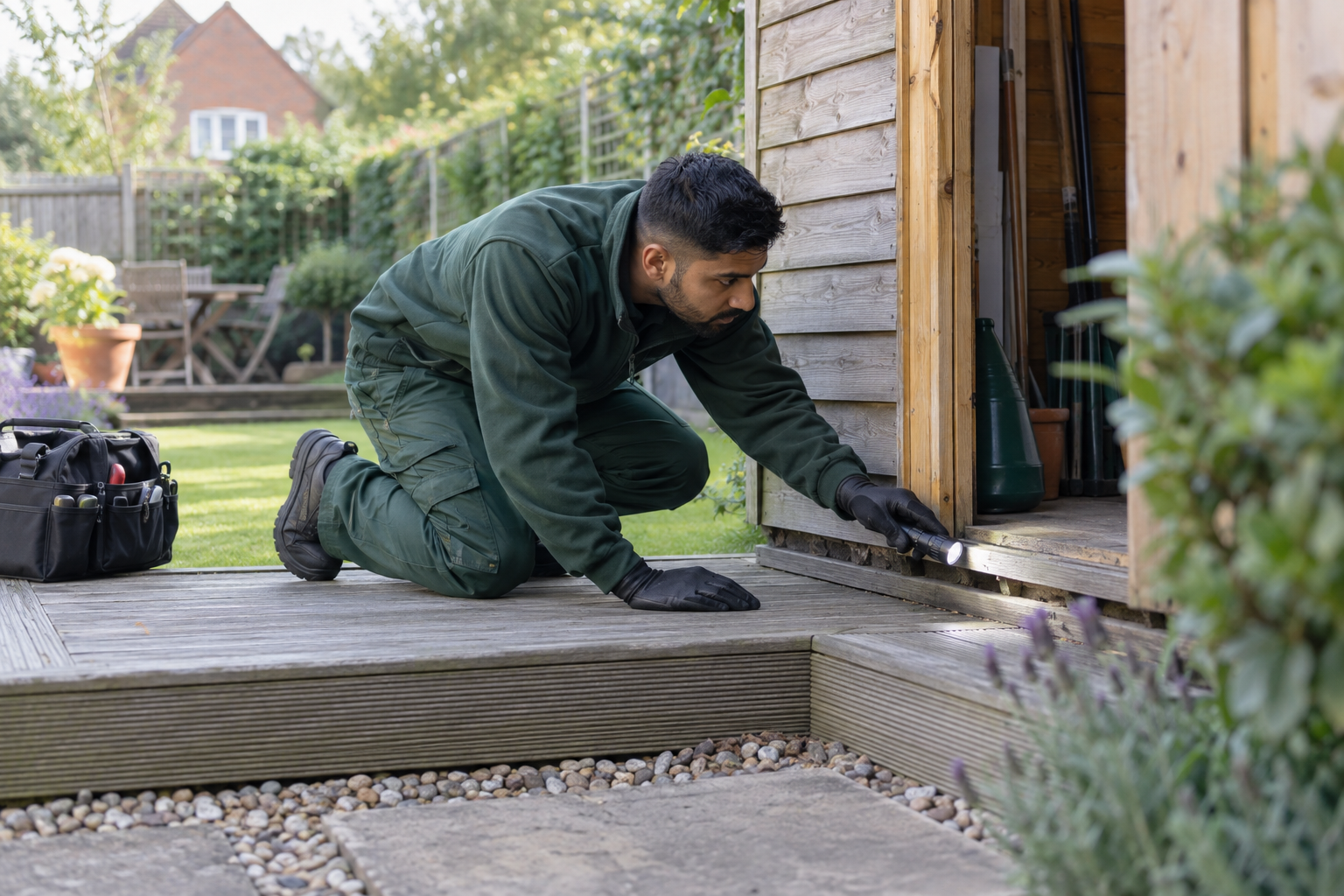
Movement above a newer kitchen extension can come from the shallow roof void, the original house or an outside junction between them. At an Orpington home, we locate the sound from below, inspect safe internal evidence and avoid sealing the obvious edge until the animal and active route have been established.
- Original and extension roof zones assessed separately
- Wildlife access considered before permanent closure
- Roofing defects assigned to an appropriate contractor
LOCAL CONTEXT
Find where the extension roof meets the house
Orpington is an outer south-east London town near Kent and the south-eastern M25. Houses with gardens, low-rise flats, high-street businesses and light commercial premises form its broad setting, but none of those categories demonstrates pest activity. This record addresses a household hearing early-morning movement above a single-storey extension that has no full loft hatch. We begin in the room beneath the noise, note the strongest position and inspect any accessible original loft for comparable droppings, nesting material or gnawing. Safe ground-level views of the extension junction can add context, while high roof access belongs to a planned survey. A squirrel, bird or rodent cannot be chosen from sound volume. If monitoring inside the main roof remains clear, a small inspection opening by a competent builder may be more useful than indiscriminate treatment. Active entry is resolved before final proofing. Contextual links explain squirrel control, rodent inspection and roofline proofing.
What the inspection needs to establish
The ceiling zone where sound is most repeatable Accessible evidence in the original roof void The internal junction between old and new construction Safe visible eaves around the extension Kitchen services unrelated to the roof if droppings occur below
- The ceiling zone where sound is most repeatable
- Accessible evidence in the original roof void
Prepare the relevant access
Keep a five-day note of the time, duration and exact ceiling position. Do not lift external tiles, cut a ceiling opening or inject foam. Leave the original loft hatch accessible and tell us when the extension was built or altered. Record birds seen entering, but photograph only from a safe ground position. Mention cables, spotlights or water staining beneath the void.
Can the extension be assessed without a loft hatch?
The room, main loft and safe exterior clues can be checked first; a targeted opening may later be recommended.
When the response should move faster
Prompt advice is sensible if an animal breaks into the occupied kitchen, gnawing affects visible wiring or ceiling material begins to fail. Keep people away from a bulging or damaged ceiling. Electrical, water or structural danger requires the corresponding emergency contractor rather than pest work alone.
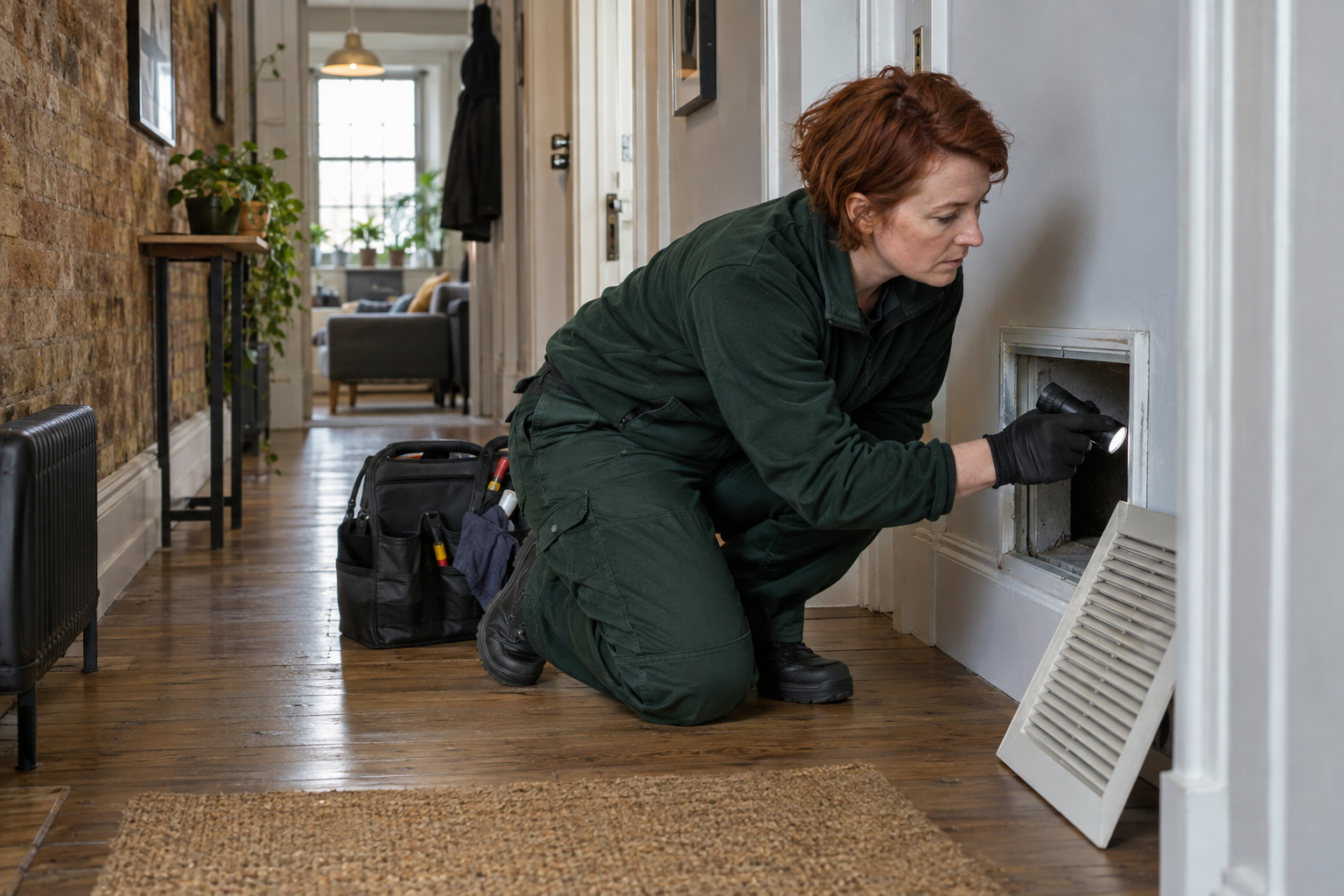
Compare accessible signs with the ceiling report
Safe visible eaves around the extension
Kitchen services unrelated to the roof if droppings occur below
Control matched to the evidence
Squirrels
Daytime roof movement and strong gnawing require physical evidence before control. Exclusion waits until no animal will be trapped inside.
Mice
Fine droppings around kitchen services may describe a ground-floor route unrelated to the extension void.
Rats
Heavy lower-level signs prompt checks of thresholds and possible drainage, not a roof diagnosis.
Wasps
A regular eave flight line is observed without blocking the nest opening.
Birds
Nesting material and seasonal activity affect the lawful timing of closure and may require specialist advice.
Build access only when the evidence needs it
Map sound from the room
The repeated ceiling position defines the first inspection zone.
Read the accessible loft
Physical signs in the original roof are compared with the extension report.
Observe the construction joint
Safe exterior and interior views test a possible connecting route.
Decide whether access is sufficient
An inspection opening or high-level survey is requested only with a reason.
Resolve active occupancy
Species-appropriate control precedes any permanent closure.
Specify the roof repair
A roofer or builder receives the relevant junction and timing.
Review both roof zones
Fresh sound and physical disturbance show whether the working route still fits.
A hidden extension void with a testable location
Before
Noise identifies a ceiling area, but the species and connection to the main loft remain unknown.
Work
Accessible roof evidence and the construction junction are mapped before targeted monitoring or specialist access is chosen.
After
New sound and physical signs can confirm or reject the proposed route; no permanent exclusion result is guaranteed.
Current starting prices
Separate inspection, control and roofing work
| Service | Starting price | Scope factors |
|---|---|---|
| Pest inspection | From £62 | Property, access and areas inspected |
| Wasp treatment | From £89 | Nest position, height and safe access |
| Rodent control | From £184 | Activity, monitoring and visits |
| Bed bug control | From £204 | Rooms, preparation and method |
| Squirrel control | From £273 | Loft access, visits and proofing |
Final scope can change with access, activity, property size, treatment method, specialist equipment and the number of visits. Confirm the current price and inclusions before booking.
Practical local answers
Does dawn noise prove squirrels?
No. Timing is one clue and must agree with droppings, nesting, damage and access.
Who should create an inspection opening?
A suitable building contractor should make and reinstate it safely when the evidence justifies access.
Can roof proofing be quoted immediately?
A provisional scope is possible, but final closure depends on species, active use and safe high-level access.
Nearby coverage
Related services
Questions before booking
Why is the Orpington extension treated as a separate roof zone?
Its void depth, access and junctions can differ from the original loft, so evidence may not transfer between them.
Can a thermal camera identify the animal above plasterboard?
It may reveal heat under suitable conditions, but it does not replace physical identification or safe access planning.
What if sound stops before the booked inspection?
The timing record and accessible signs can still guide monitoring; absence during one visit does not confirm departure.
Should recessed lights be removed to inspect the void?
Only a competent person should disturb electrical fittings, and removal needs a specific inspection reason.
How is an old bird nest handled during proofing?
Nesting status, species considerations and safe cleaning are assessed before the opening is altered.
Orpington extension-access answers
Pest control in Orpington for houses, flats and local businesses. Extension-roof inspection, targeted squirrel or rodent control and proofing advice.
Call 020 3318 2099