
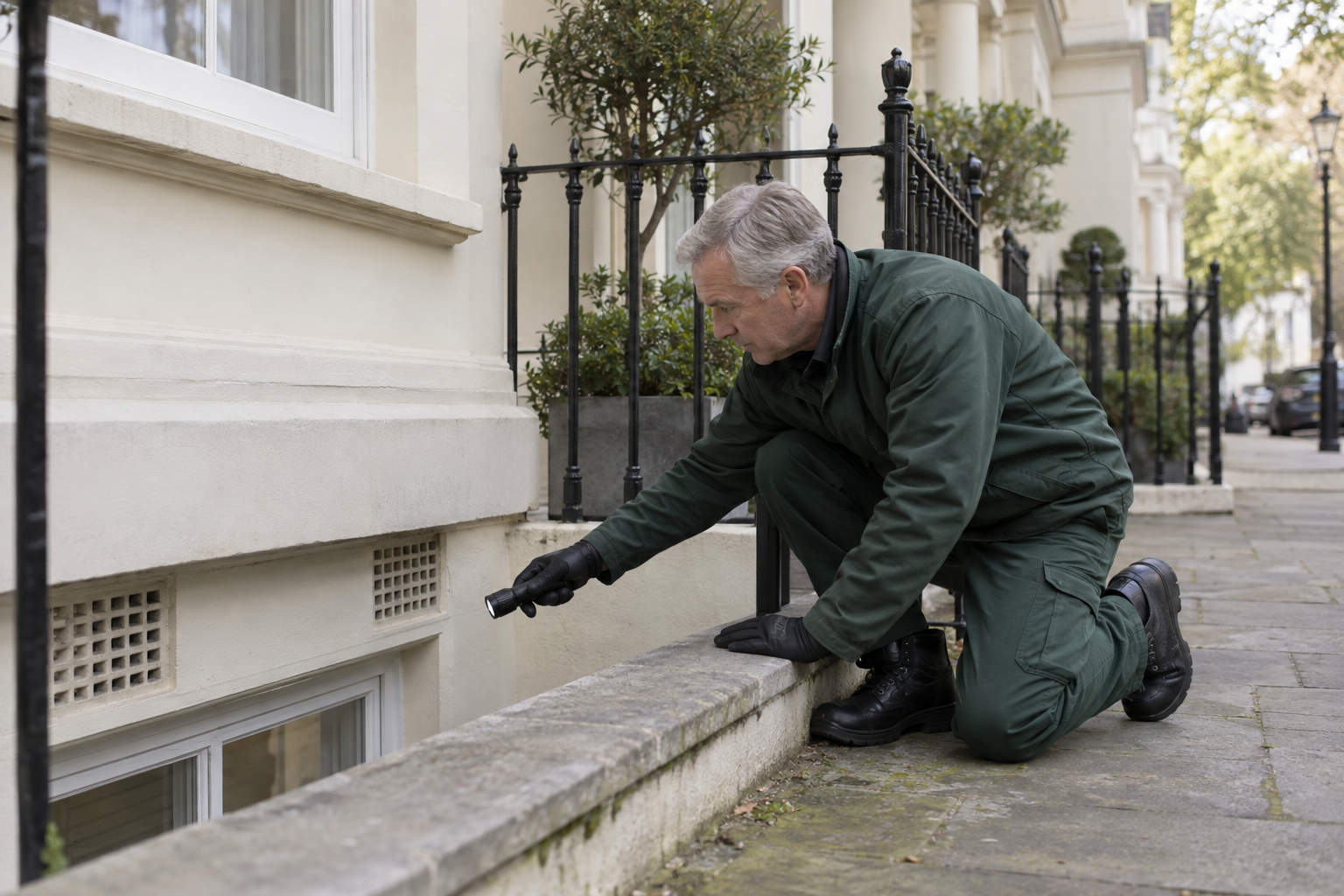
Inspect safe exterior views
Eaves, vents and cladding joints are watched without ladders beyond the agreed scope.
EARLSFIELD · HIGH-LEVEL WASP ASSESSMENT
Wasps collecting below a roof light may have entered through an open window, emerged from a concealed nest or followed light after travelling through a void. We observe direction and frequency from a safe position, inspect accessible external entry points and decide whether specialist height access is required. Staff are moved away before any treatment decision.
Eaves, vents and cladding joints are watched without ladders beyond the agreed scope.
Tower, ladder or specialist contractor needs are decided from measured height and surface conditions.
LOCAL CONTEXT
Earlsfield includes terraces, flats and converted workspaces. In this studio, later ceilings and roof lights may separate the visible wasps from an exterior entrance. That possibility guides observation but remains unconfirmed until the flight path is traced. We record where insects appear indoors, then observe external traffic from a safe position and inspect accessible void edges without opening finished ceilings. A few wasps at glazing may be incidental; repeated emergence from one junction needs targeted attention. The active entrance remains open during treatment so insects are not diverted through occupied space. Landlord approval and specialist access may be required for roof work. Review measures activity at the confirmed entrance over the advised period before any permanent roof repair is considered.
Frequency, direction and time of day provide a safer first picture than tapping ceilings or blocking holes. The team views exterior activity from accessible ground positions.
Move desks beneath the roof light, close internal doors where possible and tell staff not to swat concentrated insects. Keep a note of the busiest hour and photograph exterior flight only from a safe place. Provide ceiling height, roof access rules and the building manager’s contact.
Opening may alter flight or increase entry; wait for a safe species and route assessment.
Move staff away and call promptly if numerous wasps enter the occupied zone or an allergic person is exposed. A severe sting reaction requires emergency medical assistance.
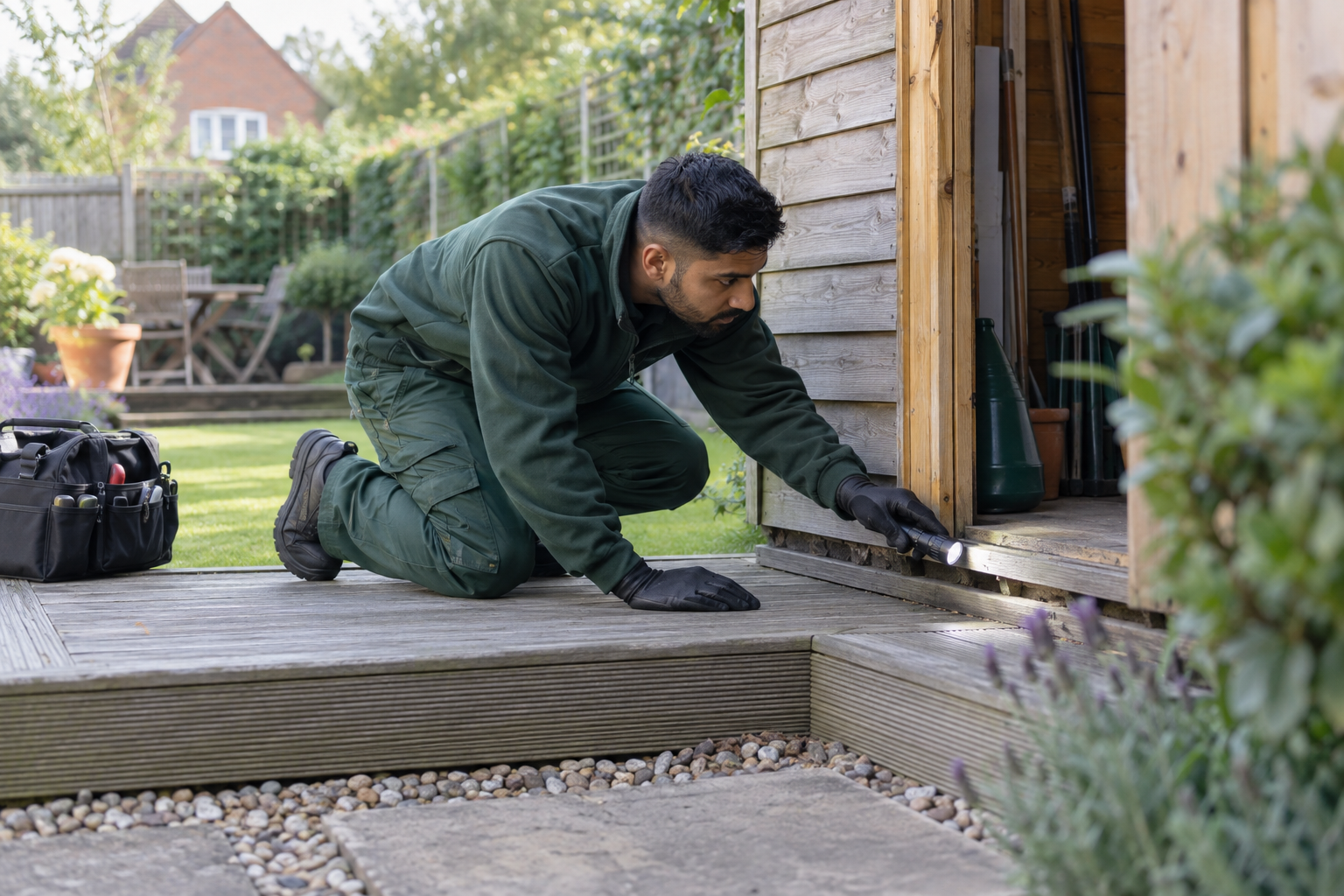
A consistent flight line to a concealed point supports nest treatment when the location and working height are safe.
Identification matters because bee colonies may require a different response or specialist relocation advice.
Small insects around roof lights may originate from waste, drains or trapped adults rather than a social-insect nest.
Roof fouling and nesting material can support other insects and may need a separately controlled high-level survey.
The occupied area below activity is separated.
Shape and behaviour distinguish wasps from bees and flies.
Repeated movement is watched towards the likely exterior entry.
Safe reach and required equipment are confirmed.
A suitable method is applied only to a located, accessible target.
Staff learn what movement may remain and when review is required.
Individual wasps collect at the glazing, but nobody knows whether the nest is inside the roof construction.
The studio is cordoned, species and direction are observed, and treatment is directed at a confirmed accessible nest where possible.
Flight frequency at the original entry and indoor roof light is compared over the advised period. Ongoing concentrated traffic indicates that location, access or identification needs review; an immediate zero count is not promised.
Price changes with nest position, working height, access equipment and whether a separate return is needed after initial assessment.
| Service | Starting price | Scope factors |
|---|---|---|
| Pest inspection | From £62 | Property, access and areas inspected |
| Wasp treatment | From £89 | Nest position, height and safe access |
| Rodent control | From £184 | Activity, monitoring and visits |
| Bed bug control | From £204 | Rooms, preparation and method |
| Squirrel control | From £273 | Loft access, visits and proofing |
Final scope can change with access, activity, property size, treatment method, specialist equipment and the number of visits. Confirm the current price and inclusions before booking.
Do not close an active entrance before the colony status and treatment sequence are understood.
That depends on separation, insect numbers and the method selected; the site lead receives specific restrictions.
Trapped insects orient to daylight even when their original route lies elsewhere.
It is possible, but flight direction and safe inspection must support that conclusion.
Access and application are planned to minimise disturbance, while concealed construction may limit direct reach.
Work pauses for correct identification and an appropriate bee-specific response.
Those details determine whether assessment or treatment equipment is needed first.
Call about a wasp flight path