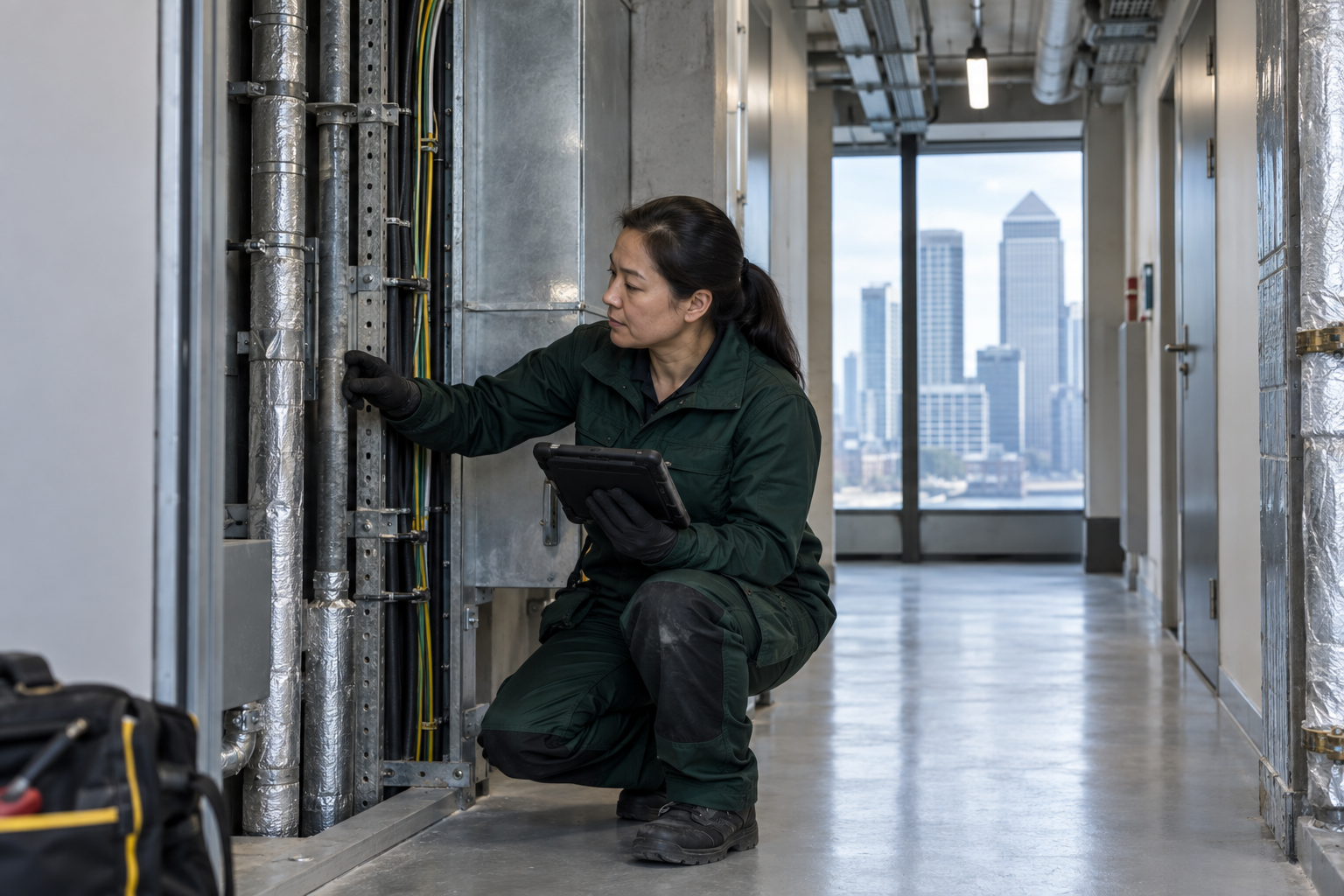
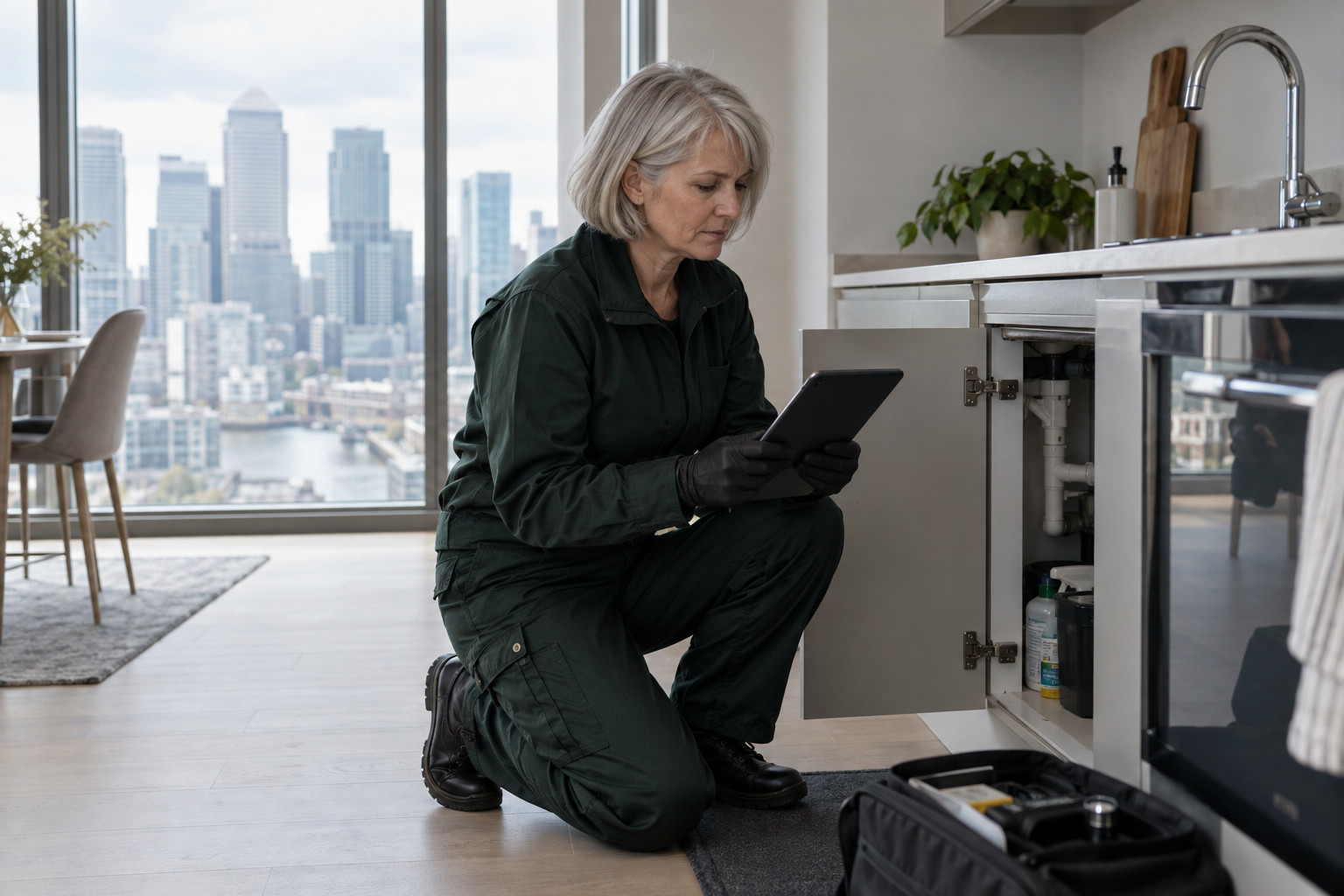
Found droppings in an office kitchen, insects near food equipment or bird fouling above an entrance? Give us the building, floor and exact location. We inspect the evidence, agree a suitable control plan and explain what the occupier and facilities team need to do next.
Tower Hamlets planning material identifies an office core and mixed-use development including homes at Wood Wharf. This can explain why access may involve an occupier, reception and facilities team, but it does not prove pest activity. Inspection remains specific to the reported unit and authorised connected spaces. We claim no Canary Wharf office. The practical starting point is a precise report: what was seen, the time and room, whether food or stock was affected and what products have been used. A photograph or sighting log can help, but it does not replace inspection. One insect beside a delivery box needs a different response from repeated activity around warm equipment. The technician begins at the strongest evidence and checks only relevant accessible routes. In an office this may include kitchen units, service openings and nearby storage. A food-premises investigation may extend to equipment edges, dry goods, sinks, delivery access and waste handling. An apartment visit concentrates on the affected home, then considers authorised communal areas only when the pattern supports it. Findings are separated into what is confirmed, what is likely and what could not be inspected.
THE VISIT
Treatment, proofing and recorded follow-up
Evidence briefing
The occupier or site contact identifies the exact signs, timing and areas already affected.
Focused inspection
The technician starts with confirmed evidence and follows relevant authorised connections.
Control decision
Treatment, monitoring or another specialist action is explained before work starts.
Targeted work
Suitable control is placed or applied within the agreed scope and safety restrictions.
Proofing sequence
Relevant openings are prioritised only after active animal movement has been considered.
Recorded review
The closing record states what was done, what must remain undisturbed and what evidence to report.
The sequence for a Canary Wharf visit follows the pest, available access and evidence; unnecessary steps are not added.
FINDING THE SOURCE
Where the evidence can lead us
+
Kitchen equipment edges, sinks, dry storage and warm service spaces
+
Authorised pipe and cable routes connected to the affected unit
+
Loading, delivery and waste-handling points when evidence leads there
+
External ledges and terraces where bird activity affects entrances or equipment
PEST PRIORITIES
What we inspect and control
Mice
Droppings, gnawing, food disturbance and sightings are mapped by location. Suitable pipe, cable, door and unit gaps are inspected before monitoring or control is selected. Proofing is prioritised after active routes are understood so movement is not simply diverted.
Cockroaches
Identification and extent matter. Checks focus on warmth, moisture, equipment voids, storage and connected service areas. Treatment can combine targeted products, monitoring and sanitation actions rather than an indiscriminate broad spray.
Bed Bugs
Bites alone are not diagnostic. Beds, nearby furniture and resting areas are inspected for spotting, skins, eggs or live insects. When treatment is justified, preparation, belongings, room access and temporary restrictions are explained in advance.
Pigeons
We establish the roost or nesting location, fouling pattern and effect on entrances or equipment. Cleaning risk, nesting status, permission and safe access are considered before deterrent work is proposed.
BEFORE / WORK / AFTER
From an unverified report to a documented control plan
BEFORE
Staff may have isolated sightings, incomplete dates and no clear route between the affected kitchenette, stock room or service space. Products placed without a plan can make later evidence harder to read.
THE WORK
We map confirmed signs, inspect authorised connected areas, place suitable treatment or monitors, and record sanitation, repair and access actions for the correct responsible party.
AFTER
The site has marked monitoring points, clearer reporting instructions and a defined review date. Reduced fresh evidence can support the plan, while continuing evidence shows where inspection or control needs adjustment. This is an observable review process, not a guaranteed result.
COST CONTEXT
Current starting prices
Pest / service
Typical starting price
What affects the price
Pest inspection
From £62
Property, access and areas inspected
Wasp treatment
From £89
Nest position, height and safe access
Rodent control
From £184
Activity, monitoring and visits
Bed bug control
From £204
Rooms, preparation and method
Squirrel control
From £273
Loft access, visits and proofing
What can change the final cost?
The final quote can change with the extent of activity, property size, access, number of visits, treatment method and any proofing. Commercial scheduling, specialist height access or work in communal areas may also affect scope. Starting prices are a guide, not a fixed quotation. Confirm the current price and what is included before booking.
BEFORE WE ARRIVE
Arrange access before we arrive
Provide the complete address, building or tower, floor, unit and contractor entrance. Arrange reception clearance, keys, loading-bay access or facilities authorisation before the appointment. Keep the problem area accessible without spreading stored items through other rooms. Protect food and follow the site hygiene procedure, but avoid applying several shop-bought products that can disperse insect activity or conflict with a planned treatment. Mention vulnerable occupants, pets, food preparation and security rules. Do not approach nests, touch droppings or close an active animal opening before the control sequence is agreed.
LOCAL ANSWERS
Practical answers for managed premises
Can you work in an office with security controls?
Yes, if sign-in, induction and access are arranged before arrival.
Can you inspect a shared riser?
Only where relevant, safe and authorised. Any unavailable area is recorded as an inspection limit.
Will facilities management receive useful actions?
Confirmed findings, access limits, monitoring and repair priorities can be recorded clearly for the site contact.
WHEN TO ACT
When the site should raise the priority
Raise the priority when activity affects exposed food, a customer area, an occupied bedroom or critical workspace; when a rodent is loose in an occupied room; or when a nest blocks a necessary entrance. Give the exact floor and access point. Urgent attendance still depends on technician route, safe access and building procedures.
What location details prevent a wasted Canary Wharf visit?
Give the tower or building, floor, unit, contractor entrance and the name of the person authorising access. A postcode alone may not identify the correct reception or service route.
How should several office teams record occasional mouse signs?
Use one dated log with the exact room, time and type of evidence. A shared record helps the technician compare floors without turning unverified reports into assumed activity.
Can treatment proceed if the affected riser remains locked?
Work can continue inside the authorised unit when useful, but the locked riser is recorded as a limitation. The result may lead facilities management to arrange a separate inspection.
What should a food operator do with stock near a cockroach sighting?
Protect food according to the site hygiene procedure, isolate visibly affected items and record where the insect was found. Do not spread loose products around equipment before inspection.
Who is responsible for proofing between a tenant unit and a shared corridor?
Responsibility depends on the lease and building management arrangements. We can identify the relevant opening and practical priority, while the tenant and facilities team decide who authorises the repair.
Why might a pigeon enquiry need a survey before a quotation?
The ledge height, fixing surface, nesting status, cleaning risk and access method can only be scoped properly once the location is understood.
What should remain in place after monitoring is installed?
Leave labelled monitors and agreed control points undisturbed. Staff should report new evidence by location rather than moving devices to where they expect activity.
NEARBY COVERAGE
Other areas we cover nearby
RELATED SERVICES
YOUR NEXT PRACTICAL STEP
Tell us what you noticed.
Share the full postcode, property type and the clearest sign you found. We will ask focused questions and explain whether inspection, treatment or monitoring is the sensible next step.
Homes & businessesLondon & M25Clear scope before work