
Mice
Small openings around services can be more important than the room where a mouse is seen. We map signs first, then prioritise control and proofing without closing a route blindly.

AREA PEST BRIEF
Pest control in Islington begins by confirming what is active inside the area you control. We inspect signs, place monitoring where it has a clear purpose, carry out suitable treatment and identify proofing priorities. If evidence leads towards a shared space, we explain exactly what the landlord or manager needs to investigate next.
LOCAL PROPERTY CONTEXT
Islington Council records many conservation areas and historic buildings alongside modern development. The pest-control relevance is limited but useful: converted homes may share services, while managed blocks often concentrate access around risers and waste rooms. We inspect the booked unit first and follow only evidence-led connections. Proofing can be recommended at the visit, but repairs to protected or communal fabric remain subject to the owner’s authority and any required consent.
FINDING THE SOURCE
Under sinks and around heating, water and waste pipes where later services pass through walls or floors
Utility cupboards and the accessible side of risers serving kitchens or bathrooms
Lower-ground doors, light wells and air bricks when the evidence begins at basement level
Loft hatches, eaves and rear extensions when sounds or damage are reported above
Communal bin or cycle rooms only when management has provided relevant, safe access
BEFORE WE ARRIVE
Confirm the flat number, floor and entrance, then find out who holds keys for any relevant communal space. Leave the reported room and nearby cupboards reasonably accessible. Do not seal an opening while an animal may still be using it. If another resident has reported similar activity, record the location without circulating unverified conclusions. Tell us about children, pets, allergies, vulnerable occupants and restrictions on drilling or external work. A landlord or agent does not always need to attend, but their contact details can save time if shared fabric becomes relevant.
PEST PRIORITIES
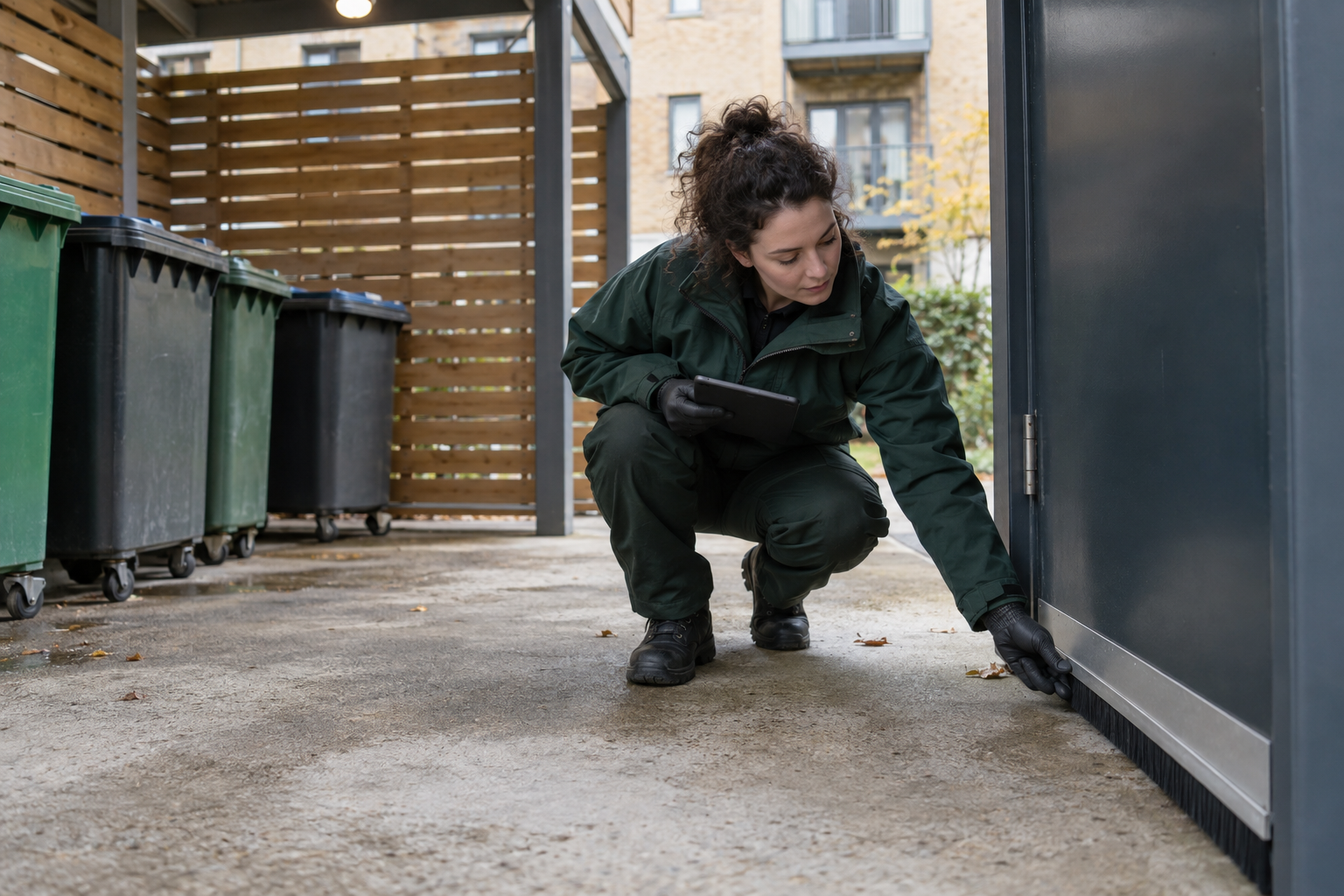
Small openings around services can be more important than the room where a mouse is seen. We map signs first, then prioritise control and proofing without closing a route blindly.
A report from one flat needs a physical inspection of sleeping and resting areas. If evidence suggests a wider issue, coordinated advice is more useful than assuming every neighbouring home is affected.
Ground-floor and lower-ground reports are assessed against internal signs, external access and possible drainage indicators. Drain defects are not diagnosed without suitable investigation.
A visible trail can be followed towards food, moisture or an entry point. Species and nest position influence whether hygiene, exclusion or bait is the appropriate response.
Daytime movement in a roof space, disturbed insulation and gnawing can justify a loft inspection. Shared roofs require authority and safe access before control or closure.
BEFORE / WORK / AFTER
Before treatment, signs inside one flat can be difficult to interpret when a pipe route, riser or roof space is shared. We establish a baseline inside the authorised area: exact locations, fresh damage, droppings, insect evidence or timed noises. Suspected activity beyond the unit is labelled as unconfirmed until access or monitoring supports it.
Control is applied where evidence and access justify it. Monitors can test movement near service entries, treatment can address confirmed harbourage, and suitable internal gaps can be prioritised for proofing. When the likely route reaches communal fabric, the visit produces a precise action for the landlord or managing agent instead of treating inaccessible space by guesswork.
The next review looks for a change against that baseline: whether monitors remain clear, fresh signs stop appearing in the same cupboard, noise persists at the same time, or activity shifts towards an unresolved shared route. These observations guide any further treatment, coordinated access or repair; they are not a promise that one visit resolves every connected area.
THE VISIT
We confirm the rooms included in the visit and any communal access already authorised.
Timing, droppings, damage, sightings or bites are considered together rather than as isolated clues.
Relevant adjacent spaces and service entries are inspected where they are accessible.
We distinguish confirmed evidence from a possible route that still needs access or monitoring.
Treatment and occupant preparation are separated from repairs or access that belong to management.
Follow-up is based on the pest and evidence, not added automatically to every job.
The sequence for a Islington visit follows the pest, available access and evidence; unnecessary steps are not added.
LOCAL ANSWERS
A tenant can report the signs and arrange access to the home. Responsibility for repairs or shared fabric depends on the tenancy and building, so keep the landlord or agent informed.
The findings and access limitations can be stated clearly, giving management a practical basis for the next inspection or repair.
No general answer applies. Small internal measures and external alterations are different matters. The owner or manager should obtain any consent required for protected fabric.
We inspect the evidence in your unit. The absence of other reports neither proves nor disproves a shared route.
COST CONTEXT
| Pest / service | Typical starting price | What affects the price |
|---|---|---|
| Pest inspection | From £62 | Property, access and areas inspected |
| Wasp treatment | From £89 | Nest position, height and safe access |
| Rodent control | From £184 | Activity, monitoring and visits |
| Bed bug control | From £204 | Rooms, preparation and method |
| Squirrel control | From £273 | Loft access, visits and proofing |
The final quote can change with the extent of activity, property size, access, number of visits, treatment method and any proofing. Commercial scheduling, specialist height access or work in communal areas may also affect scope. Starting prices are a guide, not a fixed quotation. Confirm the current price and what is included before booking.
WHEN TO ACT
Seek prompt advice when a rodent enters a bedroom or living space, when pest activity affects a nursery or food premises, or when damage appears close to electrical services. If the only route to the problem is a locked plant room, roof or communal void, contact building management at the same time. Coordinated access can be more valuable than an urgent visit limited to the wrong side of a wall.
Call 020 3318 2099
NEARBY COVERAGE
RELATED SERVICES
USEFUL DETAILS
Yes. It is useful when identification, route or level of activity is uncertain.
No. They are included only when relevant, safe and authorised.
Avoid disturbing them unnecessarily. If cleaning is essential, photograph the pattern first and follow appropriate hygiene precautions.
The aim is to prioritise evidenced routes. Broad building repair is outside a targeted pest visit.
It can resolve activity confined to that flat, but connected evidence may require coordinated access and action.
That depends on the pest and product. Restrictions and re-entry advice are explained before work begins.
Include the dated signs, exact room or service point, the technician’s access limitations and the specific communal inspection or repair requested. Avoid presenting a suspected route as confirmed.
Yes, when closing a gap too early could conceal the active route or trap an animal. The sequence should follow the evidence found in the unit.
YOUR NEXT PRACTICAL STEP
Share the full postcode, property type and the clearest sign you found. We will ask focused questions and explain whether inspection, treatment or monitoring is the sensible next step.