Pest activity often crosses the boundary between a Wimbledon home and the space around it. We compare indoor evidence with doors, service openings, loft access, gardens or business areas that could explain it. That produces a more useful plan than treating the sighting point alone—and clearer advice about what you can prevent afterwards.
Indoor and relevant external areas considered together
Merton Council lists several distinct Wimbledon conservation areas, including the Village, Broadway, Hill Road, North, West and Chase. In practical terms, the district contains houses with gardens and lofts, terraces, managed flats and shops with residential space nearby. Each needs a different inspection route. We compare evidence inside with relevant doors, services, eaves, storage or waste areas outside. The setting does not prove infestation: our first task is to distinguish normal outdoor wildlife from pests entering, nesting in or contaminating the building.
FINDING THE SOURCE
Where we would look first
+
The boundary between the affected room and its nearest outside wall or garden
+
Door thresholds, utility entries and accessible air bricks at ground level
+
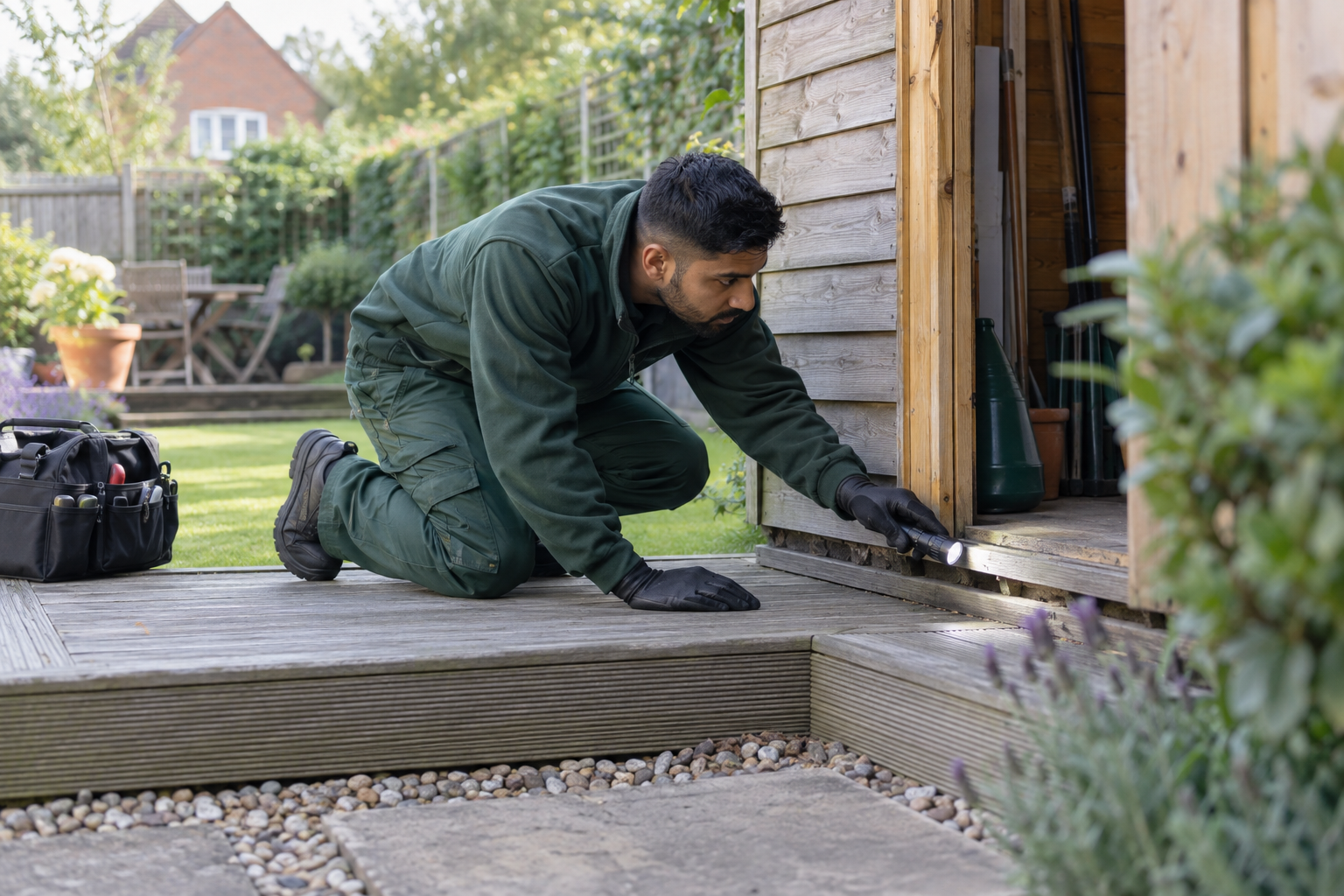
Spaces beneath decking or beside sheds where a route approaches the house
+
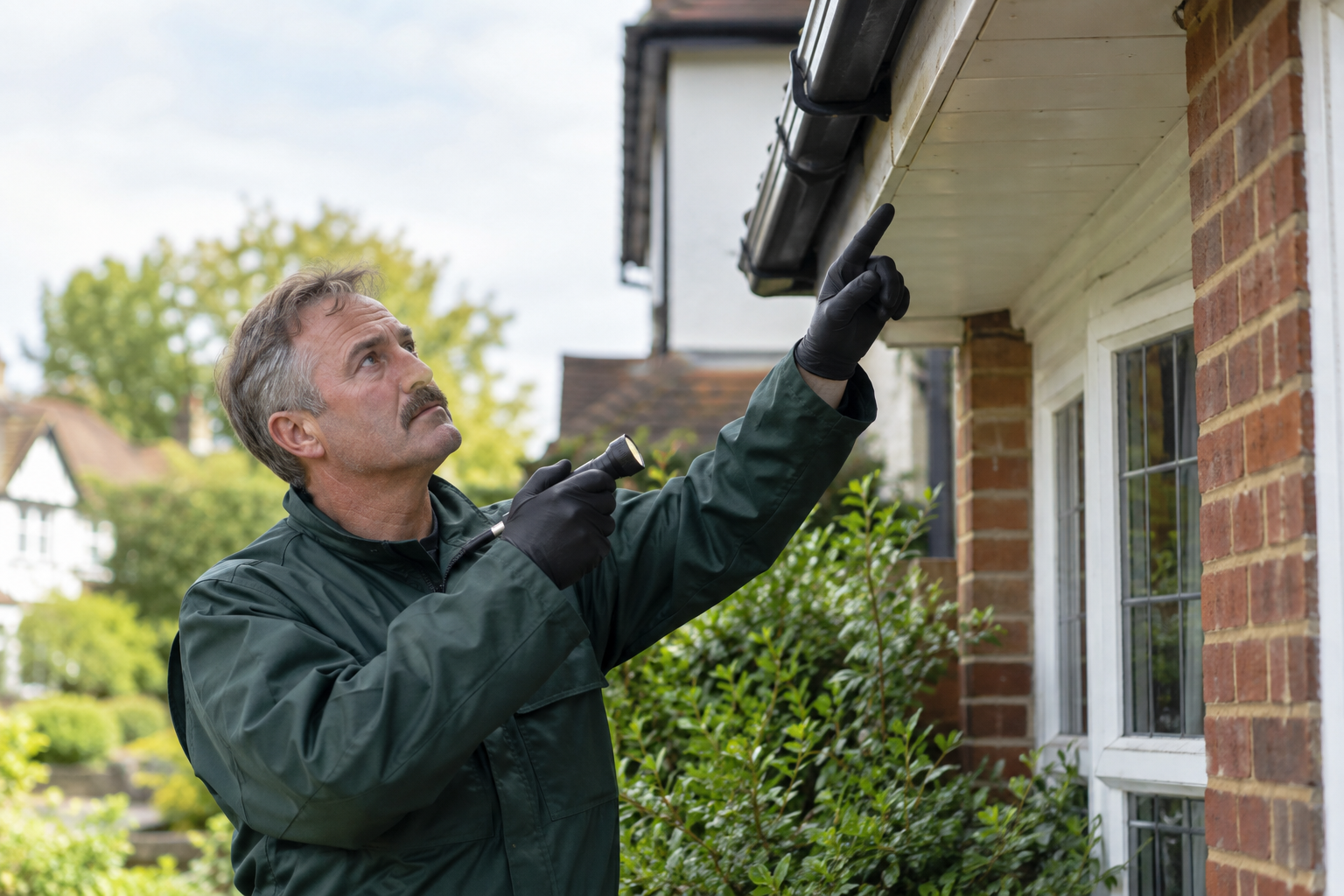
Loft edges, eaves and roof junctions when sounds come from above
+
Shared bin, riser and meter areas serving managed flats
+
Stock, food preparation, delivery and rear-yard areas at local businesses
PEST PRIORITIES
Services relevant to different signs
Rats between garden and building
A garden sighting is recorded, but indoor action depends on burrows, droppings, gnawing or a credible route. Where activity is established, we position control securely, address food and shelter, review the result and proof the relevant entry after control.
Mice in kitchens and utility rooms
We look beyond the sighting point to pipe gaps, door edges and connected storage. Monitors or traps are placed on active routes and checked for response. Proofing follows evidence rather than sealing every visible gap at once.
Ant trails at patios or worktops
The trail is followed in both directions to understand food, moisture and likely nest location. Species and nest context determine whether bait, targeted treatment or environmental correction is suitable. A contact spray on visible workers can make the trail less clear without resolving the colony.
Wasps around eaves and sheds
Occasional garden wasps may simply be feeding. A concentrated flight path to one opening supports a nest diagnosis. We assess safe access, treat the active point when appropriate and explain how long residual flight may continue.
Squirrels entering lofts
Daytime noise is checked against roof and loft evidence. Suitable control comes before closure; a follow-up check reduces the risk of sealing an animal inside or leaving a second opening untreated.
Fleas in occupied homes
Pet resting areas, floor edges and the pattern of activity shape the scope. Preparation includes thorough vacuuming and coordinated veterinary care for animal hosts. Treatment and follow-up target the developing flea life cycle, not only visible adults.
BEFORE WE ARRIVE
Prepare the useful details
Decide whether the first sign was indoors, outdoors or above the ceiling, and note any repeat pattern. Keep garden doors, sink cupboards, loft hatches and utility areas accessible where they relate to the report. Do not move garden waste through the house or transfer suspect fabrics between rooms. If pets live at the property, tell us where they sleep and whether a veterinary flea treatment is current; pest-control treatment does not replace veterinary advice. For a rented or managed property, confirm who may approve exterior proofing. A photograph of a trail, dropping or damage beside a ruler can be useful, provided it can be taken without approaching a nest or handling contamination.
LOCAL ANSWERS
Practical questions about the visit
Can the garden be inspected with the house?
Yes, when outside features are relevant and safely accessible. The visit remains focused on evidence rather than a general garden survey.
What if the pest comes from a neighbouring property?
We can document the signs and routes visible at your address. Coordinated action may help, but we cannot enter or make claims about another property without access.
Can a shop and an upstairs flat share the same problem?
They can share voids, services or rear access. Inspection is more complete when the required areas and responsibilities are clear.
Do you treat wildlife simply because it visits the garden?
No. Normal outdoor activity is distinguished from entry, nesting, contamination or damage affecting the property.
THE VISIT
What can happen during a visit
Start at the dividing line
We locate where outdoor space, a neighbouring unit or a service route meets the affected interior.
Compare signs on both sides
Indoor evidence is weighed against accessible garden, threshold, roof or commercial-service clues.
Decide whether activity is established
A one-off outdoor sighting and an active indoor route require different responses.
Treat the confirmed route
The plan may use monitors, traps, secured bait or a pest-specific insect treatment rather than a blanket application. Placement and safety are explained.
Prepare people, pets and rooms
You receive only the instructions relevant to the method, including food protection, vacuuming, access and any re-entry period.
Review, proof and prevent
We assess the response before closing active routes, then identify realistic maintenance priorities and work that needs a landlord or another trade.
The sequence for a Wimbledon visit follows the pest, available access and evidence; unnecessary steps are not added.
BEFORE / WORK / AFTER
Check the boundary before and after control
BEFORE
The starting point in a Wimbledon property may be an indoor sign with several possible outdoor explanations: droppings beside a garden door, an ant trail crossing a patio threshold or loft movement near overhanging vegetation. Recording the indoor location and the nearest outside feature helps separate normal garden activity from an established route into the building.
THE WORK
The technician treats or monitors the confirmed route and explains the supporting changes—secure food or bird feed, coordinated flea care for pets, removal of accessible shelter, or repair of a relevant threshold.Proofing is timed so an animal is not trapped inside and treatment is not undermined by an entry that remains active.
AFTER
Review uses the same boundary points: fresh tracks at the door, activity on monitors, the continuity of an ant trail, new loft disturbance or signs beside a proofed gap. A reduction can show that the plan is affecting the active route, while continued evidence indicates that another access, host or source needs investigation. Outdoor sightings alone are still assessed separately from activity inside.
WHEN TO ACT
When should you call promptly?
Call promptly if a rodent is inside an occupied room, gnawing affects visible wiring, a wasp nest prevents safe use of a doorway, or pest evidence is present around exposed commercial food.Rats passing through a distant garden do not automatically justify emergency indoor treatment. Keep people and pets away from a trapped animal or active nest and avoid improvised poisons. For a severe sting reaction, seek emergency medical help first.
The final quote can change with the extent of activity, property size, access, number of visits, treatment method and any proofing. Commercial scheduling, specialist height access or work in communal areas may also affect scope. Starting prices are a guide, not a fixed quotation. Confirm the current price and what is included before booking.
NEARBY COVERAGE
Other areas we cover nearby
RELATED SERVICES
USEFUL DETAILS
Questions before booking
Does seeing a rat beyond the garden fence mean the house needs bait?
No. We first look for activity within the property boundary and a route towards the building. Indoor control should respond to evidence, not simply to wildlife moving through the wider area.
Why should an ant trail be left visible until it is checked?
The direction and destination of the workers can reveal the food source, moisture point and likely nest position. Wiping or spraying it immediately may remove the clearest inspection clue.
How should pet bedding be prepared when fleas are suspected?
Keep it in the affected home, follow the supplied laundering instructions and arrange appropriate veterinary advice for each animal. Moving untreated bedding elsewhere can spread the problem.
Can the technician look beneath fixed garden decking?
Only from safely accessible edges during a normal visit. Lifting fixed boards is building work and needs to be agreed separately if the surrounding evidence makes it necessary.
What should be monitored after a garden-door gap is proofed?
Check the repair for disturbance and compare nearby indoor tracking points for fresh droppings or prints. New evidence may indicate a second route rather than failure at the repaired point.
YOUR NEXT PRACTICAL STEP
Tell us what you noticed.
Share the full postcode, property type and the clearest sign you found. We will ask focused questions and explain whether inspection, treatment or monitoring is the sensible next step.
Homes & businessesLondon & M25Clear scope before work