
Map vertical services
Pipes, cables and boxing are compared with the flat arrangement above.
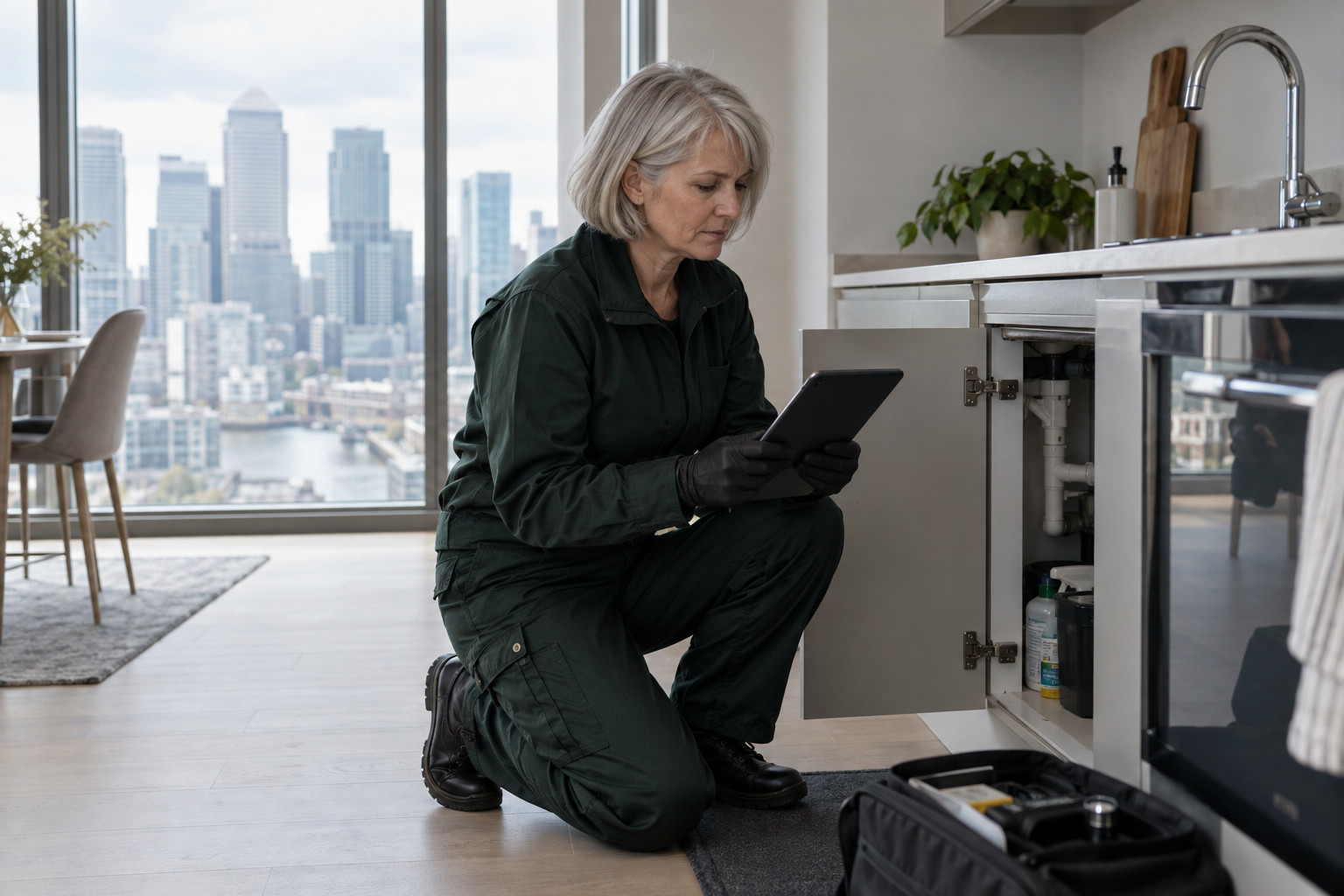
UPTON PARK · SHOP CEILING MOUSE CHECK
Droppings on top of a suspended ceiling can indicate travel within the void without showing where mice enter or feed. We inspect safe access tiles, compare service penetrations and roof or flat boundaries, and protect packaged stock below. Monitored control is positioned within authorised space, while repairs involving the accommodation above are coordinated through the landlord.
LOCAL CONTEXT
At this Upton Park address, the starting evidence is confined to the shop: the exact ceiling point where sound, staining, droppings or an animal was reported, together with stock damage and service penetrations below it. A shallow void can be inspected only through existing safe access or an opening authorised by the person responsible for the fabric. We do not infer activity in the flat above from noise alone, and shop staff cannot grant entry to a separate tenancy. Pipe, cable and ventilation routes are mapped because they may connect spaces, but a connection becomes part of treatment only when signs support it. Food or retail stock is protected and affected batches are handled under the business procedure. The landlord or managing agent coordinates access to communal fabric and repairs; residents control entry to their homes. Traps, monitors or proofing are positioned against a documented route, with follow-up comparing fresh evidence at the same ceiling and service points.
The technician begins over the affected stock bay and follows fresh evidence towards accessible services, avoiding unsafe or unnecessary disturbance.
Remove compromised packets under the shop food-safety procedure, photograph deposits and keep the affected bay accessible. Provide ceiling drawings, landlord contact and the flat layout where known. Staff should not lift tiles, scatter bait or push material into service openings.
Access and contamination findings determine whether the affected bay or wider unit needs temporary separation.
Use the retailer’s food-safety procedure when droppings reach packaging or preparation. Unsafe ceiling panels and damaged wiring require the relevant building professional.

Pipes, cables and boxing are compared with the flat arrangement above.
An independent ground route remains possible and is checked separately.
Secured control in the void follows active edges, with catches and fresh droppings reviewed before closure.
Heavier damage or larger droppings change equipment and may indicate a rear-yard or drainage route.
Warm ceiling services are monitored for insects only when specimens or spotting support that concern.
Package damage from beetles or moths is identified because it needs batch-led stock action rather than rodent control.
Contamination and package damage are recorded.
Relevant safe tiles reveal tracks and shelter.
Vertical and rear routes are compared.
Control remains protected from stock and staff.
Upstairs access is requested only from evidence.
Confirmed openings receive an ownership and repair brief.
Droppings sit above packaged goods, but no sales-floor sighting shows whether mice descend or merely cross the void.
Stock is protected, selected ceiling access reveals the active edge and secured monitoring tests service and rear directions.
New droppings, package damage and device contact are compared by ceiling position. Activity remaining above one service point sharpens the landlord request; a clear sales floor supports review without guaranteeing the entire building void.
Shop scope reflects stock protection, safe ceiling access, monitored visits and any separate landlord or contractor work.
| Service | Starting price | Scope factors |
|---|---|---|
| Pest inspection | From £62 | Property, access and areas inspected |
| Wasp treatment | From £89 | Nest position, height and safe access |
| Rodent control | From £184 | Activity, monitoring and visits |
| Bed bug control | From £204 | Rooms, preparation and method |
| Squirrel control | From £273 | Loft access, visits and proofing |
Final scope can change with access, activity, property size, treatment method, specialist equipment and the number of visits. Confirm the current price and inclusions before booking.
Not initially, though verified vertical evidence may make coordinated access useful.
The operator or landlord should arrange safe removal after pest and building risks are documented.
They can travel and shelter there while feeding elsewhere, which makes route tracing important.
No, broad opening can release dust and disturb animals without improving the evidence.
Placement must be secured, recorded and separated from food-contact or saleable goods.
Condition, cleaning history and fresh monitored deposits are considered together.
Yes, travel can remain concealed; private-room treatment still requires its own evidence.
That location helps distinguish void travel from sales-floor activity.
Arrange a shop ceiling check