
Check moisture
Leaks and condensation are recorded for maintenance.
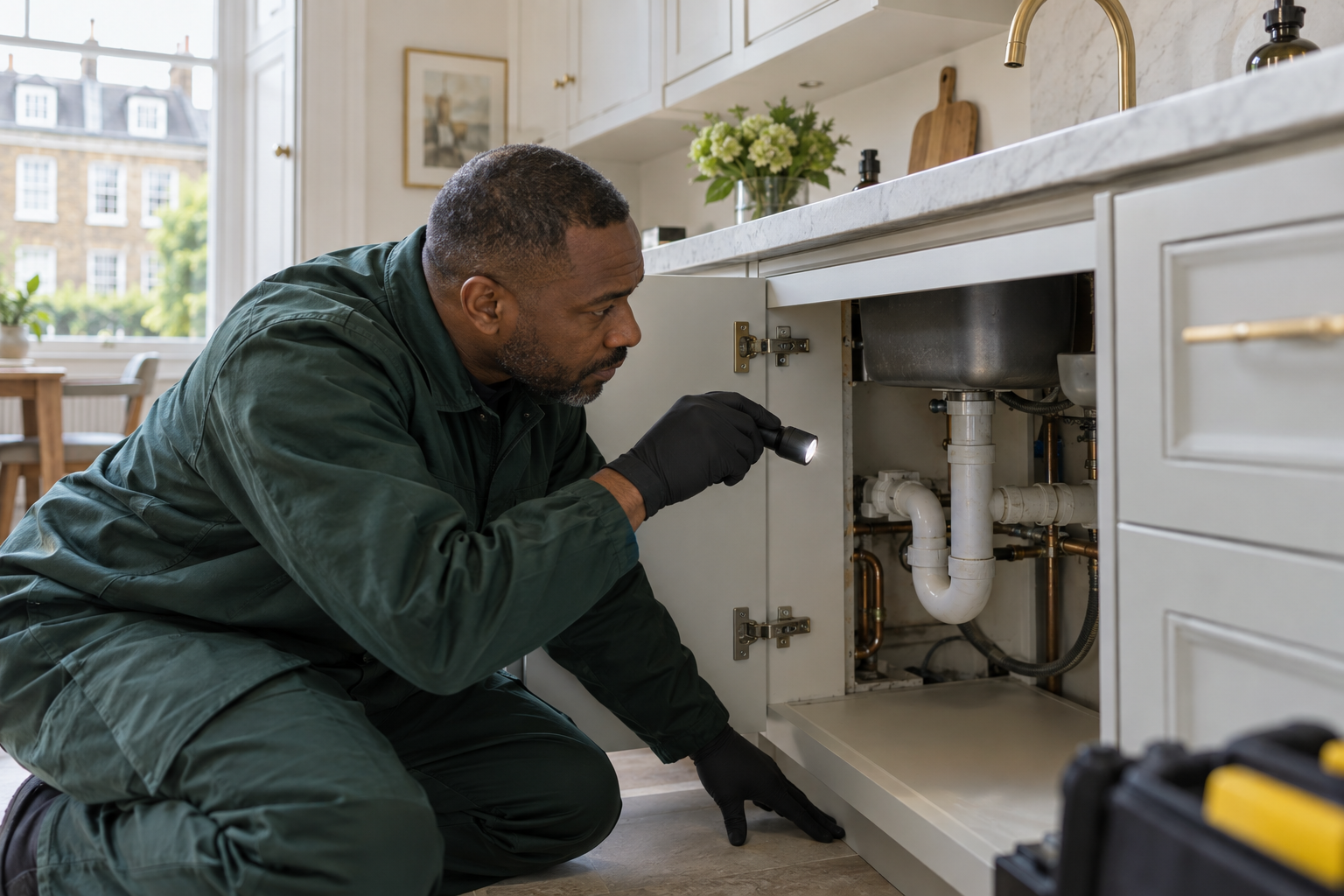
TOTTENHAM · FLAT AND SERVICE-CUPBOARD CONTROL
Cockroaches around a utility cupboard may be breeding inside the flat, moving beside warm pipework or entering from a managed service route. We confirm the species, inspect local harbourage and use directional monitoring before widening treatment. The resident controls private rooms; the housing or building team must authorise communal riser access and repairs.
Leaks and condensation are recorded for maintenance.
Placements inside the cupboard and towards the room test where activity emerges.
LOCAL CONTEXT
Tottenham includes terraces, estates and commercial premises. For this flat, the relevant arrangement is a resident-accessible cupboard beside pipework that continues into shared fabric. The property type guides permissions, not a presumption that neighbouring homes are affected. The resident keeps the specimen and shows where it emerged, allowing identification before any insecticide is selected. Inspection covers the cupboard, moisture source and accessible pipe sleeve; the riser beyond requires management access. Monitoring can distinguish isolated entry from repeated movement through the service boundary. The occupier receives preparation for confirmed activity only, while a leak, broken seal or communal void is assigned to maintenance. Neighbouring flats are not treated from one report and need their own evidence and consent. Follow-up reviews the original cupboard and coded monitor rather than relying on general block-wide concern.
The technician compares temperature, moisture and insect life stages inside the cupboard with evidence in the bathroom, kitchen and authorised service edge.
Remove personal items from the front and preserve any specimen in a sealed clear container. Avoid aerosol, bleach in gaps or dismantling fire-stopping. Report leaks and arrange a building contact who can identify the boundary between the flat and managed service riser.
They are useful when shared riser keys, fire-stopping or repair approval may be needed.
Call when numerous live cockroaches reach food preparation, a child’s room or several occupied spaces. Active water leaks should be reported to building maintenance immediately.

Species-suitable bait or another focused method addresses confirmed harbourage while monitor review measures direction and level.
Moisture-loving insects around pipework require humidity and leak correction rather than cockroach treatment.
Droppings near services are mapped through smaller entry gaps under a separate rodent plan.
Bedroom evidence has no automatic connection with insects found in a utility cupboard.
Sighting time and previous products are recorded.
The recovered insect or physical signs are assessed.
Accessible warmth, moisture and shelter are mapped.
Suitable placement remains protected within the private space.
The exact shared access or repair need is written clearly.
Captures are compared between cupboard and room edges.
The resident has repeated cupboard sightings but no kitchen evidence and no authorised view behind the service boundary.
Identification, local treatment and separated monitor positions establish what occurs inside the flat while management receives a precise access request.
Life stages and captures are compared by position. Falling cupboard activity supports the local plan; continued contact at the riser edge justifies coordinated inspection without promising that treatment in one flat resolves an entire block.
Only authorised accessible space can receive treatment; protected systems are not opened casually.
No, preparation follows the confirmed activity zone and selected method.
Flat pricing reflects species, accessible harbourage, treatment and review visits. Communal inspection or block work requires separate authorisation and scope.
| Service | Starting price | Scope factors |
|---|---|---|
| Pest inspection | From £62 | Property, access and areas inspected |
| Wasp treatment | From £89 | Nest position, height and safe access |
| Rodent control | From £184 | Activity, monitoring and visits |
| Bed bug control | From £204 | Rooms, preparation and method |
| Squirrel control | From £273 | Loft access, visits and proofing |
Final scope can change with access, activity, property size, treatment method, specialist equipment and the number of visits. Confirm the current price and inclusions before booking.
Warmth, moisture and narrow shelter can support harbourage inside a utility area.
A specimen justifies inspection, while life stages and monitor data indicate establishment.
Premature closure may redirect insects and hide untreated harbourage.
Management should communicate confirmed facts and a reporting route without declaring uninspected flats infested.
The resident receives compatible cleaning limits and must leave labelled placements untouched.
The review interval depends on species, activity and treatment purpose stated at placement.
Species and direction determine whether management access is needed.
Arrange a flat inspection