
Compare concession fronts
Shutter corners and equipment gaps enter the survey only where signs approach them.

WOOD GREEN · SHARED RETAIL MOUSE PLAN
Droppings beneath communal seating do not show which concession, service route or delivery door is involved. We date the evidence, compare overnight cleaning records, inspect accessible perimeter edges and place secured monitoring under facilities control. Individual food units are added only when stock, equipment or internal signs support a wider route.
LOCAL CONTEXT
Wood Green includes terraces, flats and major retail premises. In this centre, facilities manages public space and services while operators control their own kitchens and stock. The inspection records those responsibilities instead of assigning a source from one communal sign. A cleaner’s report is tied to the exact seating bay, wall edge and time before the area is washed. We check accessible skirting, nearby service doors and waste movement for droppings or tracks, then inspect a concession only when evidence points towards it and the operator grants access. Shared control points remain locked, numbered and clear of customer reach. Each business receives actions for its own stock or hygiene, while facilities handles communal doors, voids and repairs. Review compares the same public positions after trading cycles so one transient sighting does not trigger blanket treatment across every unit.
The technician starts beneath the reported seating, then checks whether physical evidence continues towards waste, delivery or a particular unit. Busy daytime observations are kept separate from overnight patterns.
Facilities should retain the location photograph, cleaning time and overnight security notes. Concessions protect food and report stock damage without moving communal devices. Arrange keys for service corridors and identify areas requiring induction. Loose bait or unlogged traps must not be added by separate contractors.
No, access follows physical signs, route proximity and each operator’s safe working window.
Operators should isolate contaminated stock and follow food-safety procedures. A live rodent in customer circulation or food preparation warrants prompt facilities coordination.
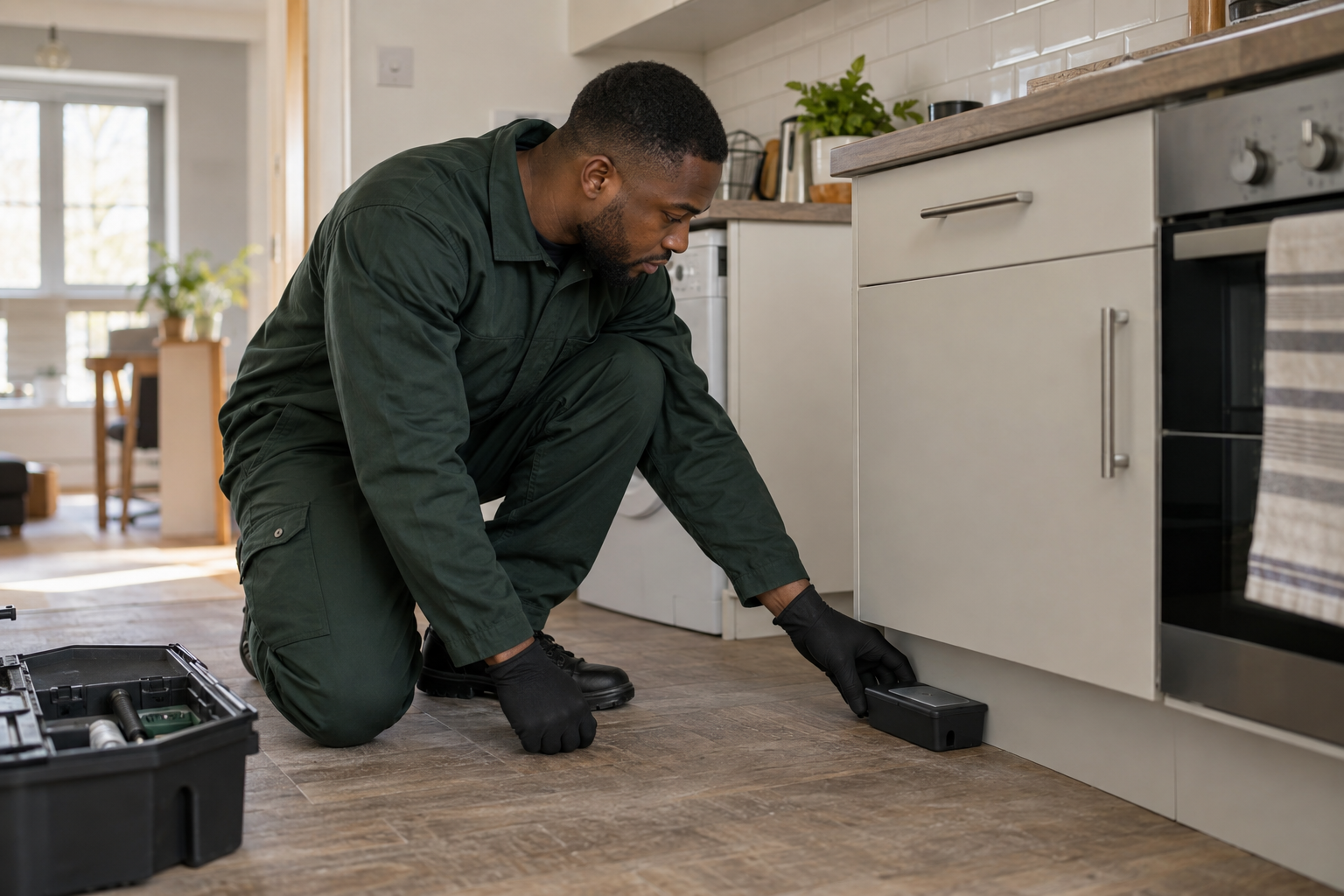
Shutter corners and equipment gaps enter the survey only where signs approach them.
Waste trolleys, delivery doors and cleaning stores are mapped with facilities.
Lockable control is positioned along evidenced communal edges, with concession work kept separately coded.
Larger signs near loading or compactor areas require another route assessment and possible drainage consideration.
Warm food-unit equipment is monitored when live insects or spotting support a harbourage concern.
Waste moisture and drain breeding are addressed through source hygiene rather than rodent products.
Damage inside dry ingredients triggers batch inspection within the responsible concession.
The public-space report and access rules are confirmed.
Seating, perimeter and waste edges are inspected.
Only concessions with relevant evidence receive internal checks.
Devices remain inaccessible to customers and cleaners.
Confirmed shared gaps enter the centre maintenance plan.
New signs are compared by zone before scope changes.
One communal finding creates concern across several concessions, but none has documented an internal loss.
The shared floor is mapped, protected monitoring tests perimeter directions and each operator receives the same reporting standard.
Fresh droppings and device contact are compared by coded zone after normal trading cycles. A clear concession with continued waste-route activity narrows the work; reduced communal evidence supports review without guaranteeing permanent absence throughout the centre.
Retail-centre scope reflects communal area, concessions inspected, protected equipment, induction and review reporting. Tenant-specific treatments remain separately defined.
| Service | Starting price | Scope factors |
|---|---|---|
| Pest inspection | From £62 | Property, access and areas inspected |
| Wasp treatment | From £89 | Nest position, height and safe access |
| Rodent control | From £184 | Activity, monitoring and visits |
| Bed bug control | From £204 | Rooms, preparation and method |
| Squirrel control | From £273 | Loft access, visits and proofing |
Final scope can change with access, activity, property size, treatment method, specialist equipment and the number of visits. Confirm the current price and inclusions before booking.
A nominated person may make the agreed external observation without opening or relocating equipment.
Facilities should arrange suitable building work after the route and service constraints are documented.
Movement is possible, so their distribution and trolley route are considered before a harbourage conclusion.
Small floor gaps can provide travel even when mice have not reached packaged goods.
A common format helps facilities compare time and location while preserving operator responsibility.
Fixed furniture is inspected through accessible edges; removal is requested only when evidence justifies it.
Reliable waste control removes a resource but does not close established access routes.
Precise communal evidence prevents unnecessary treatment of every concession.
Plan a retail-centre inspection