

PINNER · PEST CONTROL
Pest Control Pinner
Scratching close to an eave above a bedroom can sound like it comes from the whole loft. At a Pinner property, we locate the report from below, inspect accessible roof-space evidence and compare safe exterior clues before identifying the animal. Active occupancy is resolved before any permanent closure that could trap wildlife inside.
- Loft identification based on physical signs
- Bird nesting status considered before repair
- High-level roofing kept outside unsafe access
LOCAL CONTEXT
Find the active eave before planning closure
Pinner is a north-west London district with detached and semi-detached homes, flats, local shops and managed properties. Those broad property types help plan access but do not establish that a particular pest is present. This record focuses on repeated movement near the eaves above a first-floor bedroom. The occupant marks the ceiling position and notes whether activity occurs in daylight, around dusk or overnight. We inspect the safe accessible loft for disturbed insulation, droppings, nesting material and gnawing, then compare the evidence with visible roof junctions from inside or ground level. Nearby branches or roof features are possible access aids, not proof of the active route. Bird, squirrel and small-rodent evidence lead to different control and repair sequences. A current bird nest cannot simply be sealed, and a squirrel opening stays available until occupancy has been addressed. Fragile tiles, chimneys, solar panels and high external work require appropriate specialist access. Separate mouse signs in a kitchen receive their own service-route investigation. Contextual links lead to squirrel control, wasp treatment, mice control and pest proofing guidance.
What the inspection needs to establish
The ceiling area where sound is most repeatable Fresh displacement within accessible insulation Dropping, nesting and gnawing characteristics Interior eave edges visible from a safe loft route Ground-level views of relevant roof junctions Kitchen services only when separate signs exist
- The ceiling area where sound is most repeatable
- Fresh displacement within accessible insulation
Prepare the relevant access
Keep a dated note of time, duration and the exact room beneath the sound. Leave a safe path to the loft hatch without spreading stored items through the house. Do not climb onto the roof, trim branches, remove nest material or cover an opening. Mention solar panels, fragile ceilings, water staining, wiring damage and earlier roof or proofing work. Keep children and pets below the hatch.
Can the loft be inspected when it contains storage?
Yes, provided a safe route exists from the hatch to the reported area. Do not redistribute boxes before advice.
When the response should move faster
Seek prompt advice if an animal enters the occupied bedroom, severe gnawing reaches visible wiring or ceiling material starts to bow or fall. Keep people away from an unsafe room or loft rather than trying to catch the animal. Electrical, water and structural hazards require the corresponding emergency contractor, and a serious sting reaction needs medical services first.
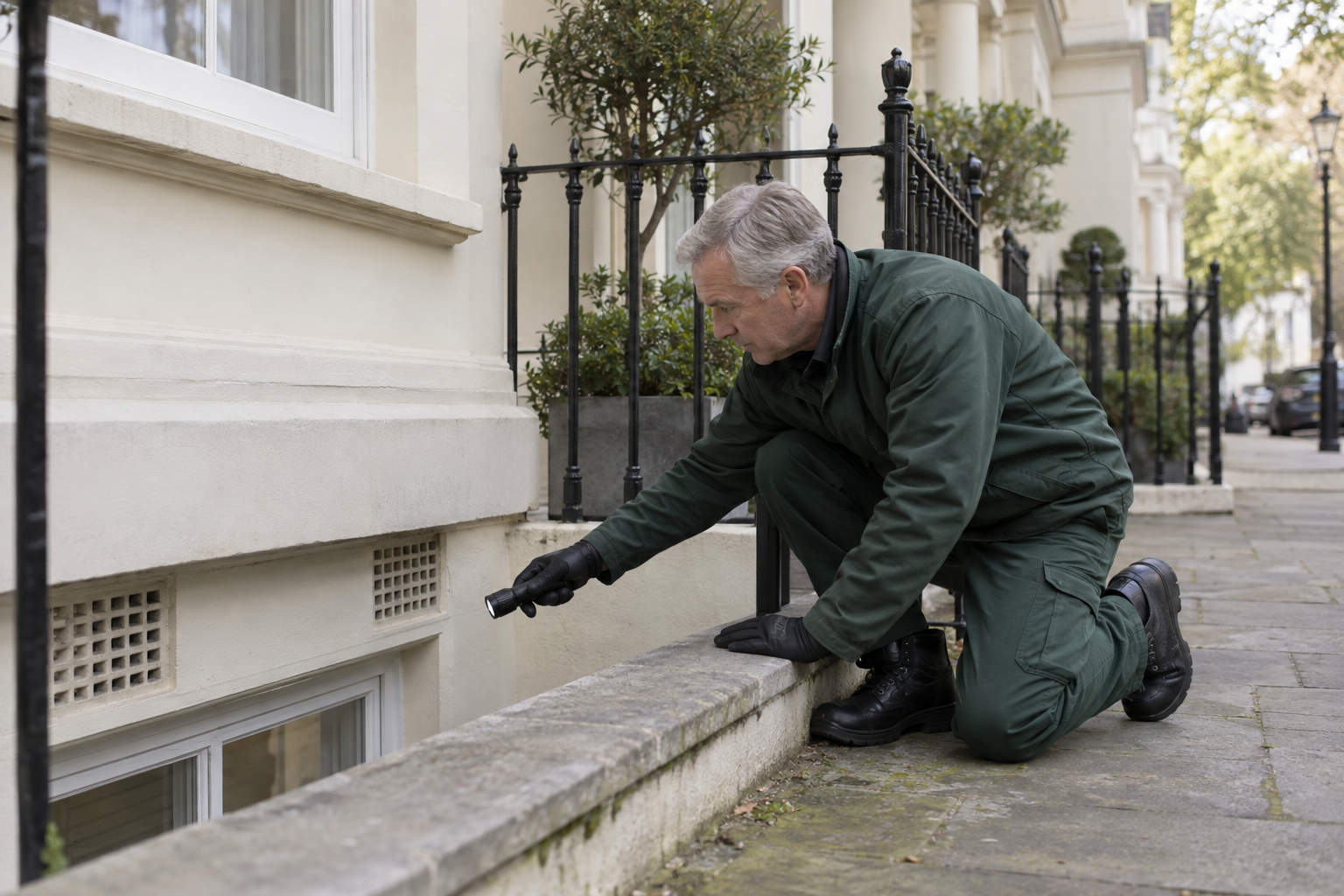
Read loft evidence from a safe route
Interior eave edges visible from a safe loft route
Ground-level views of relevant roof junctions
Kitchen services only when separate signs exist
Control matched to the evidence
Squirrels
Daytime movement, substantial gnawing and nesting material support identification. Suitable control precedes final exclusion of an active roof opening.
Birds
Feathers, nest structure, calls and seasonal entry are assessed before disturbance or proofing. Active nesting changes the lawful and practical response.
Mice
Fine droppings can appear in loft edges or kitchens and require monitoring of much smaller gaps than a squirrel route.
Wasps
A regular flight line into an eave is observed from a safe point. The entrance should remain open until nest treatment has taken effect.
Rats
Heavy sound does not identify rats. Lower-level physical evidence and a plausible route are required before rodent control changes.
Evidence, occupancy, control and repair
Locate the report from below
The most consistent ceiling position defines the first internal search area.
Inspect the loft safely
Only stable accessible space is used to record fresh physical evidence.
Compare possible species
Timing, droppings, nesting and gnawing are interpreted together rather than separately.
Check nesting and occupancy
The technician considers whether wildlife remains active and whether legal restrictions affect work.
Choose control or referral
Suitable pest work, monitoring or specialist wildlife advice is explained before action.
Plan high-level repairs
A roofer receives the supported entry position and safe closure timing where required.
Review the protected route
New sound, disturbance and the condition of repair are compared with the original record.
A roof-space report with an evidence-based closure point
Before
Sound identifies one part of the ceiling, while the animal, opening and current occupancy remain unknown.
Work
Accessible loft signs and safe exterior context are recorded before species-specific control or specialist repair is scheduled.
After
Fresh disturbance, sound and the repaired junction can be compared with the baseline; a quiet interval is not a guaranteed permanent outcome.
Current starting prices
Separate inspection from specialist roof access
| Service | Starting price | Scope factors |
|---|---|---|
| Pest inspection | From £62 | Property, access and areas inspected |
| Wasp treatment | From £89 | Nest position, height and safe access |
| Rodent control | From £184 | Activity, monitoring and visits |
| Bed bug control | From £204 | Rooms, preparation and method |
| Squirrel control | From £273 | Loft access, visits and proofing |
Final scope can change with access, activity, property size, treatment method, specialist equipment and the number of visits. Confirm the current price and inclusions before booking.
Practical local answers
Does a branch touching the roof prove squirrel access?
No. It can provide context, while an active opening and matching internal evidence are still needed.
Who should repair broken tiles after control?
An appropriate roofing contractor normally completes substantial high-level work at the agreed stage.
Can the visit include a kitchen mouse report?
Yes, but the kitchen receives a separate evidence map and control plan from the loft.
Nearby coverage
Related services
Questions before booking
Why is daylight Pinner loft noise useful but not diagnostic?
Some animals have typical activity periods, but building sounds and other species can overlap, so physical signs remain necessary.
Can a camera pushed through the hatch identify the whole route?
It may document visible areas, while hidden eaves, voids and species evidence can still require safe direct inspection.
What happens if an active bird nest is found?
The species, nesting status and applicable protections are considered before any disturbance, control or closure.
Should old insulation be removed before treatment?
No. Tracks and nesting disturbance may be useful evidence, and removal can expose occupants to contamination.
How is proofing checked after roof work?
The repaired position, fresh internal disturbance and any new sound are reviewed together over a suitable period.
Does one quiet week confirm the animal has gone?
No. A quiet interval contributes to the review, but monitor results, physical signs and repair condition provide stronger evidence.
Pinner loft-access answers
Pest control in Pinner for houses, flats and local businesses. Evidence-led eaves and loft inspection, targeted wildlife control and proofing advice.
Call 020 3318 2099