
Measure working access
Ground condition, height and pedestrian flow determine equipment.

MORDEN · ENTRANCE WASP ASSESSMENT
A flight line beside an essential entrance needs prompt planning because simply blocking the hole can drive wasps elsewhere. We confirm the insect, observe the entry from a safe distance, measure access requirements and agree how residents will use an alternative route during treatment. The nest is approached only when the target and working position are clear.
Ground condition, height and pedestrian flow determine equipment.
Management defines a temporary route and communicates restrictions.
LOCAL CONTEXT
Morden includes houses, estates and town-centre premises. Here, the important local circumstance is a shared entrance used by residents with limited mobility. Management must coordinate safe passage while the pest technician controls the nest. The flight line is observed from a protected position and the entrance height, species and likely nest void are recorded without blocking the opening. An alternative resident route is agreed for the treatment window, with staff responsible for barriers and communication. Indoor areas are not sprayed because wasps are feeding outside. The active entry remains open so returning insects reach the treated nest rather than diverting into the building. High repairs belong to a suitable contractor after activity has declined. Follow-up checks the same entrance at a comparable time and preserves emergency access throughout.
Flight direction and frequency are assessed during active conditions. Poking mortar or spraying from inside would increase risk and obscure the true entry.
Ask residents not to stand below the opening, strike insects or apply household spray. Management should provide entrance-use information, a site contact and permission for any access equipment. Keep windows nearest the route closed where practical.
Only under the site-specific restriction agreed before and during treatment.
Request prompt help if wasps enter mobility equipment, gather inside the lobby or repeatedly sting passers-by. Severe allergic reactions need emergency medical care.
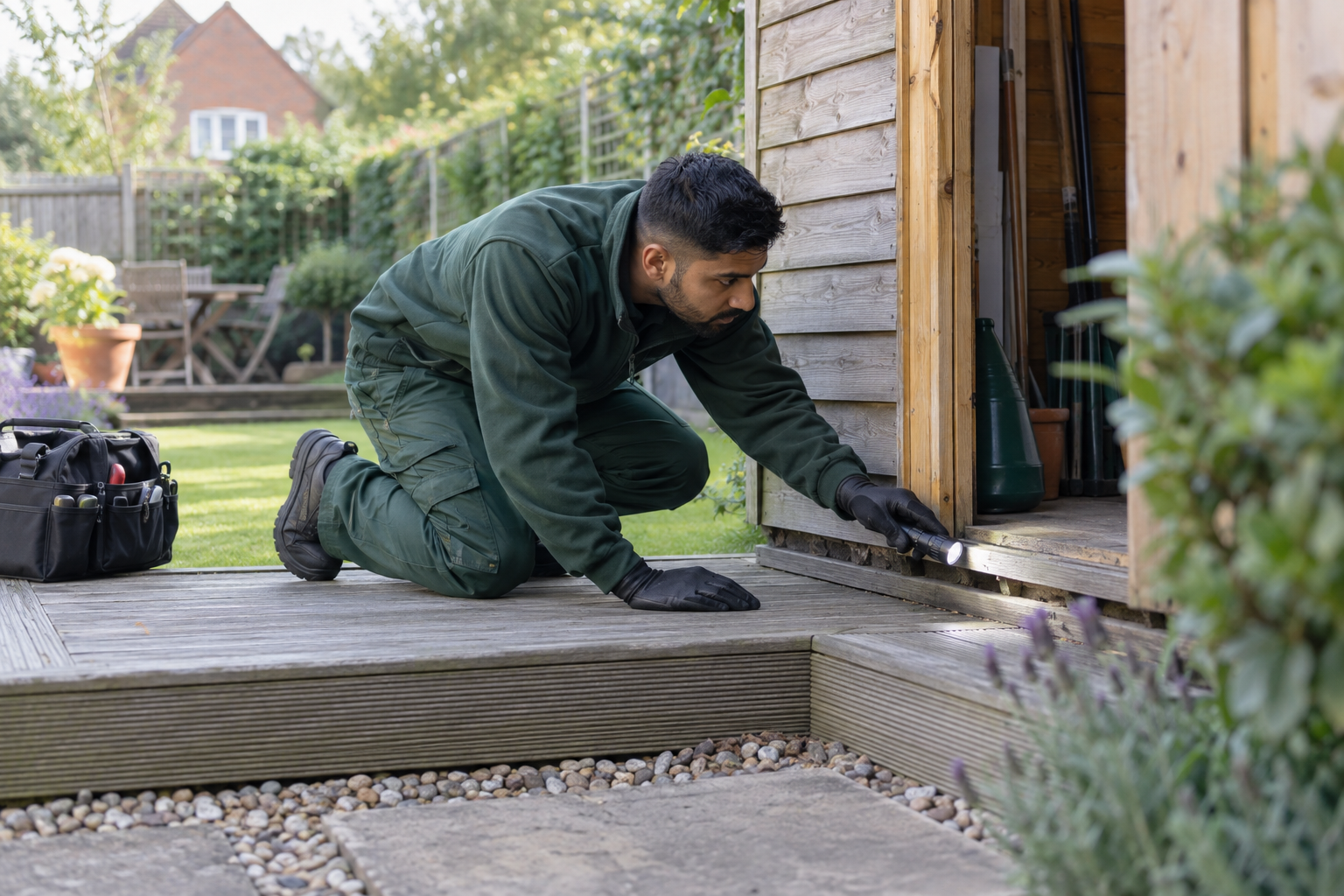
A suitable insecticidal treatment is delivered to an identified active entrance under controlled access.
A bee colony changes the response and may require specialist advice rather than routine wasp treatment.
Small insects emerging from paving need close identification before the wall opening is blamed.
Clustered flies behind glazing indicate a different source and control plan.
Essential movement and alternative entry are confirmed.
The technician watches repeated traffic to the masonry point.
Equipment and exclusion space are positioned safely.
The active entrance receives the selected application.
People are told what residual movement may occur.
Permanent repair waits until nest activity has ceased.
Wasps repeatedly enter one joint while residents pass close beneath it.
The route is cordoned, species confirmed and treatment applied to the active access under suitable height controls.
Management observes flight frequency from a safe location over the advised period. Continued concentrated entry prompts reassessment; reduced traffic supports the response but is not presented as an instant guarantee.
Not while the colony may remain active behind the wall.
The flight path decides the approach; interior application is not assumed.
The quotation depends on nest height, equipment, safe exclusion space and whether another visit is required.
| Service | Starting price | Scope factors |
|---|---|---|
| Pest inspection | From £62 | Property, access and areas inspected |
| Wasp treatment | From £89 | Nest position, height and safe access |
| Rodent control | From £184 | Activity, monitoring and visits |
| Bed bug control | From £204 | Rooms, preparation and method |
| Squirrel control | From £273 | Loft access, visits and proofing |
Final scope can change with access, activity, property size, treatment method, specialist equipment and the number of visits. Confirm the current price and inclusions before booking.
Colony foraging changes with temperature and daylight, affecting the best observation period.
Separate entry points require distinct flight observations before that conclusion.
Repair follows confirmation that active traffic has ended and no insects are trapped.
Heavy weather can suppress flight and make location less reliable, so conditions may affect timing.
Signs support communication but may not create adequate distance from the treatment zone.
Share the entrance type, approximate height and busiest flight period.
Call about an entrance nest