
Inspect fixed shelter
Compressors, drains and shelving anchors are checked for further evidence.
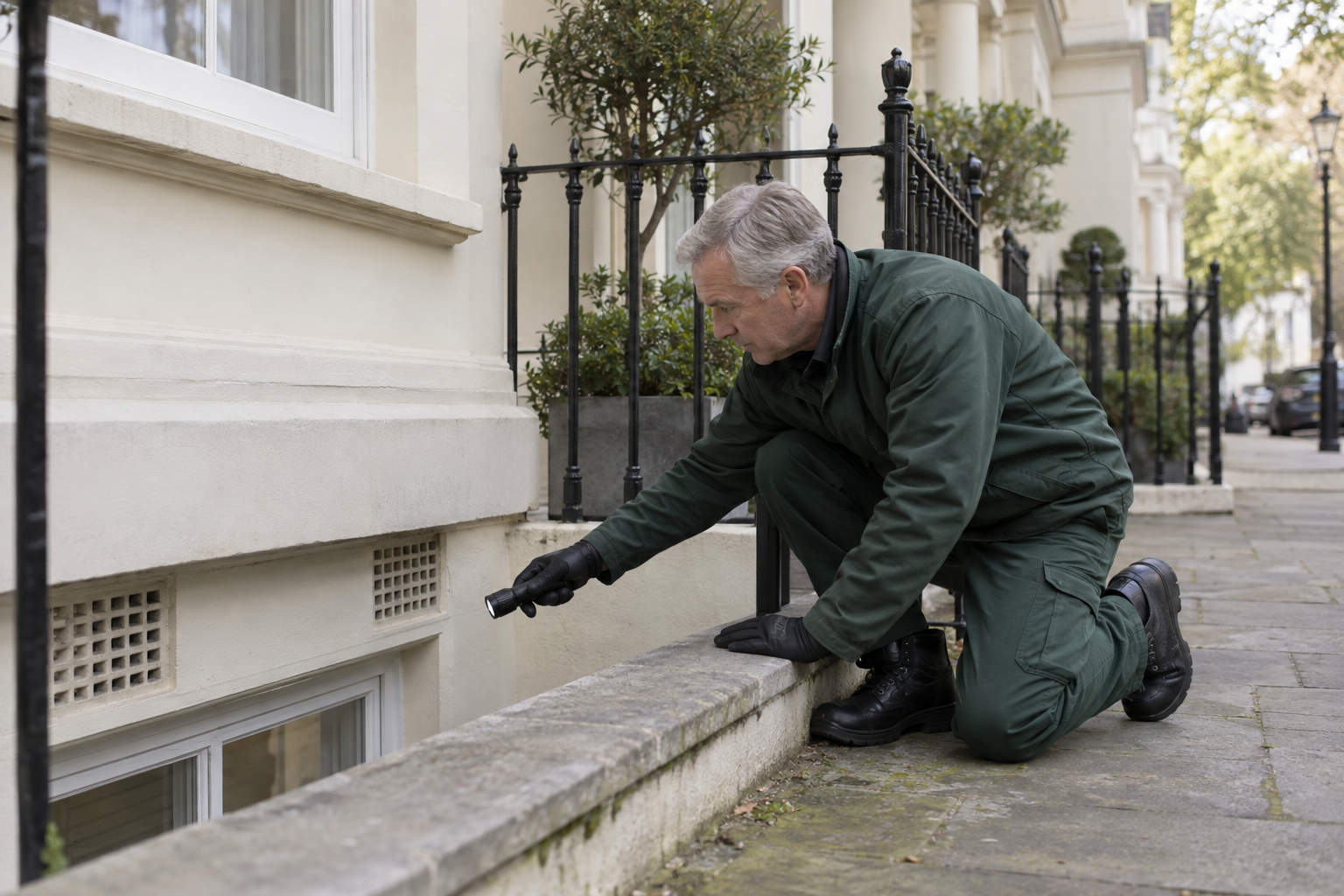
COLLIERS WOOD · STOCKROOM INSECT CONTROL
One insect on a delivery cage may have arrived with goods or emerged from harbourage near the loading route. We identify the specimen, inspect receiving and storage edges, place monitors that distinguish introduction from established activity, and coordinate any shared loading-bay checks with facilities. Sales-floor treatment is not added without supporting evidence.
LOCAL CONTEXT
Colliers Wood includes terraces, apartments and retail premises. A shop can control its stockroom while the landlord manages loading doors, risers and refuse space. Findings are assigned to the correct boundary. The specimen, carton and delivery batch are retained so incoming insects can be distinguished from established harbourage. We inspect shelving, damaged packaging and accessible service edges, then extend to loading or refuse areas only when captures support that route. Stock isolation and disposal follow the operator’s procedure; treatment avoids food-contact and saleable goods. A shared door or wall defect is reported to management rather than patched without authority. Neighbouring flats are not included from suspicion alone. Follow-up uses coded monitors and new package checks by bay, allowing supplier, cleaning and building actions to be evaluated separately.
Packaging history and the point where the cage stood are examined alongside warmth, moisture and cracks capable of sustaining activity.
Isolate affected packaging according to business procedure, retain the specimen and record supplier details. Do not transfer loose goods to another store. Facilities should provide loading schedules and access to the immediate shared boundary.
Not automatically; findings, treatment restrictions and the operator’s safety duties guide that decision.
Quarantine affected consumables and call when multiple live cockroaches appear under lighting or reach staff food areas. Follow the retailer’s product-withdrawal process.
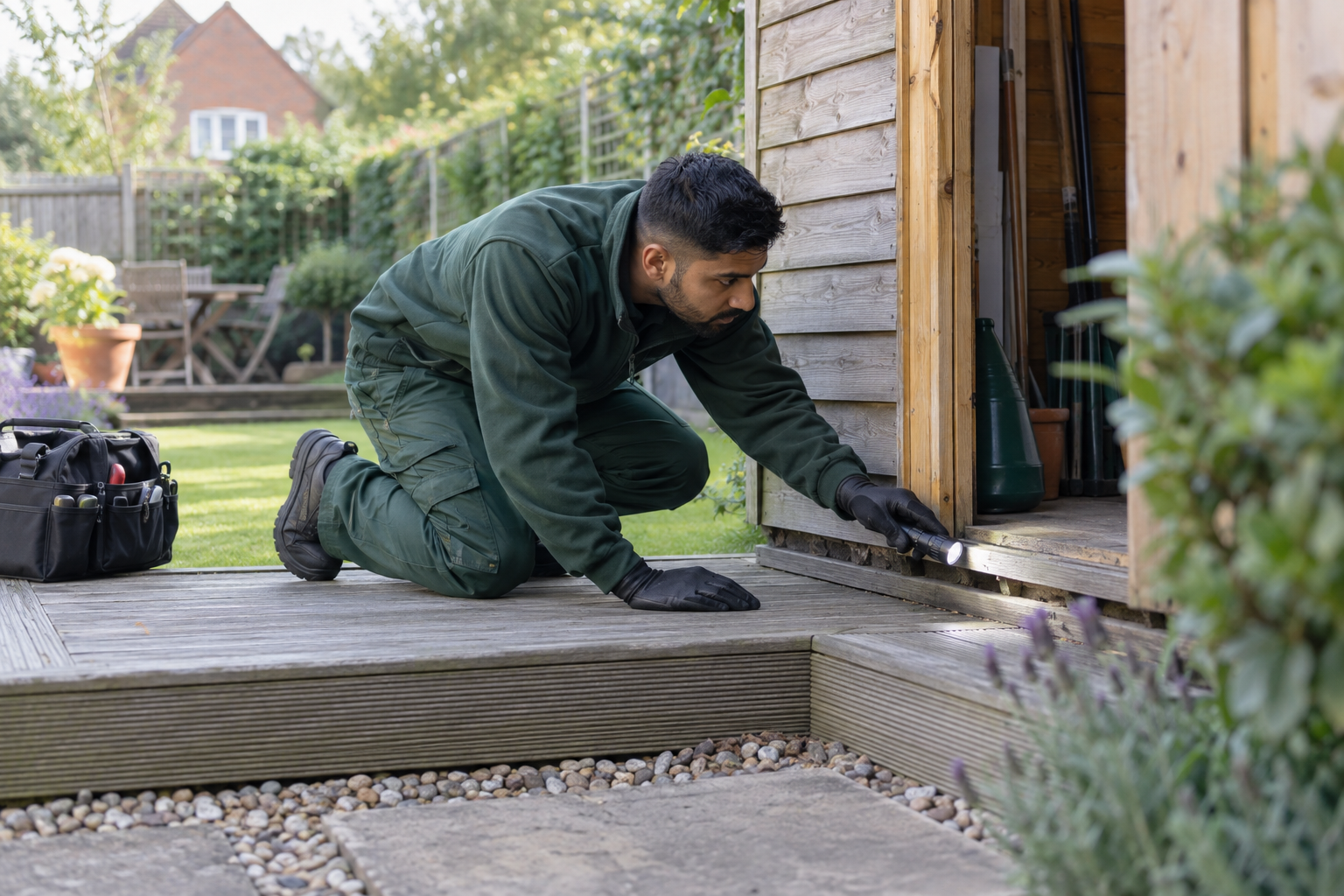
Compressors, drains and shelving anchors are checked for further evidence.
Receiving-door and stockroom placements test opposite explanations.
A single live insect sits on movable equipment with no earlier store report.
Identification, stock tracing and monitors compare the delivery route with permanent shelter.
New captures at receiving suggest an incoming or boundary issue, while activity around fixed warmth supports local harbourage. A clear period informs review but does not prove that future deliveries carry no risk.
Confirmed harbourage receives targeted bait or another suitable method, supported by coded monitor review.
Beetles or moths associated with packaging require batch isolation and stock-source checks.
Gnawed cartons and droppings are traced along dock edges with protected rodent control.
Drain or waste breeding calls for source sanitation instead of cockroach bait.
The insect is identified before product choice.
Cage movement is mapped through receiving.
Fixed environmental resources are inspected.
Contrasting placements test source direction.
Only supported zones enter treatment.
Evidence is documented for stock-chain action where relevant.
Retail scope depends on stockroom size, identification, monitoring period and facilities access beyond the unit.
| Service | Starting price | Scope factors |
|---|---|---|
| Pest inspection | From £62 | Property, access and areas inspected |
| Wasp treatment | From £89 | Nest position, height and safe access |
| Rodent control | From £184 | Activity, monitoring and visits |
| Bed bug control | From £204 | Rooms, preparation and method |
| Squirrel control | From £273 | Loft access, visits and proofing |
Final scope can change with access, activity, property size, treatment method, specialist equipment and the number of visits. Confirm the current price and inclusions before booking.
No, traceability supports enquiry but does not establish origin by itself.
Facilities must authorise shared-space access and coordinate other occupiers if needed.
Corrugations offer shelter, so affected packaging deserves careful inspection and controlled disposal.
The contrast helps distinguish inward movement from stockroom harbourage.
Broad application without evidence can contaminate stock and weaken monitoring value.
Keep them through the investigation period set by the business traceability process.
Yes, which is why identification precedes a cockroach treatment plan.
It adds a documented event that should be considered when interpreting later captures.
The cage route may be as important as the room where it stopped.
Arrange a stockroom check