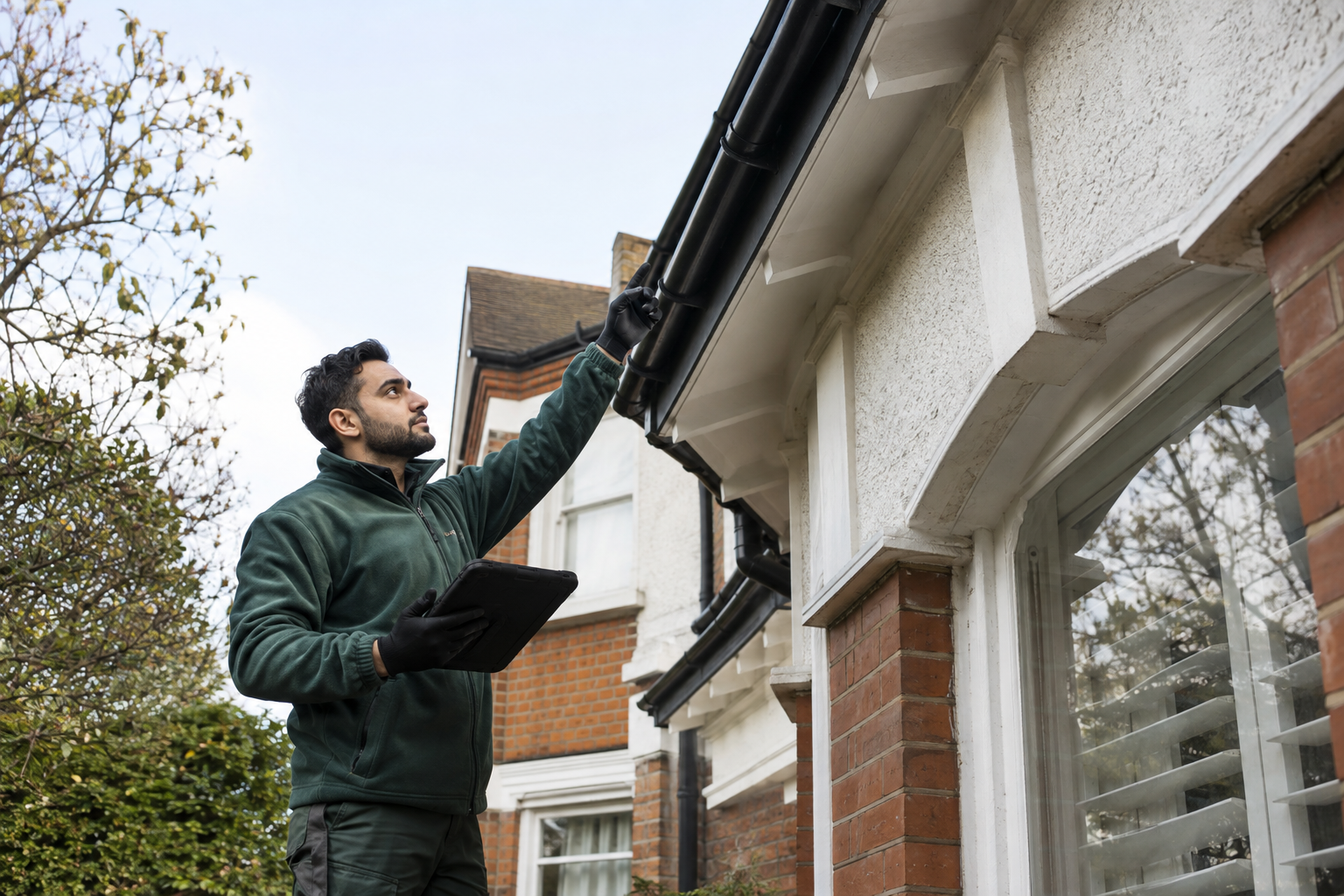
A sound above the ceiling, droppings behind a cupboard and insects near a bed need different investigations. Our Hampstead pest-control visits start by locating the strongest evidence and understanding how the building is connected. You receive a clear account of what is known, what still needs checking and which action is reasonable.
Focused checks for lofts, homes and converted properties
Identification and access considered before control
Camden Council’s Hampstead Conservation Area appraisal records an older village core, Victorian streets, denser central buildings, more spacious outer areas and later additions. Those forms can put cellars, altered services, converted flats, roof junctions and gardens into the same inspection route. The local description helps us ask better access questions, but it cannot identify what is making a sound above a ceiling. That requires timing, droppings, tracks, nesting material, gnawing and a credible entry point. Shared roofs or protected exteriors may also need coordinated permission before proofing.
PEST PRIORITIES
Services relevant to different signs
Squirrels above living rooms
Squirrels are active mainly by day, but timing alone is not proof. We look for roof access, compressed insulation, nesting material and characteristic damage. Control is planned before closure; follow-up confirms the void is clear so an animal is not sealed inside.
Mice across several floors
In a divided house, small service openings can form a vertical route. Fresh droppings and food disturbance guide monitor or trap placement. Results show whether control can remain within one flat or whether authorised shared access is needed.
Rats near cellars or gardens
Lower-level signs are compared with external access and possible drainage involvement. A treatment plan may combine secured control points, waste correction and later proofing. Bait is not placed simply because a rat was seen outdoors.
Wasps at eaves or outbuildings
A regular stream entering one point can locate a nest more reliably than occasional garden wasps. We assess species, height and safe access, treat the nest entrance with a suitable method and give a realistic period for activity to decline.
Bed bugs in occupied rooms
We inspect beds and nearby resting areas for physical evidence. Once confirmed, the number of affected rooms determines preparation and treatment. Follow-up matters because eggs or concealed insects can survive an incomplete one-room response.
Moths affecting fabrics
Larvae, webbing, cases and damaged material distinguish textile pests from harmless adults entering through windows. Control focuses on the larval source, affected storage and cleaning—not only the moths that are flying.
FINDING THE SOURCE
Where we would look first
+
The precise ceiling bay or roof slope connected to reported movement
+
Loft insulation, timbers and stored items for tracks, nesting or gnawing
+
Eaves, fascia junctions and branches that meet or overhang accessible roof edges
+
Cellar and utility entries where pipes or older services pass through walls
+
Vertical routes in converted houses, including authorised cupboards and risers
+
Garden rooms, sheds or rear additions when activity begins outside the main house
THE VISIT
What can happen during a visit
Build a time pattern
Day or night, intermittent or constant, one room or several: the pattern determines which explanations deserve attention first.
Orient within the building
We relate the reported point to the loft, exterior, cellar or services above and below it.
Inspect without unsafe disturbance
Visible evidence is checked from sound access points; inaccessible roof or void work is not improvised.
Identify the active route
Where possible, the technician distinguishes a current entry from old damage and unrelated gaps.
Control the identified pest
The technician chooses a legal, targeted method suited to the species, the occupied space and the accessible route. Preparation and safety restrictions are confirmed first.
Prove clearance, then close
Monitoring or a return check shows whether activity has stopped. Only then are relevant openings prioritised for proofing or referred for roofing work.
The sequence for a Hampstead visit follows the pest, available access and evidence; unnecessary steps are not added.
BEFORE / WORK / AFTER
A loft problem should be measured, not guessed
BEFORE
Before intervention, Hampstead loft reports often begin as sound without identification. Marking the ceiling area, noting daylight or night-time timing and recording visible tracks, compressed insulation or gnawing prevents an old hole or unrelated roof noise from becoming the whole diagnosis.
THE WORK
Inspection tests the likely species and route from safe access points. Suitable control or monitoring is then positioned around confirmed evidence. An opening believed to be active remains under review until there is a reasonable basis to close it; roofing or work to protected fabric is referred or separately authorised where necessary.
AFTER
The useful after picture is a comparison over time: whether sounds recur in the same period, whether monitors or control points show activity, and whether new disturbance appears at the marked access. A quiet day on its own is not proof of clearance. When the evidence remains inactive through the appropriate review period, the relevant entry can be proofed and then checked for fresh damage.
BEFORE WE ARRIVE
Prepare the useful details
For roof or ceiling noise, write down whether it occurs in daylight, after dusk or through the night and mark the room where it is loudest. Avoid walking on an unsafe loft surface and do not block the suspected entry. Make the loft hatch reachable, but leave heavy stored items in place unless safe access genuinely requires them to move. For kitchen signs, keep a sample or clear photograph and leave the edges of relevant cupboards visible. In a converted building, establish who can authorise shared roof, cellar or garden access. Mention recent scaffolding, roof work, tree cutting or pipe repairs because a change in the building can change animal routes.
WHEN TO ACT
When should you call promptly?
Fresh gnawing around wiring, an animal entering a bedroom, a nest directly beside the only safe doorway or contamination in a food area deserves prompt contact. Repeated loft noise matters, but it is not automatically an emergency if the animal remains within a void and there is no immediate safety risk. Do not climb onto a roof or approach an active wasp entry to obtain a photograph. Where several flats share the roof, contact the freeholder or manager early so access does not delay a useful inspection.
The final quote can change with the extent of activity, property size, access, number of visits, treatment method and any proofing. Commercial scheduling, specialist height access or work in communal areas may also affect scope. Starting prices are a guide, not a fixed quotation. Confirm the current price and what is included before booking.
LOCAL ANSWERS
Practical questions about the visit
The noise stops when someone enters the loft—can you still investigate?
Yes. Location, timing and physical signs can be more informative than hearing the animal during the appointment.
Can the entry hole be closed on the first visit?
Only when it is safe and appropriate. Closing an occupied route can trap an animal or force it deeper into the property.
Who arranges access in a converted house?
The booking party should confirm rights and keys for any shared loft, cellar or exterior area before the visit.
Does a large garden mean rodents are inevitable?
No. Wildlife outdoors does not automatically mean an internal infestation. We look for direct evidence and a route into the building.
USEFUL DETAILS
Questions before booking
Why does the exact time of a loft sound matter?
Different animals have different activity patterns. Timing cannot identify the species by itself, but combined with droppings, nesting and damage it helps decide which evidence to test first.
Should stored boxes be emptied before the loft visit?
Usually not. Make the hatch and a safe inspection route available, but leave undisturbed areas intact because tracks and nesting evidence may help locate activity.
What happens when the suspected entrance is high above a conservatory?
The internal evidence can be assessed first. Safe external inspection or repair may then require specialist access and a separately planned scope rather than improvised ladder work.
Could a bird be responsible for the noise instead of a squirrel?
Yes. Feathers, nesting material, droppings, sound pattern and the form of the opening help distinguish birds from mammals before control is selected.
Why should an active roof hole remain open during control?
Premature closure can confine an animal or send it towards another part of the building. The route is proofed after the agreed evidence indicates that occupancy has ceased.
How is a shared loft handled in a converted Hampstead house?
The visit covers only areas that are safely accessible and authorised. If signs cross a party division, the freeholder or other occupiers may need to coordinate the next inspection stage.
Can old gnawing be separated from current damage?
Often, yes. Colour, dust, debris and repeat change at a photographed point can help. Monitoring the location is more reliable than treating every historic mark as active.
NEARBY COVERAGE
Other areas we cover nearby
RELATED SERVICES
YOUR NEXT PRACTICAL STEP
Tell us what you noticed.
Share the full postcode, property type and the clearest sign you found. We will ask focused questions and explain whether inspection, treatment or monitoring is the sensible next step.
Homes & businessesLondon & M25Clear scope before work