
Check tea-point plumbing
Pipe gaps and appliance voids receive focused attention.

HAMMERSMITH · OFFICE MOUSE RESPONSE
Mouse signs in a tea point and under desks often reflect food availability plus a concealed service route. We map the fresh evidence, inspect accessible cable and plumbing entries, and place secured control outside casual contact. Facilities receive proofing priorities, while staff get practical storage and reporting instructions that do not disrupt the whole floor.
Pipe gaps and appliance voids receive focused attention.
Facilities identify safe access around floor boxes and risers.
LOCAL CONTEXT
Hammersmith contains homes, retail and offices. This floor’s raised services, tea point and shared riser govern inspection; the wider district does not predict mouse activity. Staff reports are converted into desk numbers, times and exact signs, with cleaner observations kept in the same log. We inspect the first affected tea point, accessible floor edges and cable routes before asking facilities to open a shared riser. Food in drawers, dishwasher moisture and deliveries are considered without treating housekeeping as the sole cause. Devices are placed where they answer a route question and cannot be disturbed by employees or contractors. Another tenant is not included from rumour alone; its space needs evidence and permission. Fit-out gaps, fire stopping and heavy access panels remain facilities work. Review uses fresh droppings, captures and completed repairs at the mapped positions.
The survey follows fresh droppings from the pantry towards desks and accessible utility edges, avoiding unnecessary opening of data infrastructure.
Ask staff to seal snacks, clear only the affected low cupboards and leave droppings photographed before cleaning. Facilities should provide riser keys and identify sensitive data or electrical zones. Do not let employees move devices or add consumer poison.
Not automatically; separation and treatment restrictions depend on findings and placement.
Restrict the affected point and call promptly when cables are freshly gnawed or mice enter catering preparation. Electrical safety stays with the qualified building team.
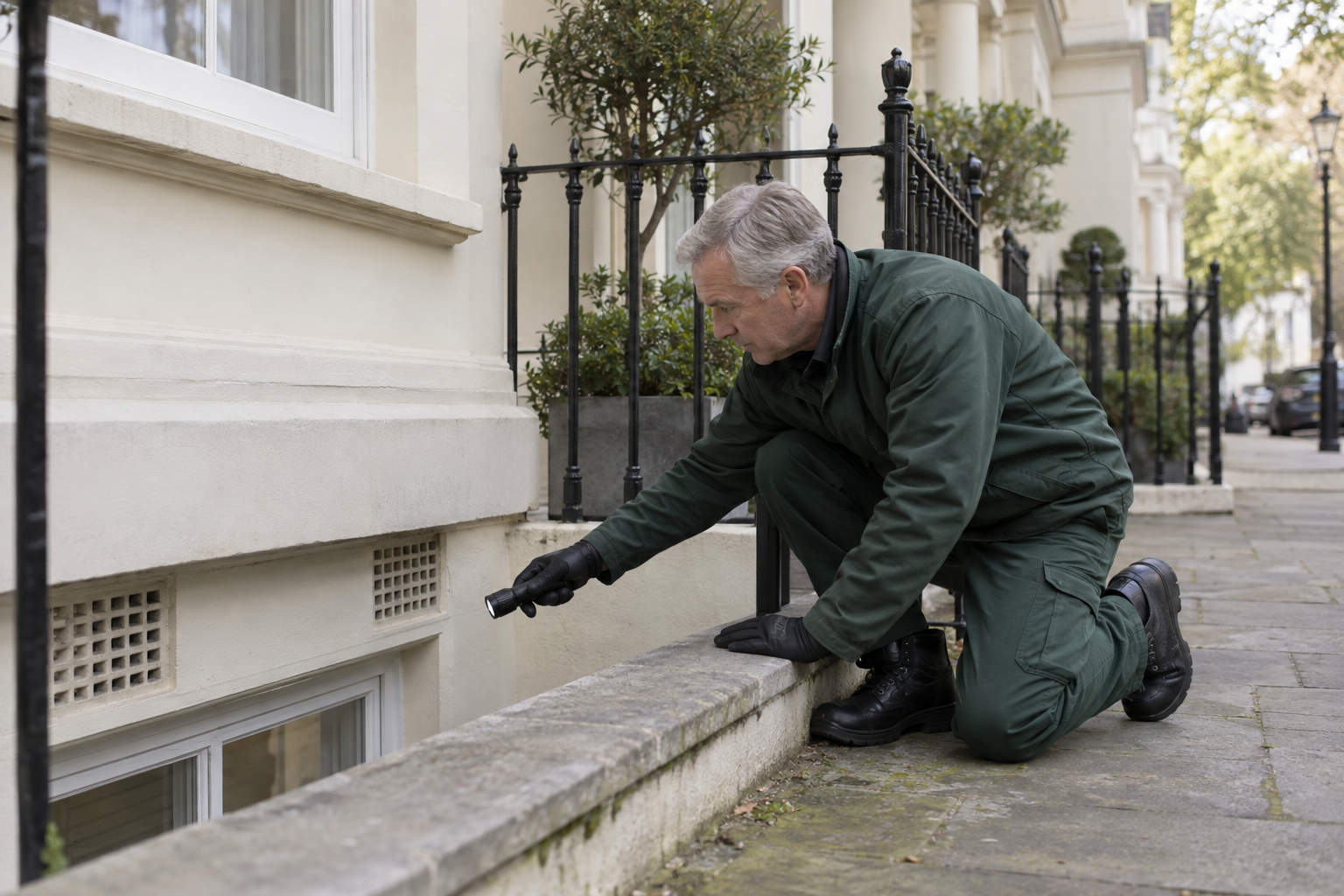
Lockable control intercepts evidenced edges while staff remove open snacks and crumbs.
Larger signs at loading level require a separate building route assessment.
Warm drink machines are monitored only when insect specimens or spotting support concern.
Trails around sugar storage are followed to entry points before bait is used.
Cleaning and security observations establish timing.
Pantry and workstation edges are mapped.
Devices remain secured and discreet.
Storage and reporting rules are communicated.
Confirmed service gaps enter the maintenance list.
Fresh signs are compared after normal occupancy.
Droppings and snack damage occur in separate zones with no shared record.
Evidence is mapped, protected devices test service edges and food practices change across the floor.
New marks and device contact are compared by workstation and shift. Decline supports the present route map; activity at another riser expands the survey without guaranteeing permanent exclusion.
Yes when cleaners protect devices and report evidence before removal.
Facilities should issue one privacy-aware instruction through management.
Office cost reflects floor area, protected equipment, facilities access and review scheduling outside busy periods.
| Service | Starting price | Scope factors |
|---|---|---|
| Pest inspection | From £62 | Property, access and areas inspected |
| Wasp treatment | From £89 | Nest position, height and safe access |
| Rodent control | From £184 | Activity, monitoring and visits |
| Bed bug control | From £204 | Rooms, preparation and method |
| Squirrel control | From £273 | Loft access, visits and proofing |
Final scope can change with access, activity, property size, treatment method, specialist equipment and the number of visits. Confirm the current price and inclusions before booking.
They may travel there, but food and accessible evidence determine where control is needed.
They do not replace route inspection, food control or monitored treatment.
Clean contaminated surfaces under workplace hygiene guidance without scattering dry droppings.
Location patterns reveal whether movement follows one service edge.
Machine cleaning and access records may identify resources around the unit.
Desk numbers and sighting times reveal more than a general complaint.
Plan an office visit