
Review food attraction
Sugar, crumbs and pet bowls are controlled.
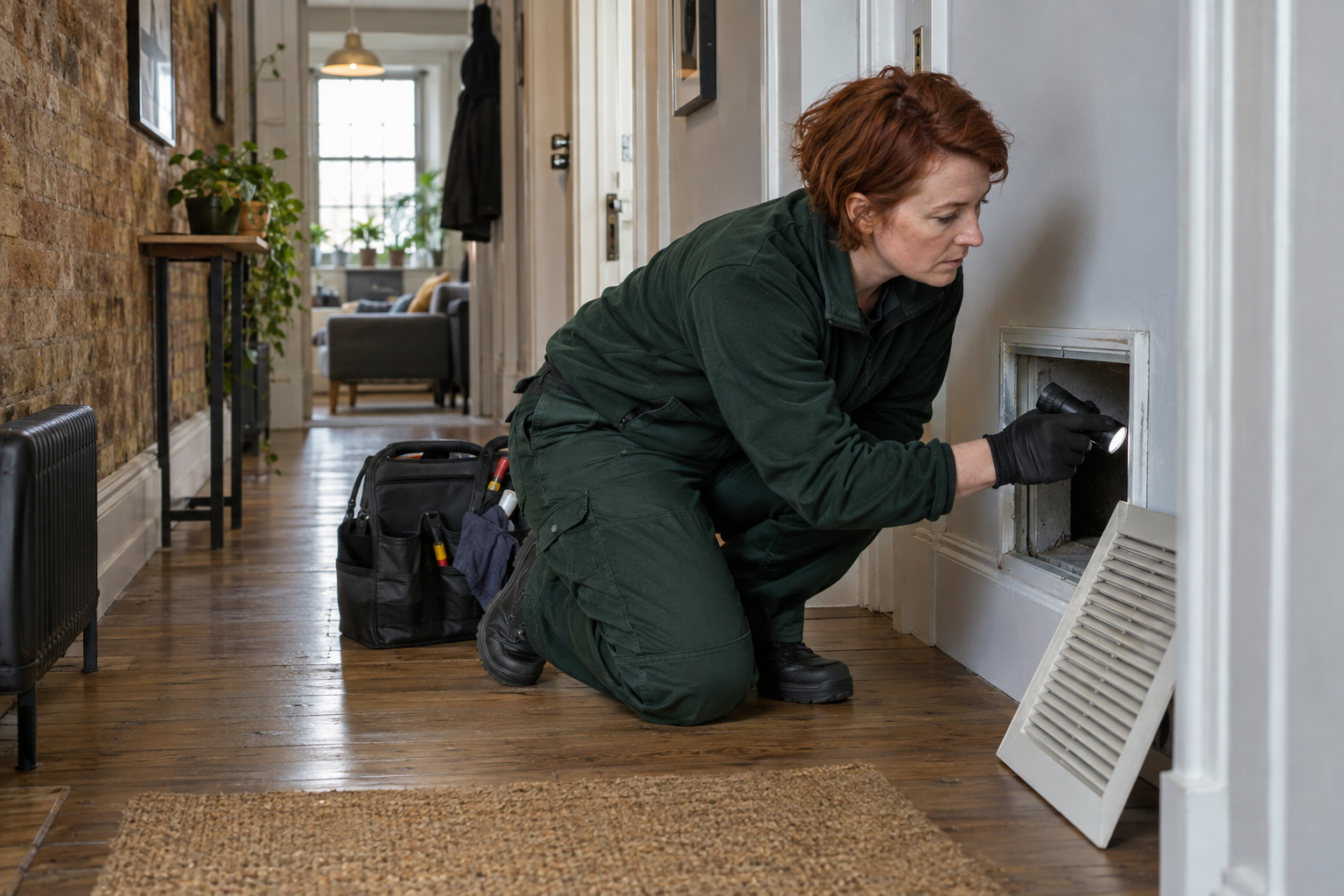
EALING · APARTMENT ANT INVESTIGATION
A trail beside one appliance provides a strong starting point but not the nest location. We follow movement towards food, moisture and service openings, identify the ant where possible, and place targeted bait away from children and pets. Building management becomes involved only when evidence continues into a shared riser or external fabric.
LOCAL CONTEXT
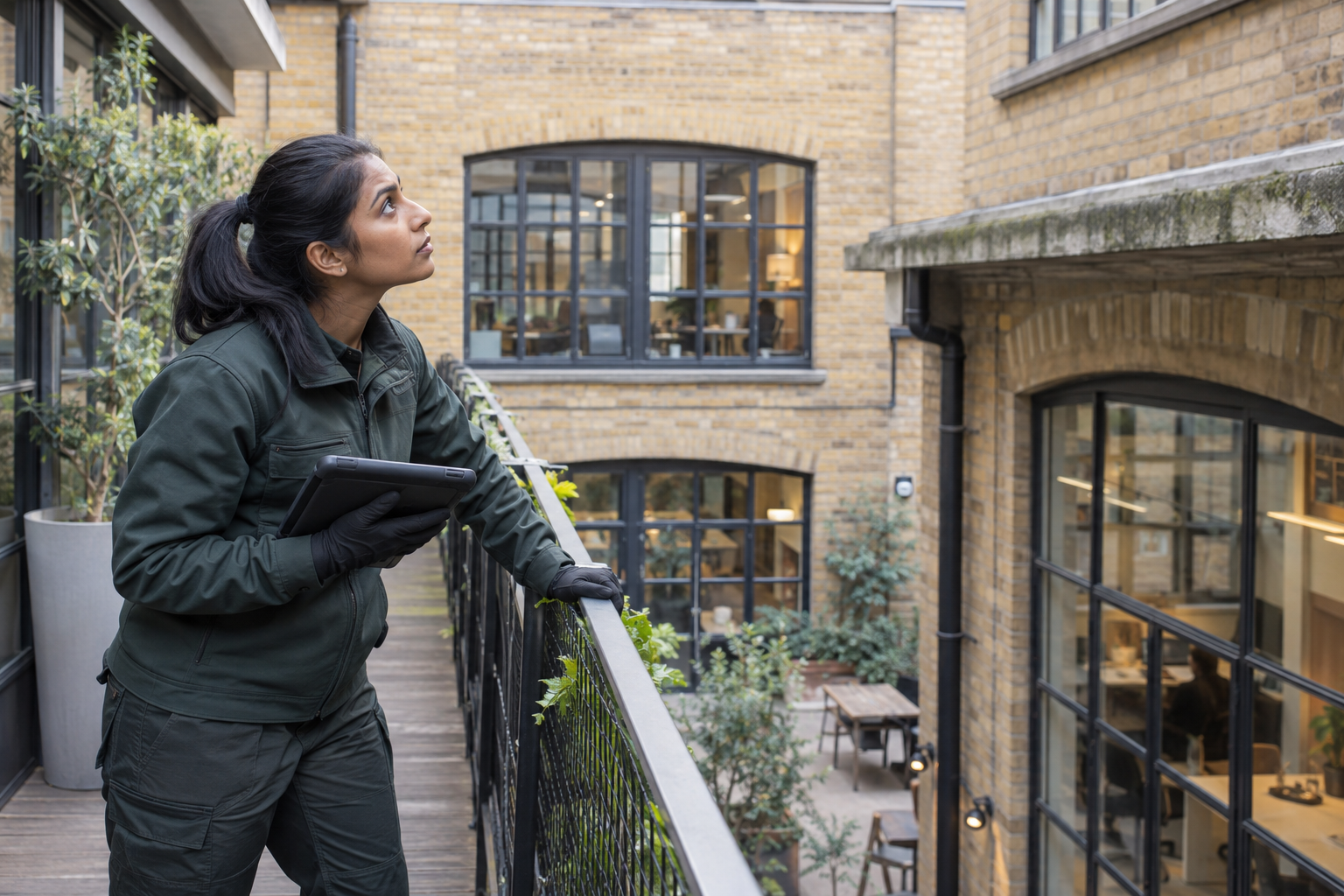
Ealing has houses, apartments and town-centre premises. This managed flat’s dishwasher, balcony and utility riser define the inspection. Other units are not labelled from one household report. We inspect the afternoon ant trail from its feeding point back towards moisture, sealant lines and accessible service entries. Repeated aerosol use may scatter workers, so the resident is asked to leave the active route undisturbed before attendance. Species and trail behaviour determine whether targeted bait is suitable; contact spray across the kitchen is not the default. Facilities access to the riser is requested only if workers consistently disappear into that boundary. Leaks or failed sealant receive separate maintenance actions, timed so they do not remove the route before control is assessed. Review records activity at the same bait and entry positions, not isolated ants on the balcony.
The resident’s afternoon timing helps the technician see direction and feeding behaviour under ordinary kitchen conditions.
Clean food spills but avoid repellent spray or sealing the emergence point before inspection. Empty the sink cupboard, secure pet bowls and report any dishwasher leak. Keep children away from the trail and note balcony activity.
Avoid disrupting bait-feeding workers once the treatment plan begins.
Disconnect an unsafe leaking appliance through a qualified service and protect infant food or sterile items from active trails. Most ant reports do not require emergency attendance.
Sugar, crumbs and pet bowls are controlled.
Pipe openings enter management scope only when trails reach them.
Species and trail behaviour guide bait type, placement and the need for exterior inspection.
Nocturnal insects near a dishwasher require specimen identification and harbourage monitoring.
Moisture-related activity indicates leak and humidity correction rather than ant bait.
Droppings beneath appliances are treated as a separate rodent issue.
Direction and food preference are watched.
A sample supports correct method.
Appliance and sink conditions are recorded.
Small protected points follow active travel.
Leaks or service defects are assigned.
Activity is compared without disturbing bait.
Ants appear for several hours, then disappear before the resident can identify direction.
The route is observed, food and moisture are corrected, and species-suitable bait is placed along protected travel.
The resident records trail length and feeding at the original afternoon window. Gradual reduction can support bait transfer; activity shifting to another opening requires review and is not treated as guaranteed elimination.
Not without identification, authorisation and a method suited to building services.
Closure before colony control may redirect the trail elsewhere.
Apartment ant scope reflects identification, internal and external access, bait review and any separate maintenance work.
| Service | Starting price | Scope factors |
|---|---|---|
| Pest inspection | From £62 | Property, access and areas inspected |
| Wasp treatment | From £89 | Nest position, height and safe access |
| Rodent control | From £184 | Activity, monitoring and visits |
| Bed bug control | From £204 | Rooms, preparation and method |
| Squirrel control | From £273 | Loft access, visits and proofing |
Final scope can change with access, activity, property size, treatment method, specialist equipment and the number of visits. Confirm the current price and inclusions before booking.
Temperature and foraging cycles can create predictable activity windows.
Residue or moisture may contribute, but the trail must be observed.
No, identification affects nesting assumptions and treatment choice.
Follow the product-specific review period given by the technician.
Only evidence of nesting or attraction would justify changes to a planter.
It is possible, yet coordinated access should follow actual reports or route evidence.
Timing, direction and appliance moisture help choose the right method.
Arrange an ant inspection