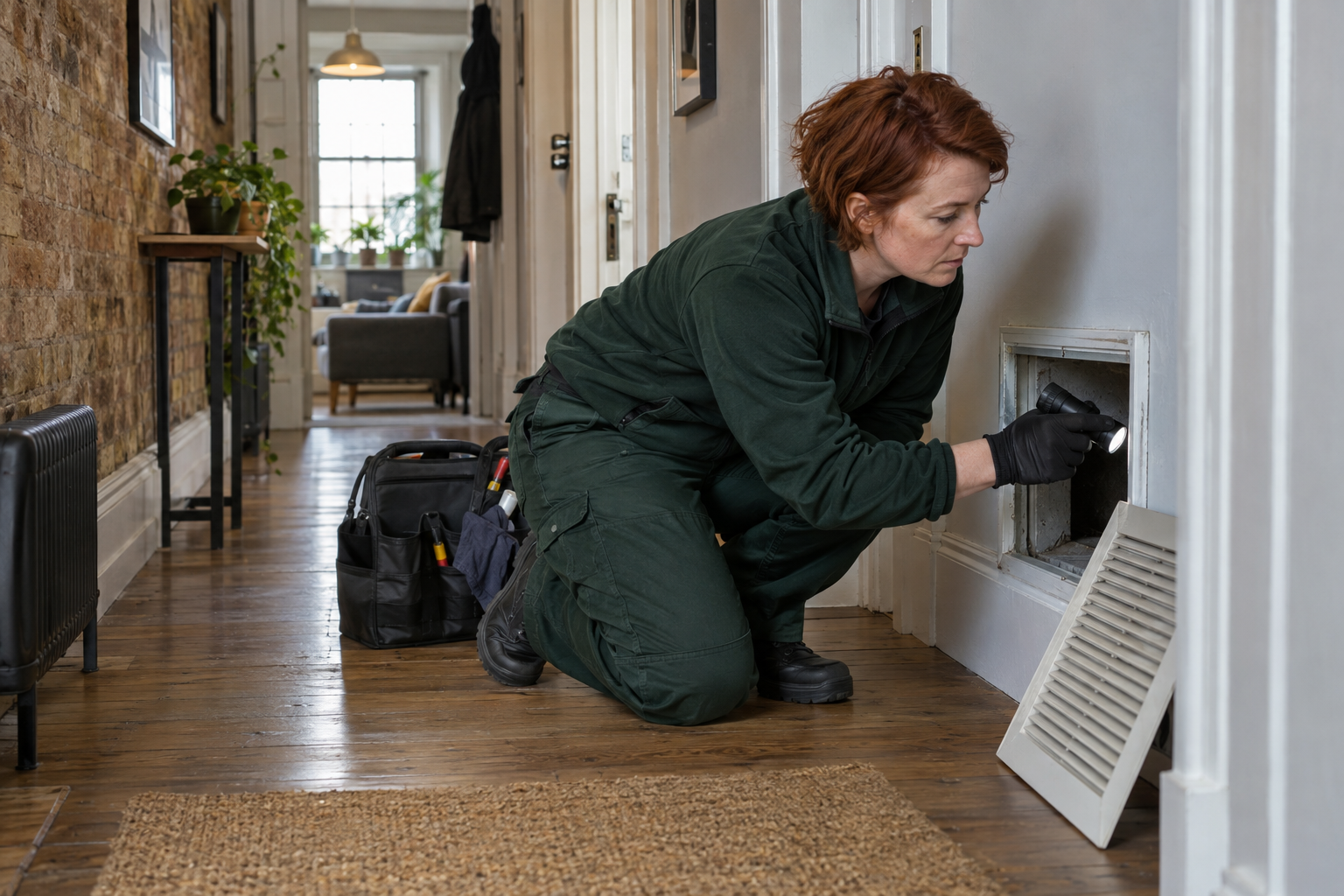
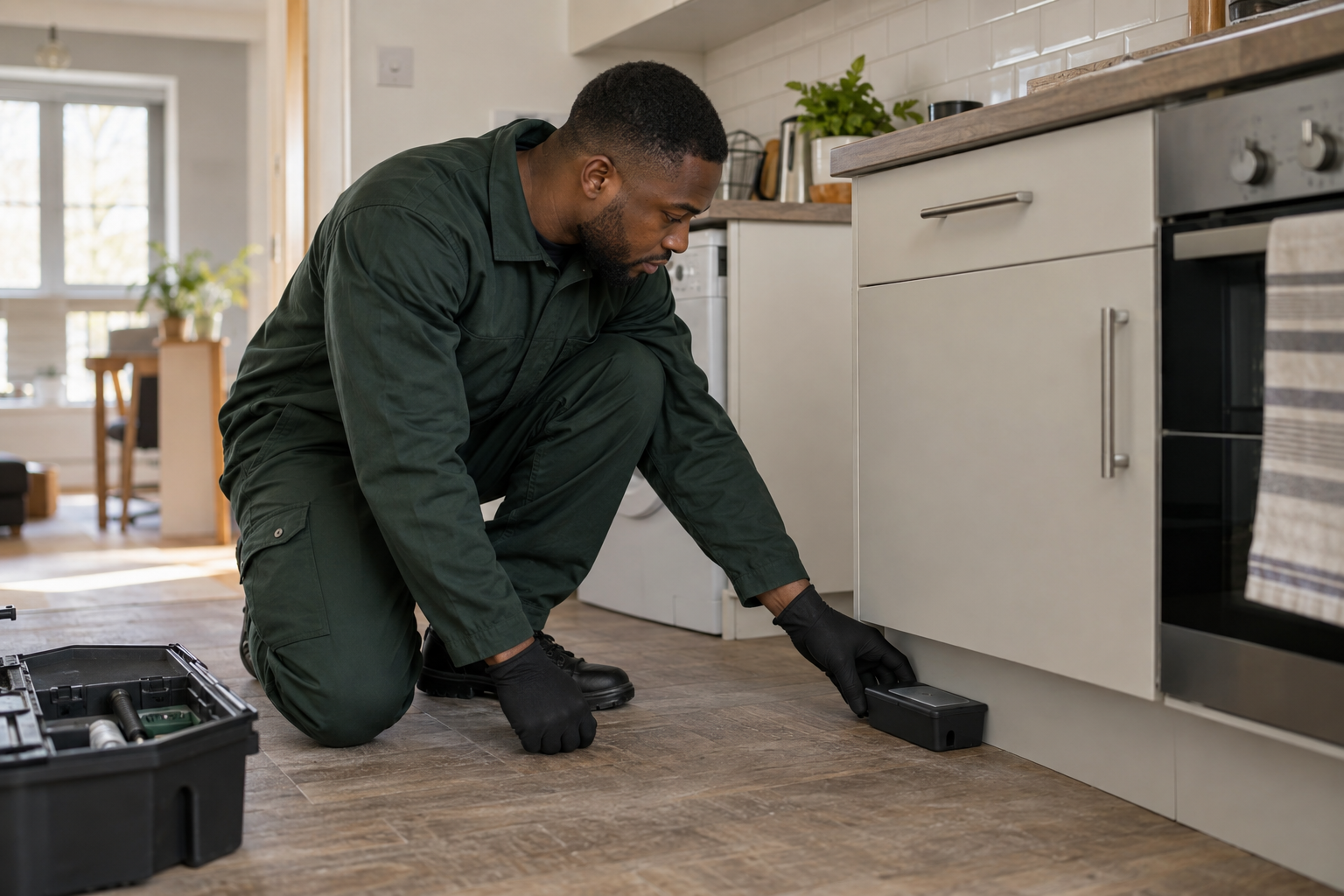
For pest control in Camden, we first identify the signs and active route. The visit can include inspection, monitoring, targeted treatment and practical proofing advice, depending on what the evidence shows. Tell us where activity appeared, what has already been tried and which relevant rooms can be accessed.
A useful mouse inspection maps droppings, rub marks, gnawing and possible food sources instead of placing control everywhere. In a shop-and-flat building, the route may cross more than one occupancy, so access and responsibility need to be clear.
Cockroaches
Warm equipment, moisture and narrow harbourage can sustain activity out of sight. Identification and monitoring help distinguish an isolated introduction from movement through a kitchen or service area.
Bed Bugs
Bites alone cannot confirm bed bugs. We look for physical evidence around beds, upholstered seating and nearby cracks, then explain preparation in a way the occupant can realistically follow.
Rats
Reports at lower-ground level may require internal signs to be considered alongside doors, waste routes and possible drainage access. The evidence determines whether monitoring, control or another investigation is appropriate.
Wasps
A repeated flight line can indicate an active nest, but its height and position govern safe treatment. Public access, neighbouring premises and work above ground may change what can be done on the first visit.
Pigeons
Fouling or repeated roosting calls for an assessment of the ledge, roof detail and access method. Cleaning risk, ownership and specialist height access should be understood before deterrent work is proposed.
LOCAL PROPERTY CONTEXT
One address can contain several working environments
Camden Council’s conservation material describes both residential and commercial character areas. For pest control, the useful distinction is practical: a flat, restaurant, shop with accommodation above and managed block each provide different access. The technician begins at the strongest sign, then checks only relevant connected spaces such as a stockroom, basement, riser or bin store when access is authorised. No pest is presumed from the postcode or style of building.
FINDING THE SOURCE
A practical inspection route through the premises
+
The exact point of the first sighting, including nearby food, water, warmth or stored goods
+
Accessible pipe entries, cable routes and gaps behind removable kickboards or equipment
+
Basement stairs, delivery doors and the route between stock, preparation and waste areas
+
Shared corridors, risers or bin stores when authorised access has been arranged
+
Beds, sofas and luggage storage when the report concerns biting insects rather than rodents
BEFORE WE ARRIVE
Make the first visit more useful
Keep a short record of where and when the signs appeared. If it is safe, retain a photograph or sample without handling droppings or insects directly. Ask staff or occupants not to cover gaps or use several new sprays immediately before the visit, because that can hide the pattern. Confirm who can open the basement, stockroom, bin store or communal door. Food should remain protected, but the technician still needs to see the layout and the area where activity was reported. Tell us about trading hours, alarms, loading restrictions, children, pets and any treatment already attempted.
WHEN TO ACT
Problems that should not wait
Contact us promptly when a rodent is loose in an occupied room, pest evidence reaches exposed food, or activity is disrupting a customer-facing space. A wasp nest beside a busy entrance also deserves quick assessment. Urgency does not remove the need for safe access and correct identification: the fastest useful response is the one that reaches the right part of the premises with an informed site contact.
We start with the first sighting, later activity and any change in use, stock or building work.
Walk the route
The occupant or site contact shows the affected point and the spaces that connect to it.
Test the likely explanation
Physical signs are compared with access, food, moisture and harbourage rather than relying on a single clue.
Define the workable scope
We separate areas available now from communal or neighbouring spaces that need permission.
Agree control
The technician explains suitable treatment, monitoring and preparation before anything is placed or applied.
Leave a usable record
You receive clear aftercare, expected activity and any action for staff, landlord or facilities management.
The sequence for a Camden visit follows the pest, available access and evidence; unnecessary steps are not added.
BEFORE / WORK / AFTER
From scattered sightings to a trackable control plan
BEFORE
The useful starting point is a dated record of what staff or occupants actually noticed: droppings beside stock, an insect near warm equipment, damage behind a counter or activity at a particular time. Photographs, room names and previous treatment details help separate one confirmed sign from assumptions about the whole premises.
THE WORK
The technician inspects the strongest evidence, checks relevant adjoining routes and chooses control that can be measured. This may combine targeted treatment, discreet monitoring, removal of an accessible food or water source, and proofing of confirmed entry points. Actions for the occupier and actions requiring a landlord are recorded separately.
AFTER
After the work, compare new sightings and monitor activity with the original record. Observable change may include fewer fresh signs, no further contact at a treated point, reduced monitor counts or the absence of new damage around a proofed route. Continued evidence is equally useful because it shows where follow-up inspection or a change of method is needed.
COST CONTEXT
Current starting prices
Pest / service
Typical starting price
What affects the price
Pest inspection
From £62
Property, access and areas inspected
Wasp treatment
From £89
Nest position, height and safe access
Rodent control
From £184
Activity, monitoring and visits
Bed bug control
From £204
Rooms, preparation and method
Squirrel control
From £273
Loft access, visits and proofing
What can change the final cost?
The final quote can change with the extent of activity, property size, access, number of visits, treatment method and any proofing. Commercial scheduling, specialist height access or work in communal areas may also affect scope. Starting prices are a guide, not a fixed quotation. Confirm the current price and what is included before booking.
LOCAL ANSWERS
Planning access in Camden
Can a visit be arranged around opening hours?
Tell us the quietest access window and any alarm or key-holder requirements. Timing depends on availability and the work needed, but the operating pattern can be considered when the visit is planned.
What if the flat and shop have different landlords?
Book the area you control and explain the arrangement. If the evidence points to shared fabric or another occupancy, we will state what further access would make the investigation more complete.
Can staff prepare without clearing the whole premises?
Usually, yes. Concentrate on safe access to the reported area, relevant equipment edges and storage. Pest-specific preparation is explained before treatment.
Will you decide whether the business must close?
We can explain the pest-control findings and treatment restrictions. Food-safety or closure decisions may also involve the operator and the relevant authority.
NEARBY COVERAGE
Other areas we cover nearby
RELATED SERVICES
USEFUL DETAILS
Questions from residents and premises managers
Do I need to identify the pest before calling?
No. Describe the size, colour, location and time of activity, and send a safe photograph if available.
Can you inspect only one flat in a block?
Yes. The visit can establish what is happening in that flat, although shared routes may require management access later.
Will all control be completed on the first visit?
Not always. Monitoring, repeat treatment or access to another area may be necessary.
Can you include a basement or yard?
Yes when it is relevant, safe and included in the authorised access.
Is proofing always part of rodent treatment?
Proofing is recommended against evidenced routes. Larger repairs or work to shared fabric may need a separate contractor or approval.
How is the final price confirmed?
The pest, premises, access, treatment method and likely number of visits all affect the scope. Confirm what is included before booking.
YOUR NEXT PRACTICAL STEP
Tell us what you noticed.
Share the full postcode, property type and the clearest sign you found. We will ask focused questions and explain whether inspection, treatment or monitoring is the sensible next step.
Homes & businessesLondon & M25Clear scope before work