
Survey stock aisles
Droppings, gnawing and spill around lower pallets are sought systematically.

BRENTWOOD · WAREHOUSE RODENT CONTROL
Rats crossing a loading bay may be feeding outside, entering the warehouse or using the route between other resources. We compare security footage with door schedules, inspect dock edges and stock aisles, and place protected monitoring where forklift and staff movement allow. Any drainage or structural repair follows documented evidence rather than assumption.
Droppings, gnawing and spill around lower pallets are sought systematically.
Compactor edges and visible drainage indicators are documented separately.
LOCAL CONTEXT
The Brentwood warehouse inspection starts with the original camera files, exact bay numbers and door status at each recorded crossing. Exterior travel is kept distinct from confirmed entry: fresh droppings, rub marks, gnawing, footprints or stock contact inside are needed before the internal scope is widened. We inspect accessible dock seals, levellers, wall junctions, lower pallet edges and waste approaches while respecting forklift lanes and site exclusion zones. Locked rooms, high racking and drainage below covers remain outside the survey unless authorised access or a specialist contractor is arranged. Warehouse management supplies induction, traffic controls and product-hold procedures; pest control maps activity and maintains secured devices. Door engineers, drainage specialists and fabric contractors receive precise defect locations rather than a general instruction to seal the perimeter. Placement avoids vehicle impact and packaged-goods contamination. Review compares new footage, device contact and fresh signs by bay, allowing exterior pressure and warehouse infestation to be managed as separate findings.
The technician starts from filmed crossing points and checks both the external approach and the first interior stock lanes for fresh contact.
Save the original footage, mark the bay number and retain door-opening logs. Remove edible spill under site procedure while leaving tracks photographed. Facilities should provide induction, traffic-management rules, drain plans and a contact authorised to stop work around moving vehicles.
Only positions protected from impact, tampering and product contamination are acceptable.
Isolate contaminated stock and request prompt support when rodents enter production, staff food rooms or live electrical cabinets. Follow site incident and product-hold procedures.
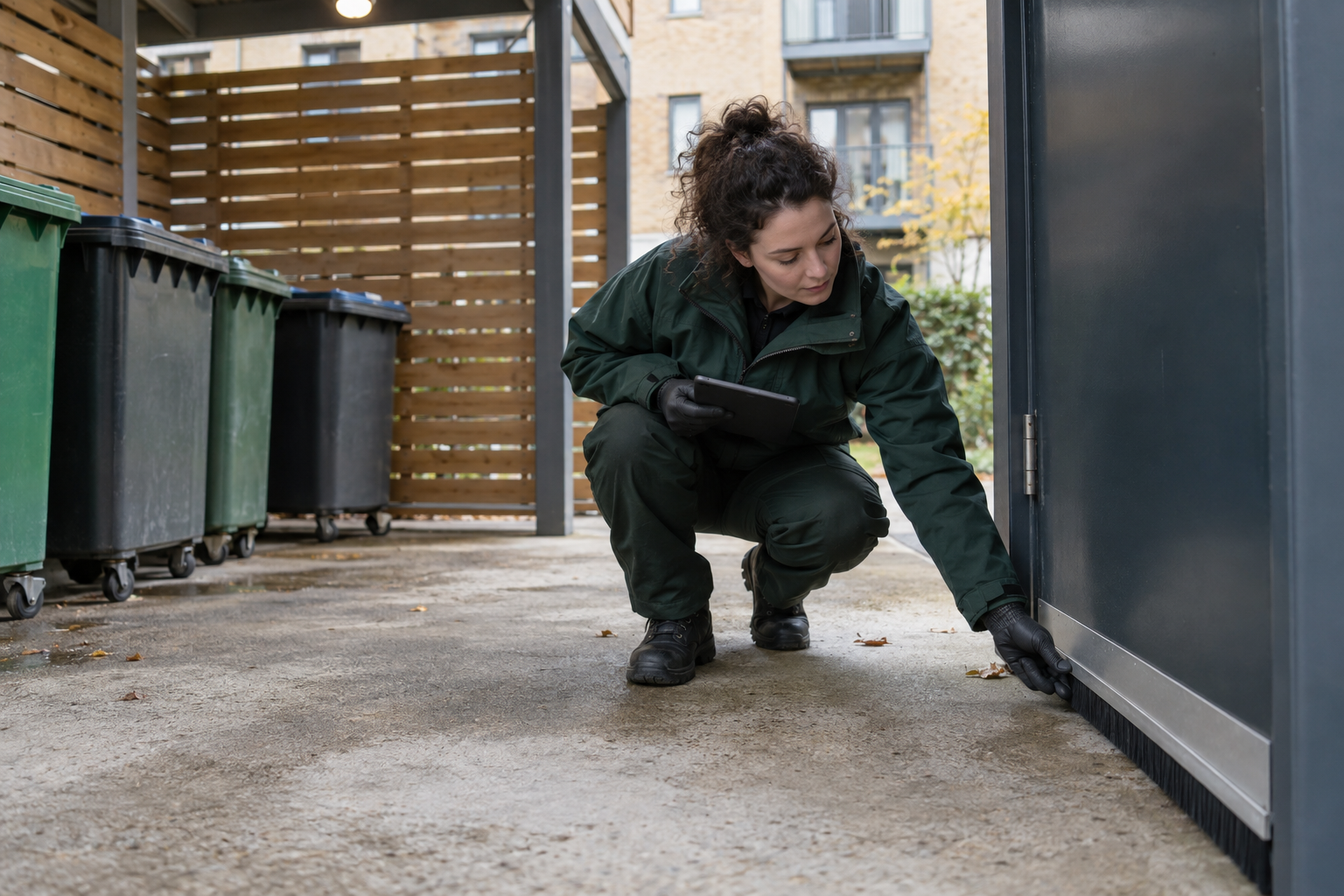
Lockable stations or traps target established travel while maintaining safe separation from vehicles and packaged goods.
Smaller droppings inside racking require closer service and stock inspection than the exterior rat report.
Damage within packaging is sampled because beetles or moths need batch-led control rather than rodent placement.
Bird fouling above loading doors creates a separate hygiene and high-level proofing requirement.
Forklift lanes, breaks and restricted areas are confirmed.
Recorded crossings are checked for physical signs.
Lower pallets and edges are inspected.
Devices are fixed outside collision and product-contact zones.
Door, drain and fabric defects receive exact locations.
Fresh signs and camera activity are compared by bay.
Security has repeated exterior recordings, but stock checks have not shown a confirmed internal route.
Footage, dock marks and aisle evidence create separate external and internal baselines before secured control is placed.
New video, station contact and fresh droppings are compared against door schedules. Declining bay movement supports the plan; interior signs trigger a wider stock survey without guaranteeing that surrounding land remains rat-free.
Warehouse cost depends on loading perimeter, internal aisles, secure equipment, induction time and planned monitoring reports; drainage repairs are additional.
| Service | Starting price | Scope factors |
|---|---|---|
| Pest inspection | From £62 | Property, access and areas inspected |
| Wasp treatment | From £89 | Nest position, height and safe access |
| Rodent control | From £184 | Activity, monitoring and visits |
| Bed bug control | From £204 | Rooms, preparation and method |
| Squirrel control | From £273 | Loft access, visits and proofing |
Final scope can change with access, activity, property size, treatment method, specialist equipment and the number of visits. Confirm the current price and inclusions before booking.
Operational opening can continue, but accurate logs help interpret each activity period.
A drainage specialist should test the focused location identified by evidence.
Yes, individual identification is difficult, so route frequency is not treated as a population count.
Busy surfaces often remove subtle signs, which makes footage and protected edges valuable.
The business decides using contamination evidence, packaging integrity and quality procedures.
Premature repair can alter movement, so active control and alternative routes are reviewed first.
Only nominated trained staff should perform the agreed visual check without opening devices.
Compactor availability can explain changes in loading-bay movement.
Time, direction and door status turn a sighting into a useful route record.
Plan a warehouse inspection