
TWICKENHAM · PEST CONTROL
Pest Control Twickenham
A steady wasp flight line beside an outdoor customer area needs a safe response, not a blocked hole. For a Twickenham hospitality site or home, we observe the entrance from a distance, assess working height and public access, then explain whether treatment can proceed and when the area can be used normally.
- Nest entrances observed without obstruction
- Customer routes considered before treatment
- Reopening advice tied to the actual method
LOCAL CONTEXT
Keep customers clear without blocking the nest
Twickenham is a south-west London town within Richmond upon Thames. Terraced and detached homes, flats, hospitality and town-centre businesses create different access conditions but do not establish pest prevalence. This record focuses on wasps entering an eave above a terrace used by customers. The approach path, height and likely nest position are assessed without climbing from furniture or sealing the entrance. The operator may need to cordon a small area while keeping another entrance available. Treatment is chosen for the nest location, and residual flight is explained so staff do not assume every returning wasp means failure. If no nest route is established, monitoring and a later observation can be safer than speculative application. Food, bins and sweet spills are managed as operational factors without being described as the sole cause. Contextual links cover wasp control, hospitality inspection and nearby residential service.
What the inspection needs to establish
Repeat flight into one eave or wall opening Distance from tables, doors and staff routes A stable treatment position at safe height Secondary entrances that keep the premises usable Food and waste points attracting foraging wasps
- Repeat flight into one eave or wall opening
- Distance from tables, doors and staff routes
Prepare the relevant access
Keep customers away from the flight path and do not plug the hole. Record the busiest activity period and provide safe access to the relevant inside space if available. Tell us about allergies among staff, products already used and any ladder or roof restriction. Continue ordinary hygiene without hosing the nest entrance.
Can the terrace remain partly open?
Possibly, if a safe boundary and alternative circulation route can be maintained.
When the response should move faster
A nest on the only entrance, wasps entering a busy indoor room or a known high-risk person repeatedly crossing the route deserves rapid advice. A serious allergic reaction is a medical emergency. Do not ask staff to climb towards the entrance while waiting for attendance.
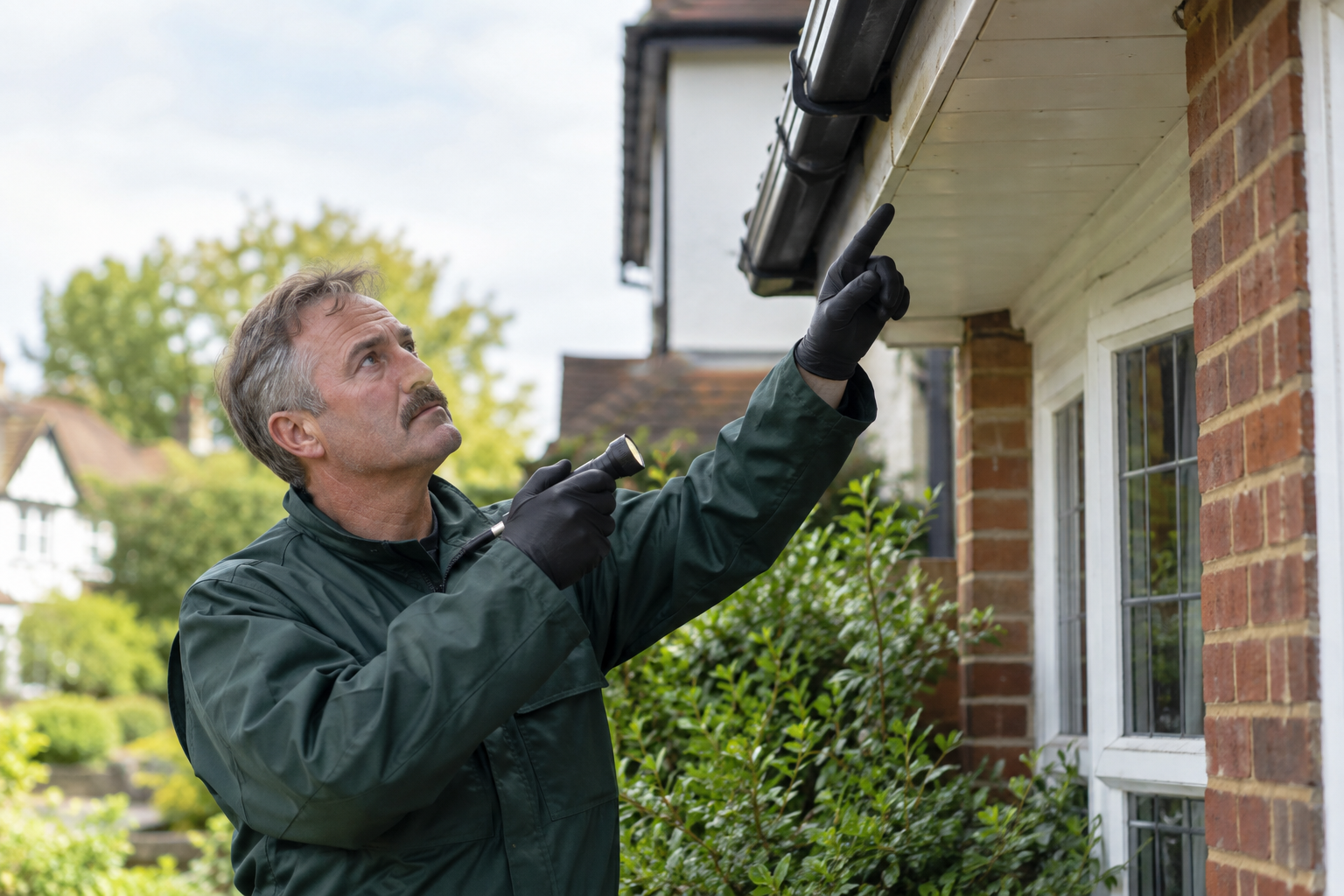
Read the flight path before choosing access
Secondary entrances that keep the premises usable
Food and waste points attracting foraging wasps
Control matched to the evidence
Wasps
Flight direction and entry frequency help locate the nest. The opening remains unblocked until treatment has taken effect.
Mice
Hospitality storage and kitchen services receive a separate evidence-led rodent check.
Ants
Trails around terraces are followed toward food, moisture and entry rather than sprayed at random.
Bed Bugs
Guest or residential sleeping rooms require physical inspection and controlled belongings preparation.
Observe, control and reopen with instructions
Observe from a protected point
The direction and frequency of flight are confirmed.
Mark the public boundary
Tables, doors and staff routes are considered before equipment is positioned.
Confirm workable access
Height, surface and inside access determine the treatment option.
Apply the agreed method
The nest entrance is treated without immediate closure.
Brief the operating team
Staff receive exclusion, cleaning and reopening instructions.
Review residual flight
Later activity is judged against the expected method response.
A customer route separated from the active flight line
Before
Staff know wasps use the eave but have no safe boundary or treatment timing.
Work
The entrance and working height are confirmed, control is applied and the operating team receives restrictions.
After
Flight activity and safe use of the terrace are reviewed against the advised interval; a complete outcome is not guaranteed.
Current starting prices
Height and safe working position shape the quote
| Service | Starting price | Scope factors |
|---|---|---|
| Pest inspection | From £62 | Property, access and areas inspected |
| Wasp treatment | From £89 | Nest position, height and safe access |
| Rodent control | From £184 | Activity, monitoring and visits |
| Bed bug control | From £204 | Rooms, preparation and method |
| Squirrel control | From £273 | Loft access, visits and proofing |
Final scope can change with access, activity, property size, treatment method, specialist equipment and the number of visits. Confirm the current price and inclusions before booking.
Practical local answers
When can the nest hole be repaired?
Only after activity has ended and the treatment sequence allows closure.
What if the flight line is visible only in sunshine?
Give the observed time so inspection can be planned around the most informative period.
Nearby coverage
Related services
Questions before booking
Why should a Twickenham venue avoid taping over a wasp entrance?
Blocked wasps may search for another route, including into occupied space, while the nest remains active.
Can treatment be applied from inside a loft above customers?
Only when the nest position, safe access and product method support that approach.
Does removing outdoor food eliminate the nest?
It can reduce foraging attraction, but an established nest still needs its own assessment.
How long should staff expect returning wasps after treatment?
The technician explains a method-specific review period; immediate zero activity is not promised.
Can an old nest be reused next year?
Wasps do not normally reuse the same nest, though a suitable building opening may attract future nesting.
Twickenham venue access answers
Pest control in Twickenham for houses, hospitality and town-centre premises. Safe wasp access checks, discreet treatment and practical reopening advice.
Call 020 3318 2099