
Trace the roof entry
Repeated traffic identifies the active gap.
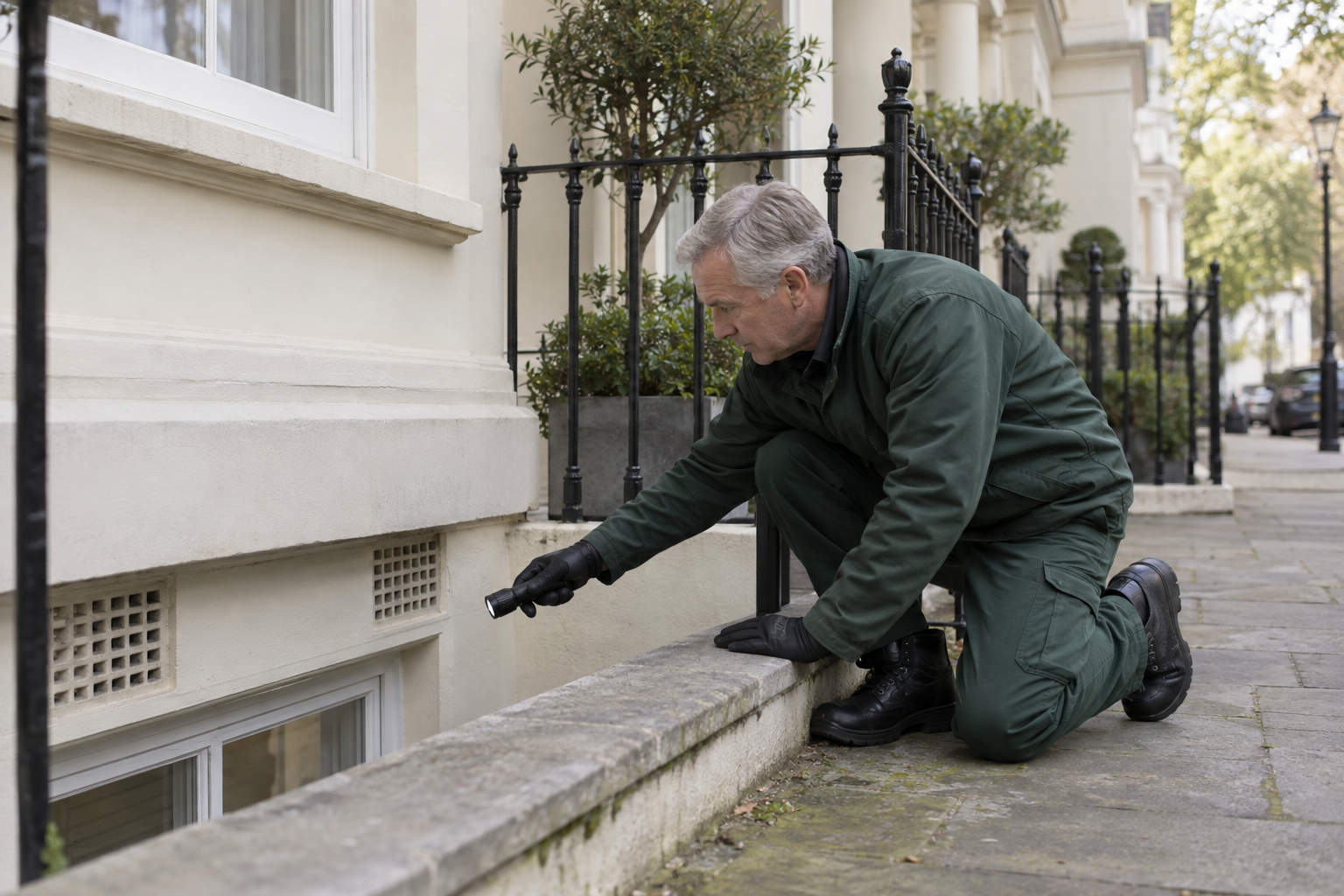
HERNE HILL · CHILDCARE WASP PLAN
A regular flight line beside a play area requires immediate separation before anyone approaches the shed. We observe the insects from a controlled distance, confirm species and nest access, and schedule treatment outside child circulation. Staff receive clear instructions for the treatment period and for deciding when the outdoor zone can be reviewed.
Repeated traffic identifies the active gap.
Stability, storage and working height are considered before application.
LOCAL CONTEXT
Homes and local commercial premises form the surrounding context, but the nursery timetable controls this visit. Arrival, outdoor play and collection periods must remain outside the treatment zone. Staff identify the first wasp flight line and keep children away without blocking the suspected entrance. Inspection observes direction, frequency and landing point from a safe position, then checks whether the nest appears to sit in a shed, eave or another structure. Indoor rooms are not treated merely because wasps feed in the garden. The manager confirms who controls the affected building and whether a landlord must authorise access. Treatment timing, exclusion distance and re-entry advice are written around the nursery’s safeguarding procedure. High work or defective roofing is referred separately. Later observations focus on activity at the same entrance, because stray foraging wasps elsewhere do not measure the treatment response.
Staff observations identify the busiest period. The technician watches repeated entry, evaluates height and checks whether treatment can reach the target without entering occupied space.
Move toys away without touching the shed, keep windows facing the route closed and communicate the boundary to relief staff. Provide allergy procedures, the collection timetable and a key holder. Do not use aerosol or seal the roof gap.
Only if the exclusion, access and product restrictions make occupancy elsewhere demonstrably safe.
Move children from concentrated wasp traffic and follow the nursery allergy procedure. Breathing difficulty or systemic reaction requires emergency medical assistance.
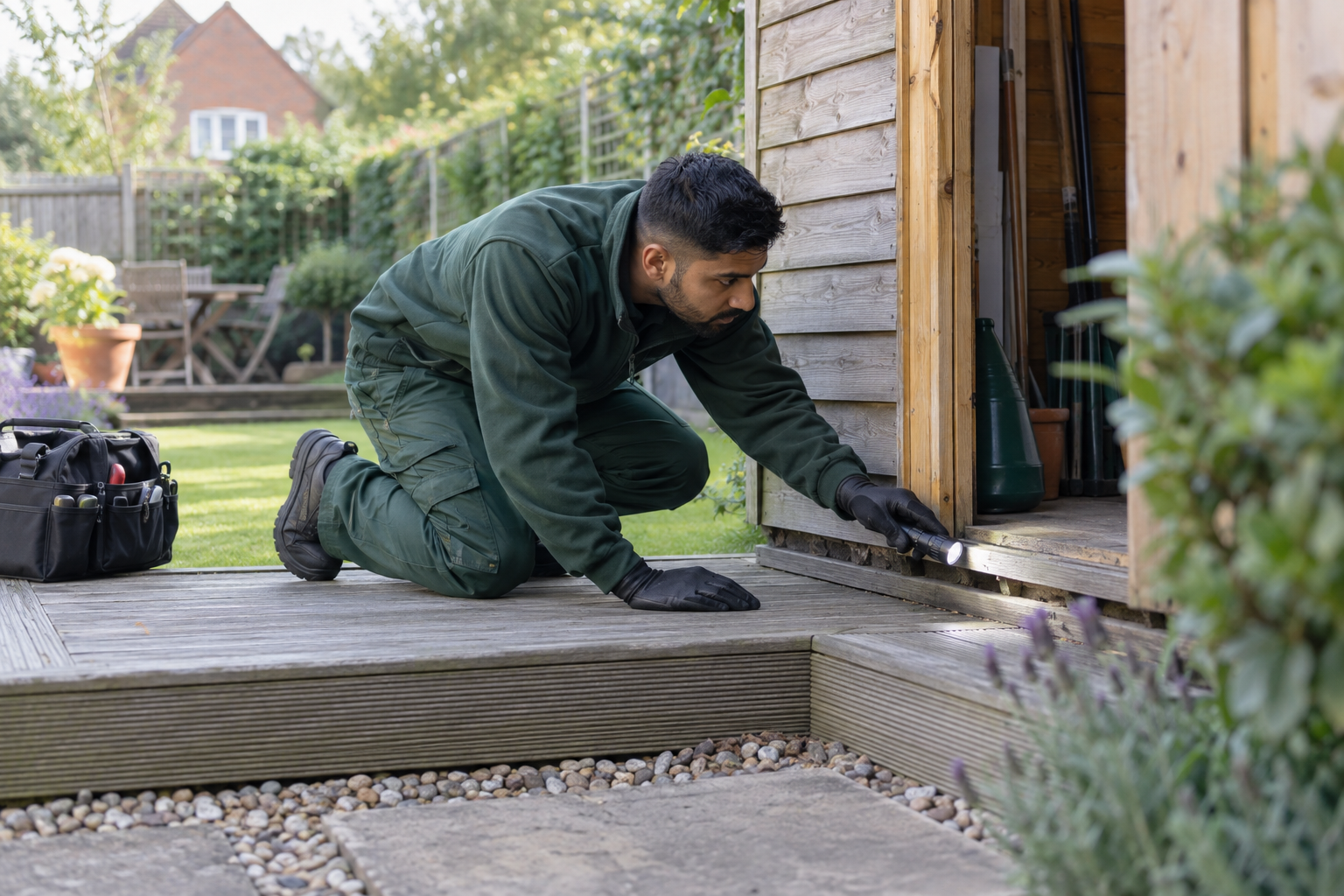
An accessible active entrance receives a targeted treatment under controlled occupancy.
Bee identification changes the plan and may lead to specialist relocation advice.
Ground trails around play equipment require a separate nest and bait assessment.
Shed droppings are investigated independently with child-safe secured control.
Occupancy and emergency procedures are agreed.
Species and entry are verified.
The exclusion zone and equipment are set.
Treatment reaches the located nest route.
Residual activity and restrictions are explained.
Flight is reassessed before normal use decisions.
Wasps cross an outdoor play boundary and staff cannot approach the roof safely.
The area is isolated, the active entry is identified and treatment is delivered outside child attendance.
Management observes the original flight line from indoors or another protected point. Reduced concentrated traffic supports reopening review; continued entry requires reassessment and no instant result is promised.
The technician explains any surfaces requiring cleaning based on actual placement.
Closure waits until the colony is no longer using the opening.
Nest cost depends on position, shed condition, access equipment and the attendance window required by safeguarding.
| Service | Starting price | Scope factors |
|---|---|---|
| Pest inspection | From £62 | Property, access and areas inspected |
| Wasp treatment | From £89 | Nest position, height and safe access |
| Rodent control | From £184 | Activity, monitoring and visits |
| Bed bug control | From £204 | Rooms, preparation and method |
| Squirrel control | From £273 | Loft access, visits and proofing |
Final scope can change with access, activity, property size, treatment method, specialist equipment and the number of visits. Confirm the current price and inclusions before booking.
They may attract additional foragers and do not treat a concealed nest.
Disturbance can agitate the colony and expose staff to concentrated stinging.
Old paper nests are not normally reused, though suitable sites can attract new colonies.
The repeated shed entry must be confirmed before ownership or source is assigned.
Tell us the flight time, roof height and childcare schedule.
Arrange a safeguarded visit