
Check sheltered edges
Shed voids, dense boundaries and stored items are examined safely.
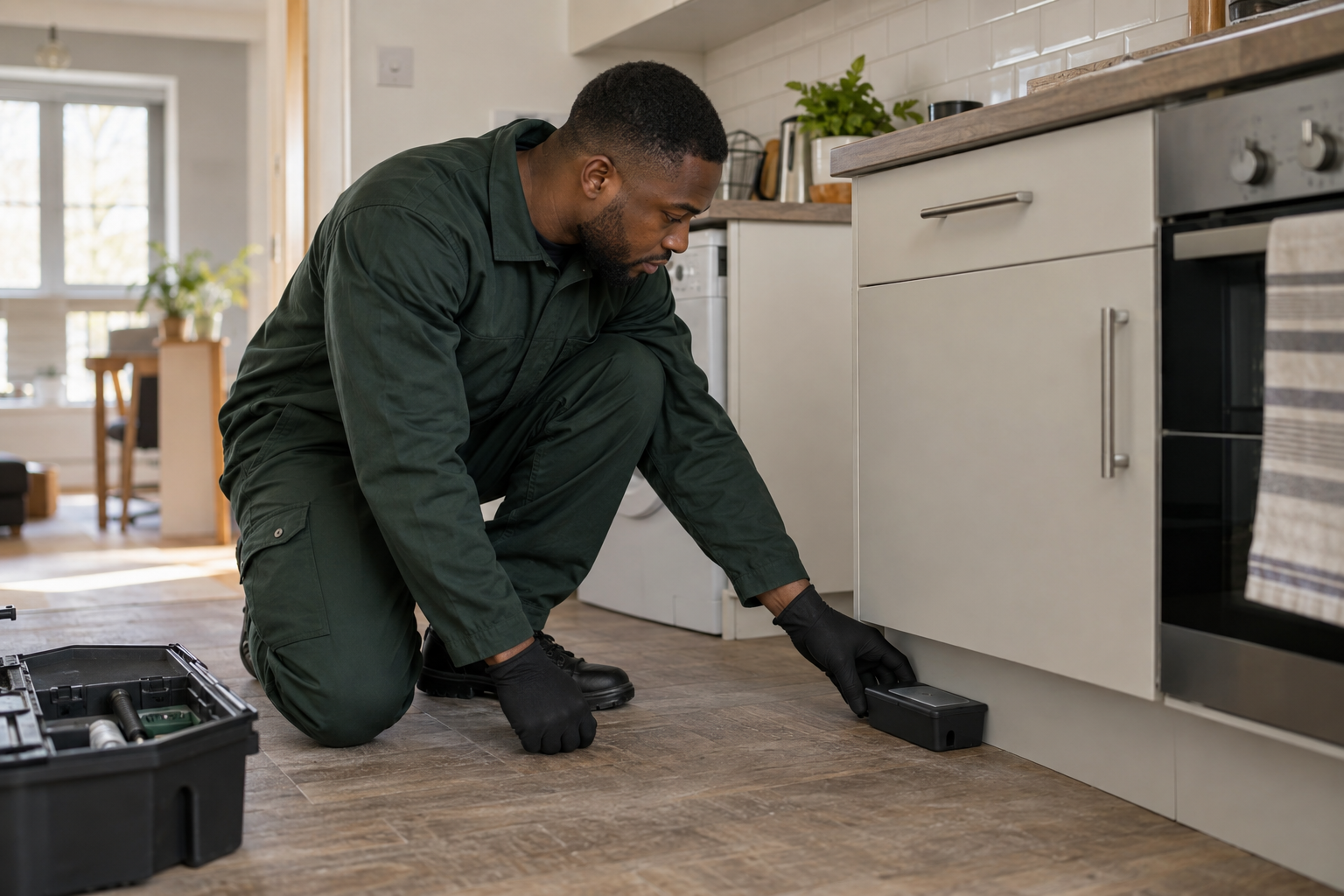
DULWICH · GARDEN RODENT MANAGEMENT
Regular feeding activity in a garden deserves action, yet outdoor sightings do not automatically justify treatment inside the house. We assess food, shelter and runs around the compost area, inspect nearby doors and air bricks, and choose protected control with wildlife, children and pets in mind. Indoor proofing is recommended only where the route is supported.
Shed voids, dense boundaries and stored items are examined safely.
Doors, air bricks and pipes are checked for independent entry evidence.
Protected control targets established runs while food availability and harbourage are reduced.
Small indoor signs require their own service-gap survey rather than being attributed to garden rats.
Daytime feeder visits are distinguished visually from ground rodent activity.
Compost insects or a shed nest are identified separately before any treatment.
LOCAL CONTEXT
Dulwich includes houses, flats, gardens and local businesses. For this home, the compost position, feeder spill and relationship between shed and kitchen determine the work; they do not establish where the rats originated. Indoor droppings or damage are mapped separately from burrows and garden sightings. We inspect the nearest door, low service entries and accessible shed edges for a continuous route. Compost and feed are managed without erasing tracks needed for assessment. Secured control protects pets and wildlife, and drain involvement is raised only when evidence justifies specialist testing. Garden construction or door repair belongs to the relevant contractor. Review compares fresh internal signs, protected devices and changes at the suspected outdoor route before suitable durable entry proofing is completed.
Runs and burrows are compared with resource points so control does not simply displace activity across the garden.
Pause ground feeding, sweep seed spill and stop adding cooked food to compost. Photograph runs before moving stored materials. Keep pets away from burrows and tell the technician about ponds, chickens or wildlife visitors that affect safe placement.
The immediate aim is to prevent accessible spill while control and habitat changes are reviewed.
A rat inside a living room, gnawing near services or contamination of stored food changes the priority. Keep people and animals away from the affected room.

Rats feed predictably below the bird station, but the household does not know whether they approach the house.
Food spill is reduced, active runs receive protected control and the kitchen boundary is inspected for separate evidence.
Fresh prints, burrow use and station contact are compared with the starting map. Decline supports the combined plan; movement elsewhere prompts repositioning or further habitat work without assuring permanent garden absence.
Food and water points are marked.
Active tracks and burrows are distinguished from old holes.
The nearest structural boundary is checked independently.
Secure stations are positioned against evidenced travel.
Storage, vegetation and compost changes are prioritised.
Fresh tracks and consumption are compared at return.
Often a secure container and suitable contents are more practical than complete removal.
Only with their permission; your property plan remains based on evidence within authorised access.
Garden scope depends on area, safe station positions, review visits and any distinct building-proofing requirement.
| Service | Starting price | Scope factors |
|---|---|---|
| Pest inspection | From £62 | Property, access and areas inspected |
| Wasp treatment | From £89 | Nest position, height and safe access |
| Rodent control | From £184 | Activity, monitoring and visits |
| Bed bug control | From £204 | Rooms, preparation and method |
| Squirrel control | From £273 | Loft access, visits and proofing |
Final scope can change with access, activity, property size, treatment method, specialist equipment and the number of visits. Confirm the current price and inclusions before booking.
Tracks support assessment but should be read with droppings, burrows, feeding and sightings.
Predators do not reliably control a food-supported rodent population.
Abrupt disturbance can change movement, so habitat work should be sequenced with control.
No, though accessible food and shelter can make them attractive.
Outdoor and indoor evidence need separate answers.
Arrange a garden assessment