
Mark the nest entry
Repeated inward and outward movement identifies the active point.
GREENWICH · ROOF-TERRACE WASP PLAN
Wasps entering a planter may nest within soil, a hollow base or a gap behind the fixed structure. We separate guests from the flight line, confirm the species and observe the exact entry before anything is moved. Treatment, access and reopening advice are planned around terrace circulation, food service and the risk of agitating a concealed colony.
Repeated inward and outward movement identifies the active point.
Drainage, hollow bases and fixed panels are reviewed without dismantling.
LOCAL CONTEXT
For this Greenwich venue, inspection begins with the observed flight line, landing point or fresh activity around a named planter, parapet or wall opening. Staff accounts help establish timing, but species and nest position require direct evidence from a safe viewing point. Tables, customers and food-service areas are kept outside the working zone while activity is assessed. The survey covers accessible terrace features and the visible approach to the suspected opening; it does not include an unseen roof void or neighbouring elevation without safe access and authority. Moving a fixed planter, opening cladding or working beyond a parapet requires the venue controller and, where necessary, a competent access contractor. Treatment choice depends on identification and whether the nest is exposed, concealed or outside the managed boundary. The business manages temporary closure and customer separation, while the building manager approves work to shared fabric. Follow-up checks the recorded entrance for continuing traffic rather than relying on insects seen elsewhere outdoors.
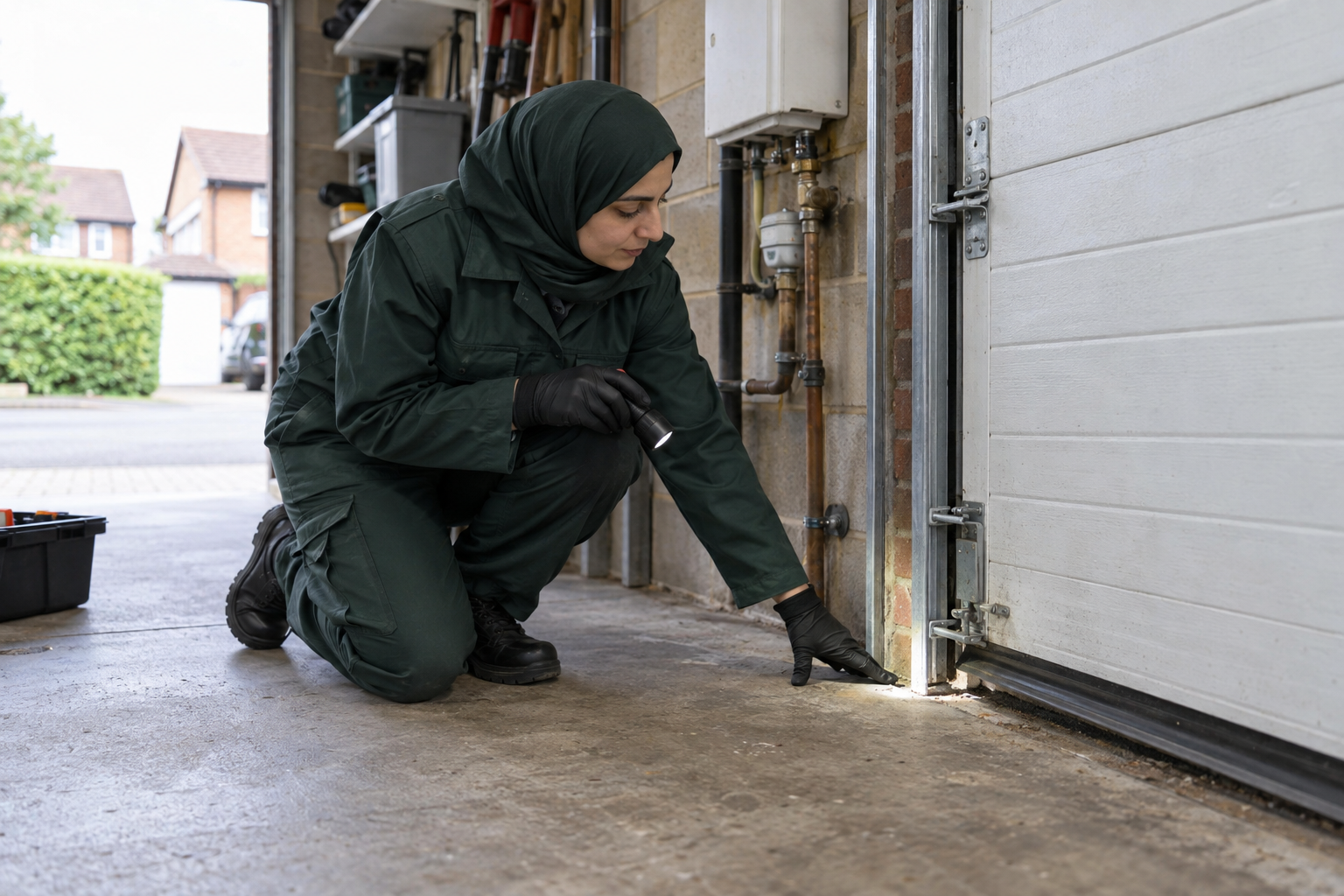
The technician watches repeated flight from a protected point, distinguishing foraging around drinks from entry into a nest space.
Stop service around the planter, remove open food and drinks, and ask staff not to swat insects or pour liquid into the soil. Provide the terrace layout, planter ownership, drainage information and access procedure. Do not drag the container or seal visible holes.
No, covering may trap or redirect wasps into the occupied terrace.
Move guests away from concentrated activity and follow the venue’s first-aid process. Breathing difficulty or systemic reaction needs urgent medical care.

A confirmed accessible nest route receives targeted treatment with the terrace kept controlled.
Bee identification changes the response and may require specialist colony advice.
Soil trails around planters need a separate species and bait assessment.
Insects attracted to drinks or waste are managed through source hygiene rather than nest treatment.
Roof-terrace fouling and roosting call for another survey focused on ledges and exclusion.
Service times and alternative guest routes are agreed.
Species and active entry are verified.
The planter base and safe reach are considered.
A suitable application reaches the located nest route.
Residual activity and exclusion limits are explained.
Original flight is reassessed before normal seating decisions.
Wasps gather near diners, but attraction to food has not been separated from a concealed nest.
Seating is moved, repeated entry confirms the planter route and treatment targets the supported colony position.
Staff observe inward and outward flight from a protected location over the advised period. Reduced concentrated traffic supports reopening review; continued entry triggers reassessment and no immediate zero count is promised.
The technician advises timing once the entry and treatment method are known.
That depends on separation from the treatment zone and the venue’s operating assessment.
Roof-terrace pricing depends on nest location, planter construction, access controls, treatment method and whether a return assessment is needed.
| Service | Starting price | Scope factors |
|---|---|---|
| Pest inspection | From £62 | Property, access and areas inspected |
| Wasp treatment | From £89 | Nest position, height and safe access |
| Rodent control | From £184 | Activity, monitoring and visits |
| Bed bug control | From £204 | Rooms, preparation and method |
| Squirrel control | From £273 | Loft access, visits and proofing |
Final scope can change with access, activity, property size, treatment method, specialist equipment and the number of visits. Confirm the current price and inclusions before booking.
Some species use ground cavities, while others occupy hollow construction around the container.
Disturbing roots or the base may provoke concentrated defensive activity.
Foraging attracts wasps, but repeated entry to one point supports a nest investigation.
Method and placement are selected with planter material and vegetation in mind.
Only after active use has ended and closure will not trap the colony.
Building rules and safe work positioning apply even when the planter sits at floor level.
Those details determine safe observation and access.
Plan a terrace wasp visit