
Check service edges
Authorised riser faces and pipe penetrations are assessed.
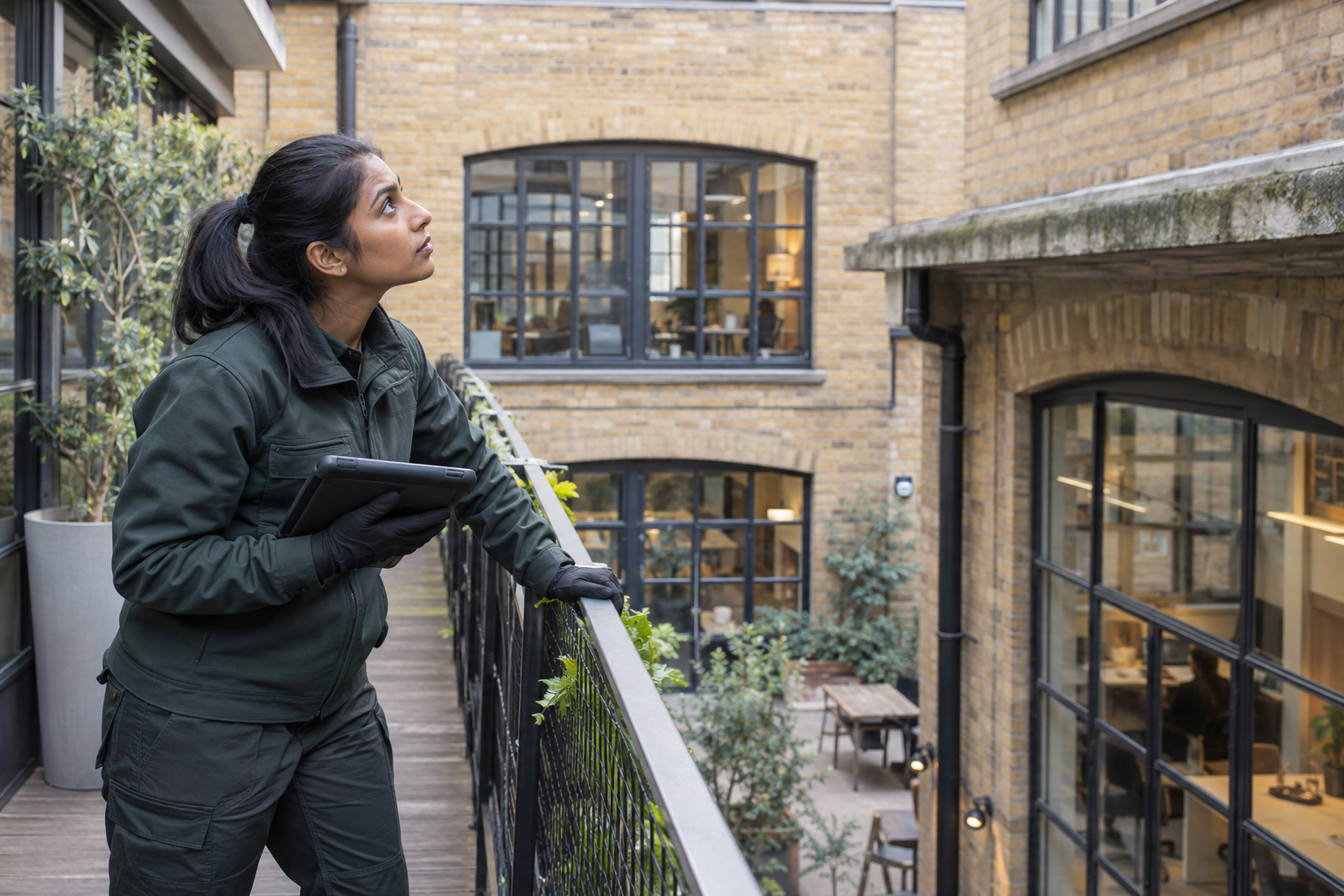
ELEPHANT AND CASTLE · MANAGED-BLOCK RESPONSE
A corridor sighting beside a refuse room should be investigated without assuming every nearby apartment is affected. We inspect the shared threshold, review waste handling and place protected monitoring where facilities authorise it. Residents receive clear checks for their own utility cupboards, while communal proofing remains coordinated through building management.
LOCAL CONTEXT
Managed apartments, estates and retail premises form part of the area, but the inspection depends on this building’s access. Concierge procedures, refuse chutes and locked risers define what can be checked. A sighting beside one lift door is logged with its floor, time and direction before staff clean the space. We then inspect accessible skirting edges, service cupboards and the refuse route for droppings, rub marks or gnawing that could support rodent activity. Private flats are outside scope unless an occupier reports evidence and grants access. Control points in shared areas must be secured, numbered and protected from residents, pets and cleaning equipment. Facilities receive separate notes for door seals, service gaps or chute defects, so treatment is not confused with building repair. Follow-up compares the same marked positions rather than relying on general concierge recollection.
The technician starts at the corridor point and searches for directional marks, shelter and food before requesting entry elsewhere.
Keep the refuse room locked under normal policy, record the floor and sighting time, and ask cleaners not to remove labelled monitors. Residents should photograph any internal signs and avoid placing loose bait. Provide loading-bay and riser access rules.
No; communication may be broad, but inspection and control follow unit-specific evidence.
Call promptly when a rodent enters a flat, nursery space or retail food premises. Facilities should isolate contaminated waste areas and preserve safe circulation.
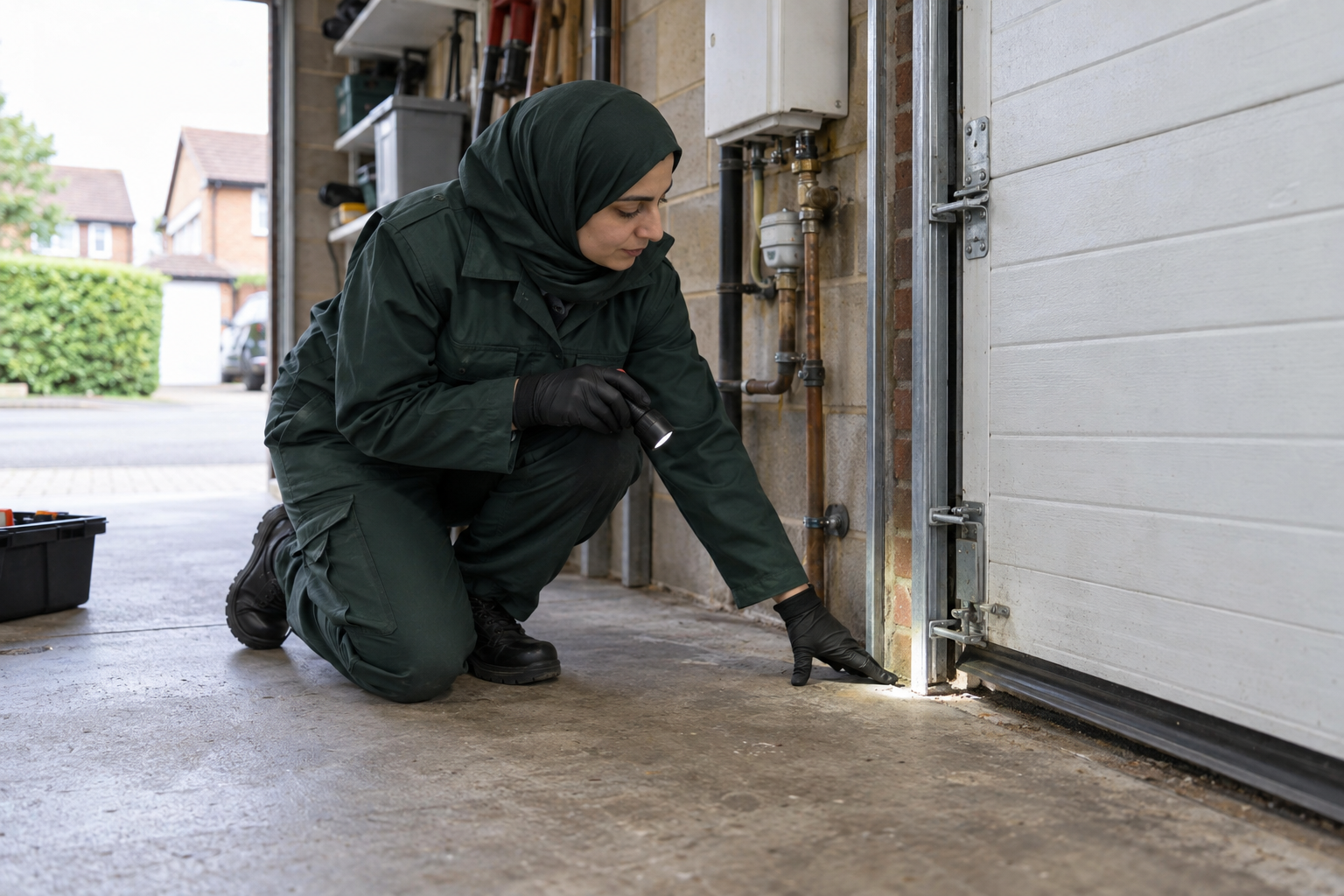
Authorised riser faces and pipe penetrations are assessed.
Utility cupboards receive simple evidence instructions rather than preventive treatment.
Secured devices test corridor movement while any flat treatment requires separate internal evidence.
Larger signs near loading or lower waste areas trigger a ground-level route assessment.
Warm chute rooms need insect monitoring when specimens or spotting support that concern.
Waste moisture and cleaning failures are addressed at source instead of relying on space spray.
One resident has a clear sighting, but management lacks marks or reports from other units.
Shared areas are inspected, secured monitoring establishes direction and residents receive a consistent reporting route.
Fresh signs and device contact are reviewed floor by floor. No further corridor evidence narrows concern; a capture beside a riser identifies another access need without guaranteeing block-wide clearance.
The incident and access permissions are confirmed.
Waste and corridor edges are inspected.
Devices test travel direction safely.
Only reported flats enter further inspection.
Confirmed communal gaps are documented.
New contact is compared by location and date.
Managed-block scope reflects communal access, protected devices, floors included and scheduled reviews.
| Service | Starting price | Scope factors |
|---|---|---|
| Pest inspection | From £62 | Property, access and areas inspected |
| Wasp treatment | From £89 | Nest position, height and safe access |
| Rodent control | From £184 | Activity, monitoring and visits |
| Bed bug control | From £204 | Rooms, preparation and method |
| Squirrel control | From £273 | Loft access, visits and proofing |
Final scope can change with access, activity, property size, treatment method, specialist equipment and the number of visits. Confirm the current price and inclusions before booking.
Only the nominated trained contact should make the agreed external check without moving it.
The building team must protect fire-stopping and services through an appropriate contractor.
No, route marks and monitored movement are needed before assigning the source.
Edges may conceal droppings or rub marks, so they are lifted during an authorised survey.
Loose product creates unacceptable access and non-target risks in communal space.
Management records unit, floor, time and exact location rather than counting rumours.
A precise shared-space sighting helps management target access.
Arrange a block inspection