Need pest control in Chelsea? Start with what you have seen, heard or found. We inspect the affected space and the routes that may connect it to the rest of the property, then explain the evidence in plain English. The aim is a proportionate plan—not an automatic treatment based on a postcode or a guess.
The Royal Borough of Kensington and Chelsea describes the Chelsea Conservation Area as strongly residential, with many single-family houses representing development from the 1830s onwards. The wider area also includes converted homes, mansion blocks, modern apartments and mixed-use premises. For pest control, the useful point is simple: the room where activity appears may connect to a basement, riser, refuse space or commercial unit. We use that context to choose inspection points, not to predict a pest from the postcode. Where proofing affects shared or protected fabric, the landlord, managing agent or an appropriate contractor may need to approve the work.
FINDING THE SOURCE
Where we would look first
+
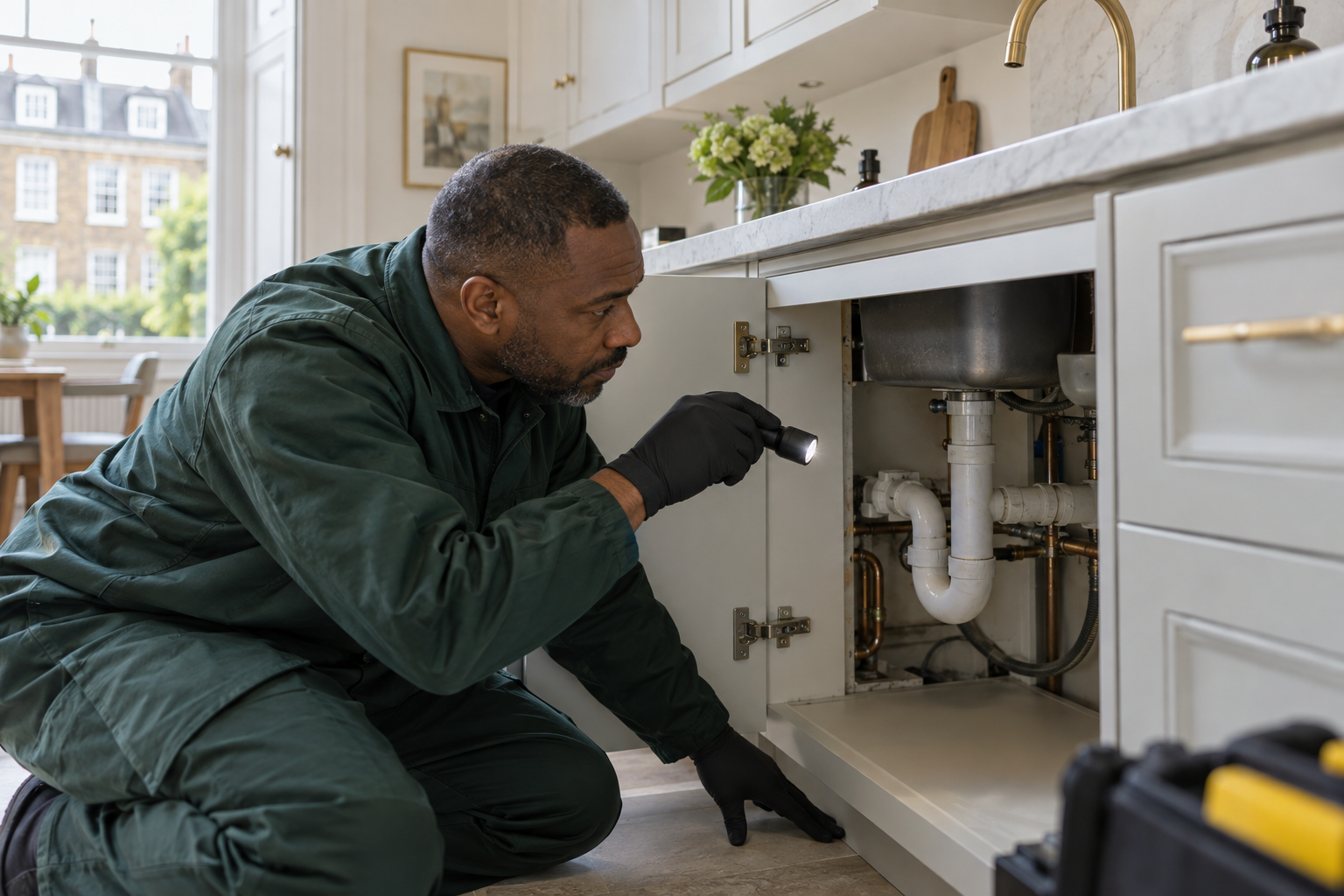
The first room where signs appeared, including edges hidden by fitted cabinetry
+
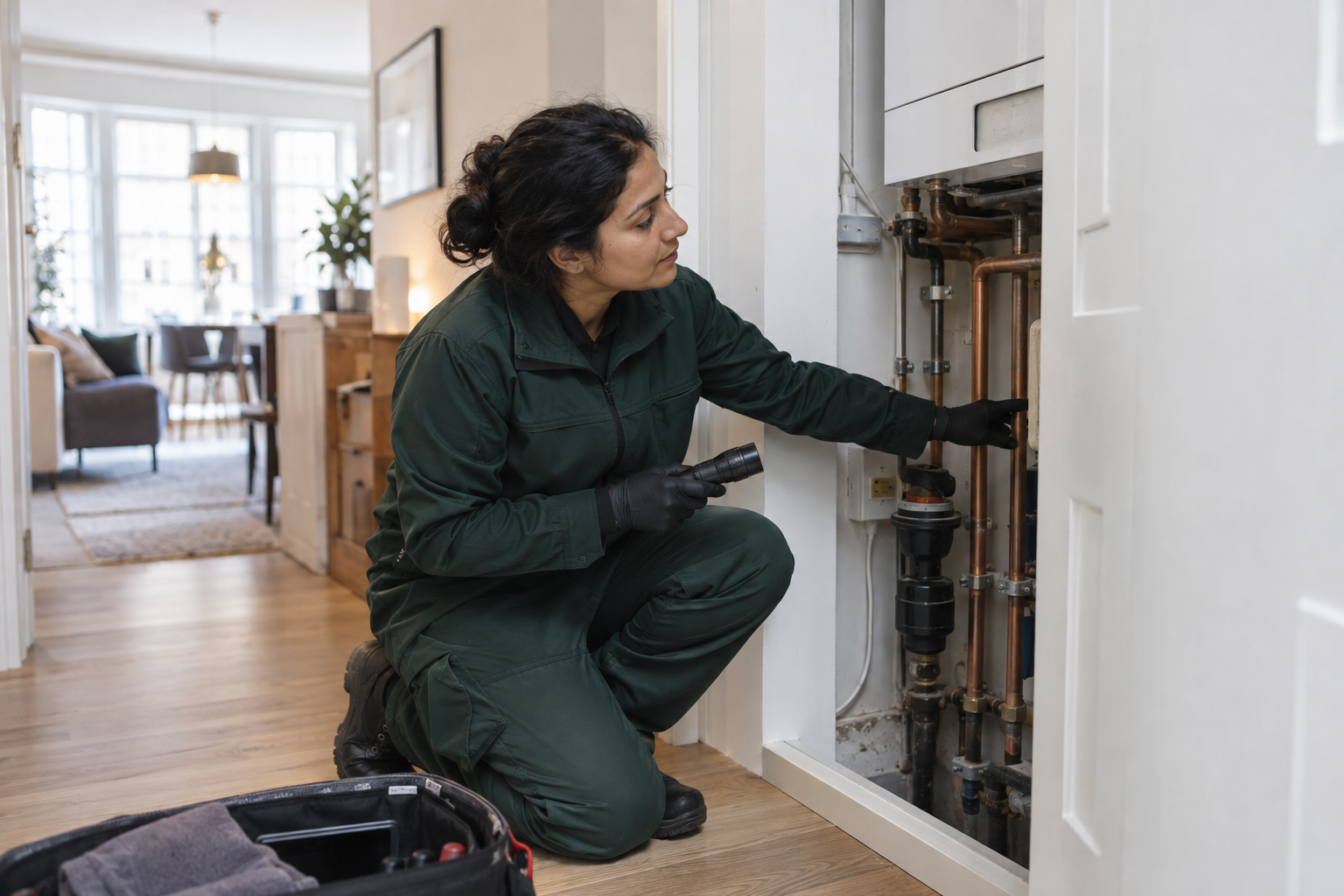
Pipe, cable and heating penetrations linking kitchens, bathrooms or lower floors
+
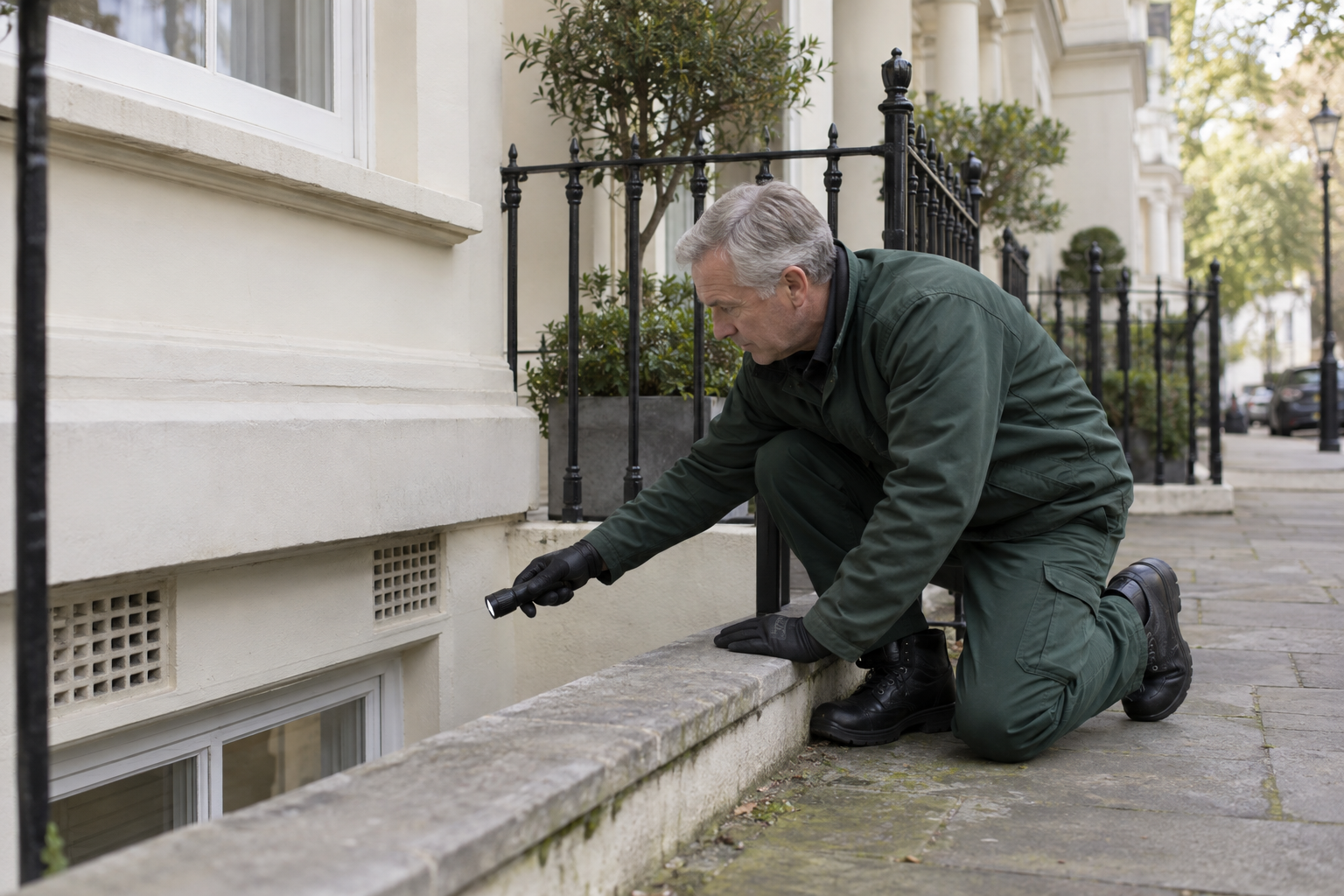
Basement doors, light wells, coal-hole remnants and lower-ground service access
+
Refuse storage, delivery routes and rear access serving mixed-use premises
+
Accessible risers or communal spaces when several flats may share a route
+
Balconies, ledges and roof details when the report concerns birds or squirrels
PEST PRIORITIES
Services relevant to different signs
Mice in fitted kitchens
A small dropping pattern can disappear behind units while the active route continues around pipework. We map fresh signs, check food and nesting opportunities, place control where it can be monitored and delay closure of uncertain routes. Follow-up establishes whether activity has reduced before proofing is completed.
Rats at lower-ground level
We compare internal signs with doors, light wells, service entries, refuse arrangements and credible drainage clues. Control points are selected for safety and relevance, not scattered around the property. Persistent drainage evidence may require a drain specialist rather than repeated baiting indoors.
Bed bugs in bedrooms or guest rooms
Bites cannot confirm bed bugs.Inspection looks for spotting, cast skins, live insects and harbourage around beds, headboards and nearby furniture. If evidence is confirmed, the treatment scope, preparation, re-entry advice and need for repeat work are explained before anything is applied.
Cockroaches around food areas
Warm equipment, moisture, storage and connecting service spaces are inspected together. Monitors can help define the active harbourage; targeted bait or another suitable method can then be placed where the insects travel. Cleaning and moisture correction support control but do not replace it.
Pigeons on ledges and balconies
We establish where birds settle, how fouling affects occupied areas and whether safe access is possible. Cleaning, exclusion or deterrent work must be scoped around height, fixing surfaces and building permission; it is not treated as a quick indoor callout.
BEFORE WE ARRIVE
Prepare the useful details
Leave the evidence as undisturbed as practical until it can be assessed. Note the date, time and exact room for sightings or sounds; a short phone video can be helpful when it is safe to take one. Clear access to sink cupboards, service boxes or the edge of the affected room, but do not dismantle fitted furniture. If the property is managed, ask who can open a riser, basement, bin store or plant area. Tell us about children, pets, food preparation, vulnerable occupants and any treatment already used. Do not seal a hole when an animal may still be inside, and do not move potentially affected bedroom items into another room.
THE VISIT
What can happen during a visit
Reconstruct the report
We establish where the first sign appeared, how often it has repeated and whether building work, deliveries or a change of occupier coincided with it.
Read the room
The technician checks the affected area for pest-specific evidence rather than beginning with a property-wide treatment.
Follow credible connections
Pipe runs, thresholds, storage edges and authorised shared spaces are considered only where they fit the evidence.
Separate fact from possibility
You are told what was found, what it is likely to mean and which areas could not be accessed. Uncertainty is not hidden.
Apply the agreed control
Monitoring, bait, traps or an insect treatment is selected for the identified pest and positioned safely. We do not substitute a general spray for diagnosis.
Review before proofing
The expected response and follow-up point are explained. Once control is demonstrated, relevant entry points can be prioritised without trapping or diverting activity.
The sequence for a Chelsea visit follows the pest, available access and evidence; unnecessary steps are not added.
BEFORE / WORK / AFTER
From scattered signs to a traceable control plan
BEFORE
Before work, the useful picture may be incomplete: a few droppings behind one Chelsea kitchen unit, an occasional night sighting or a report from a second flat without access to the shared riser. Photographing positions, distinguishing fresh from old evidence and recording which spaces are controlled by the occupier or manager creates a reliable starting point.
THE WORK
The technician links the evidence to accessible routes, places the agreed monitors or control devices and records relevant gaps rather than sealing everything immediately. For insects, the confirmed harbourage and occupied rooms define the treatment and preparation. Shared-space findings are separated from work that can be completed inside the booked premises.
AFTER
After treatment, monitoring or proofing, compare the same locations rather than relying on a general impression. Observable change may include fewer or no fresh droppings at marked points, unchanged monitors, no further captures, declining insect counts or the absence of new disturbance around a repaired entry. Continued evidence means the route, adjoining area or treatment scope should be reviewed; it is not concealed behind a claim of instant success.
COST CONTEXT
Current starting prices
Pest / service
Typical starting price
What affects the price
Pest inspection
From £62
Property, access and areas inspected
Wasp treatment
From £89
Nest position, height and safe access
Rodent control
From £184
Activity, monitoring and visits
Bed bug control
From £204
Rooms, preparation and method
Squirrel control
From £273
Loft access, visits and proofing
What can change the final cost?
The final quote can change with the extent of activity, property size, access, number of visits, treatment method and any proofing. Commercial scheduling, specialist height access or work in communal areas may also affect scope. Starting prices are a guide, not a fixed quotation. Confirm the current price and what is included before booking.
WHEN TO ACT
When should you call promptly?
Contact us promptly when a rodent is loose in an occupied room, fresh gnawing is close to electrical services, pest evidence affects exposed food, or a wasp flight path makes an entrance unsafe. A suspected bed bug does not normally require hazardous last-minute spraying; isolating affected belongings and arranging correct identification is more useful. If a sting causes breathing difficulty or another severe reaction, contact emergency medical services rather than waiting for pest control.
Can one flat be inspected without treating the whole building?
Often yes. The visit can begin in the reporting flat, although the findings may show why a riser, neighbouring service area or communal space also needs authorised access.
What should a managing agent provide?
A site contact, keys or permits for relevant shared areas, information about earlier reports and clarity on who may approve proofing work.
Can a shop and the home above be considered together?
Yes, when access is arranged. Their responsibilities may differ, but service routes, waste areas and voids can cross the divide between uses.
Will period features be damaged during inspection?
The inspection is visual and targeted. We do not open protected fabric or carry out invasive work without a separately agreed and authorised scope.
NEARBY COVERAGE
Other areas we cover nearby
RELATED SERVICES
USEFUL DETAILS
Questions before booking
Can work begin if the managing agent has not opened the riser?
Work inside the booked premises may still be possible, but the inspection record will state what could not be checked. If the evidence points towards the locked riser, access should be arranged before further treatment is assumed to be useful.
How should a Chelsea restaurant protect service during an inspection?
Tell us the preparation, delivery and customer times when booking. Food must be protected and relevant equipment edges accessible; the technician will explain whether the selected method imposes any restriction before it is used.
Who decides whether a period external gap can be altered?
The owner or managing party should confirm the building permissions. We can describe the pest-control relevance of the opening, but consent for work to protected or shared fabric sits elsewhere.
What evidence should be checked between rodent visits?
Use the agreed reference points: dated droppings locations, monitors, captures, food disturbance and fresh gnawing. Avoid moving devices or cleaning away new evidence before it is recorded.
YOUR NEXT PRACTICAL STEP
Tell us what you noticed.
Share the full postcode, property type and the clearest sign you found. We will ask focused questions and explain whether inspection, treatment or monitoring is the sensible next step.
Homes & businessesLondon & M25Clear scope before work