
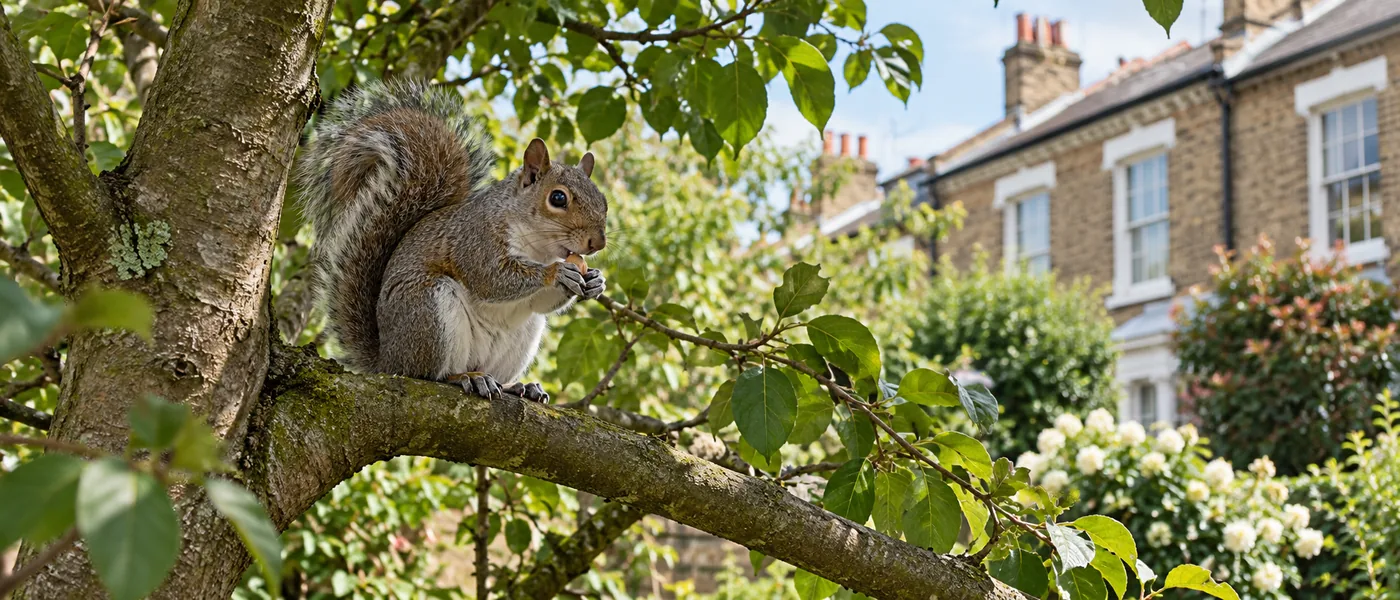
A humane-looking live trap can create a difficult situation for a householder. You catch a grey squirrel in the loft or garden, then naturally want to move it to a park or woodland. In England, that is not an ordinary lawful option. GOV.UK says it is an offence to keep or release some wild animals, including grey squirrels, after capture. It advises seeking professional help if you are unsure which animals may be controlled or how to use control methods correctly.
This article addresses grey squirrels in England. It does not provide instructions for trapping, killing or relocating an animal. The safest decision is usually made before a trap is set: identify the species, understand why it is in the property, and choose a lawful, welfare-conscious plan that also closes the access route.
Why the species matters
The legal position is not the same for every animal seen near a roof. Grey squirrels are a non-native invasive species in Great Britain; native red squirrels have a different conservation status. A photograph taken at a distance may help a professional with identification, but do not assume that every small animal in a loft is a squirrel. Rodents, birds and bats can also use buildings, and each raises different legal and practical questions.
If you can see the animal safely, note its appearance, where it enters and when it is active. Do not handle it or open a cage to check its markings. If you suspect a bat, stop and seek specialist advice: bats and their roosts are legally protected, including when the roost is inside a home. Wild bird nests have protection while in use or being built. An inspection is therefore a more reliable starting point than selecting a trap based on a noise.
What the grey squirrel release rule means in practice
Moving a captured grey squirrel to another patch of woodland is still a release. A well-intentioned journey does not remove the legal restriction. Nor does keeping the animal at home while you decide what to do offer a simple answer. GOV.UK specifically warns against keeping or releasing certain captured species and says captured grey squirrels must be killed humanely. The welfare of the captured animal and the safety of people and other wildlife both matter.
If an animal is already in a trap, avoid improvising. Keep children and pets away and contact a competent professional promptly for advice on the lawful next step. Do not transport the trap in a car, abandon it in a public place or leave the animal without attention while trying to research options. If the trap is not yours, contact the person responsible rather than interfering with it. Exact handling should be guided by someone able to identify the animal and assess the circumstances.
A professional squirrel control visit can explain the method, monitoring and follow-up relevant to your property. Ask how non-target animals will be protected, who will inspect any equipment and what happens if the wrong species is encountered. You should be comfortable with the answer before work starts.
Trapping is only one part of a roof-space problem
Removing an individual animal does not repair an opening. Another squirrel may find the same route if the roof edge, soffit or flashing remains damaged. An animal may also have dependent young inside, which changes the welfare considerations. Closing a gap while animals remain in the loft can trap them and make the situation worse. These are reasons for a survey of the entire access route before any permanent proofing.
From a safe position on the ground, watch for repeated movement to and from the roof. Photograph visible damage around eaves, fascia boards or an extension joint. Do not climb onto the roof or remove tiles to investigate. A pest inspection of the property can distinguish current activity from old damage and identify whether a roofer or electrician is also needed.
Ask for the treatment and building work to be sequenced in writing. A clear plan should answer three questions: how the species and occupancy have been established; when and how control will take place; and which specific openings will be repaired afterwards. It should also describe follow-up checks. A promise to “remove squirrels” without explaining the roof route is incomplete.
Why a household trap may create more risk than expected
A trap can catch the wrong animal, including protected wildlife or a neighbour’s pet. Placement and checking matter to animal welfare. A stressed wild animal can bite or scratch if someone tries to handle it, and a cage left exposed to heat, cold or rain can cause suffering. Homeowners may also lack a lawful plan for the captured animal. These are practical reasons to seek expert advice before buying equipment, quite apart from whether a trap appears easy to use.
Avoid poison or improvised deterrents in a roof void. Products used for pest control must be suitable for their intended use and applied in accordance with their label. Uncontrolled use can expose other animals and people, and may leave a carcass in an inaccessible space. HSE’s guidance on biocides makes the product label and authorised use central to safe application.
Prepare useful information for a professional
You can make the visit more productive without touching the animal. Record the first date of activity, the times you hear it, the part of the building involved and any visible entry point. Mention recent roof work, a loose tile, overflowing gutter or previous repairs. If you have a safe photograph, share it. Tell the professional about pets, children and any known bats or nesting birds around the building.
If you live in a flat or terrace, clarify who controls access to the roof and who can authorise repairs. A building manager may need to coordinate the roofer and pest contractor. The relevant paperwork should identify what was treated, what was repaired and what remains to be done. This avoids the common gap between animal control and a durable building repair.
The practical answer
Do not plan to release a trapped grey squirrel elsewhere in England. The government’s published guidance says that doing so is an offence. If you have already caught an animal, obtain prompt professional advice rather than trying to improvise a solution. If the problem is still at the stage of noises or sightings, begin with identification and a property inspection. Lawful control, animal welfare and sound proofing need to be considered together; none is solved by a cage alone.
Avoid advice copied from another country
Online videos often recommend taking a live-caught squirrel to a woodland several miles away. They may describe rules in another jurisdiction or omit the species entirely. Before acting on such material, check official guidance for England and the precise animal involved. A method that looks gentle in a short video can cause suffering if a trap is left exposed, checked too infrequently or catches a non-target animal. It also does nothing to close the roof opening that made capture possible.
If a neighbour has set a trap in a shared garden, discuss the concern without handling it yourself. Ask who is responsible for checking the equipment and whether they have a lawful plan for any captured animal. Where the species cannot be established safely, seek professional identification. These questions focus on immediate welfare and legal responsibilities without encouraging a homeowner to improvise a control method.