
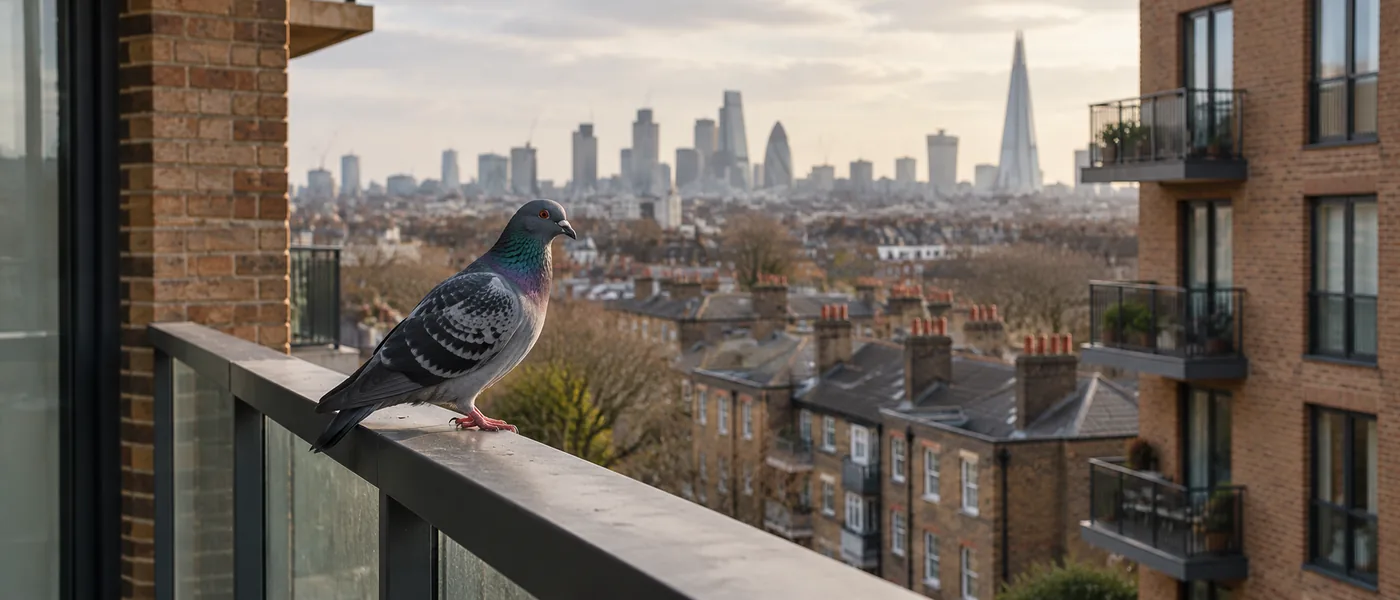
A pigeon that pauses on a balcony rail is not necessarily a lasting problem. Repeated visits, nesting material in a corner and a growing layer of droppings are different. London balconies often have sheltered ledges, planters and overhead cover that make them attractive resting places. A solution needs to address the exact place birds settle while respecting neighbours, the building and wildlife law.
Start by separating an occasional visitor from an established roost. Note how many birds arrive, at what times and where they land. Take photographs from inside the flat if safe. A few days of observations can reveal whether the issue is a railing, the recess behind an air-conditioning unit, a planter or a neighbouring ledge. That detail matters because the right deterrent for a narrow rail may be unsuitable for a whole open balcony.
Remove the reasons birds choose the space
Food is the first thing to review. Do not feed pigeons on the balcony, and check whether spilled birdseed from a nearby feeder is accumulating. Put food waste in closed containers and clean crumbs from outdoor dining. Pigeons also use sheltered, undisturbed corners. Move unused pots, boxes and furniture where practical so a corner is easier to inspect and clean. Avoid filling a balcony so densely that droppings or nesting material go unnoticed.
Water can be another draw. Empty standing water from trays and containers, and repair a drip if it falls within your control. These steps will not necessarily stop birds using a favoured architectural ledge, but they reduce avoidable attractions and make further action more effective.
Do not throw objects at birds, use sticky substances or install a device that could trap them. A deterrent must be appropriate to its setting and maintained. Poorly fitted netting, for example, can entangle birds or create an enclosed space they cannot escape. Site-specific pigeon control advice is preferable to buying a random product and attaching it to shared building fabric.
Check for a nest before moving anything
This is the point where a routine tidy-up can become a legal issue. In England, wild birds and their eggs are protected. Natural England’s guidance says it is an offence intentionally to take, damage or destroy a wild bird’s nest while it is being used or built. That applies even if the nest is on your balcony. The safest course is to stop work near a suspected active nest and obtain advice before removing materials or installing deterrents.
Do not assume that a particular month is automatically safe. Birds may breed at different times, and the relevant question is whether the nest is being used or built. A professional survey can establish the situation and plan lawful timing. Some activities may require a licence in specific circumstances; a general dislike of pigeons is not itself a licence. The building manager or freeholder should know about an active nest before contractors are sent to the site.
Clean droppings with exposure in mind
A small amount of fresh soiling on an accessible surface is different from a thick, dry accumulation around a nest or vent. Avoid dry brushing or vacuuming deposits that could raise dust. Keep children and pets away from the affected area. For extensive deposits, awkward access, contamination near air intakes or a surface that cannot be cleaned safely from the balcony floor, ask for professional cleaning advice.
Cleaning should happen after the cause has been addressed or it may need to be repeated immediately. The assessment may include removing loose debris, cleaning affected surfaces and checking whether balcony drainage is blocked. Never lean over a rail to reach outside ledges. Falling from height is a far more immediate danger than an untidy ledge.
Once the area is clean, look for new deposits. Their position will help identify whether birds are returning to the same perch or arriving from another part of the building. This evidence can guide building-specific proofing rather than covering the balcony with unnecessary hardware.
Speak with the people who control the building fabric
In a block of flats, the rail, façade, roof and external ledges may be common parts. A lease or tenancy agreement can restrict what an occupier may fix to them. Before installing spikes, wires or netting, tell the managing agent or landlord where birds are landing and share photographs. Ask who can authorise work, whether other flats report the same issue and whether a coordinated survey is planned.
A balcony-only intervention may fail if birds simply move a metre to a neighbouring ledge and continue fouling your space. Conversely, a building-wide response may be unnecessary for one small corner. The decision should be based on the actual roosting pattern, access for maintenance and the appearance of the façade. If the building is listed or subject to other controls, obtain the appropriate property advice before altering it.
Agree who will inspect and maintain any deterrent. Netting can loosen, fixings can corrode and debris can build up behind a poorly designed installation. A proposal should describe materials, access method, wildlife checks and what happens if a bird becomes trapped. It should also explain the cleaning scope separately from the installation scope.
Choose a proportionate remedy
For an open balcony with occasional visitors, food management, regular cleaning and removing sheltered clutter may be sufficient. A persistent roost on a particular ledge may call for a carefully designed physical deterrent. A broad opening under an overhang may need another approach. There is no universal product that suits every balcony, and a device should not obstruct ventilation, drainage, fire escape or safe use of the space.
After work, monitor for several weeks. Photograph new droppings or landing points and report any loose fixings promptly. If birds move to another part of the block, share that evidence with the manager before extending the installation. The aim is to make the building less attractive for roosting without creating a hazard or interfering with protected nesting activity.
An effective balcony plan begins with observation and an occupancy check, then moves to cleaning, authorisation and proportionate deterrence. That order is especially important in a flat, where the cause and the remedy may cross property boundaries.
If you rent, keep your report factual and dated. Explain what you can see, whether the balcony remains usable and whether birds appear to enter another part of the block. A simple record gives the landlord a clearer basis for arranging access and deciding whether a contractor needs to inspect more than your balcony. It is also useful if the problem returns after repairs.
Check the balcony after the first change
Once clutter or food sources have been removed, watch whether birds still choose the same corner. This small trial can tell you whether a physical deterrent is likely to be needed. Record what changed and when, because a manager or contractor may otherwise assume that every photograph shows the same conditions. Do not keep adding devices one at a time without checking the result; several small products can make cleaning harder while leaving the main perch untouched.
If the balcony has a drain, keep it clear after cleaning. Nesting material, leaves and droppings can obstruct water flow and cause overflow towards the flat below. Report a damaged outlet rather than pouring chemicals into it. A bird problem can therefore reveal an ordinary maintenance issue that needs repair even after the pigeons have moved on.