
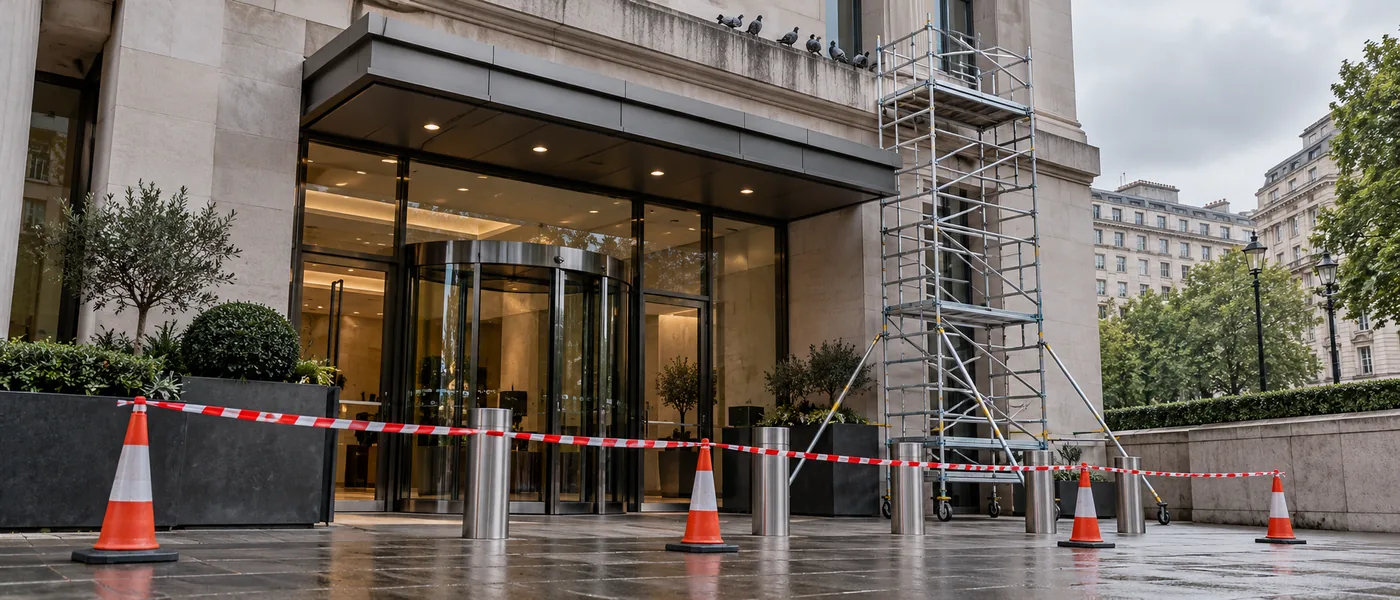
Pigeon fouling above a doorway is more than an appearance issue. People may walk through deposits, slip on wet patches or track material into a building. A cleaner may also be asked to tackle dried accumulations beneath a sign or canopy without a clear method. A sensible response separates the immediate access problem from the roosting source, then plans cleaning around the amount of material and the location.
First look up from a safe position. Note the ledge, sign, pipe or canopy where birds settle and whether there is an active nest. Photograph the area and the pattern of droppings. A fresh small patch below one perch requires a different scope from years of material in a sheltered recess. The photographs help a site inspector understand access needs and avoid guessing from a description such as “birds everywhere”.
Protect people before cleaning begins
If deposits are on a walking route, place an appropriate barrier or redirect foot traffic until the surface is assessed and cleaned. Use signage that people can see before they reach the affected patch. A business entrance may need a temporary alternative route, with attention to accessibility and emergency access. Do not create a new trip hazard with cleaning equipment or a poorly placed cordon.
Ask staff to report any wet slip area or falling material promptly. If droppings are falling from above, cleaning the ground once will not keep it safe. The route may need management until the roost is addressed. An entrance is also exposed to rain, which can change a dry deposit into a slippery smear. Review the surface condition again after weather changes.
Do not send a member of staff onto a ladder to scrape a high ledge while customers walk below. Work at height and public access require suitable equipment and a controlled work area. The cleaning plan should state who closes the route, where waste is contained and when the entrance can reopen.
Decide whether routine or specialist cleaning is appropriate
A small amount on an accessible hard surface may be managed under a workplace’s established cleaning procedure. Extensive, dry or awkward deposits need a risk assessment and may justify specialist cleaning. Avoid dry sweeping or vacuuming material in a way that raises dust. Consider surface type: porous stone, painted metal and a rubber entrance mat may need different cleaning methods. Do not assume an aggressive chemical is safe for every material.
Cleaning staff need appropriate protective equipment and a method that prevents splashing or spreading material into food, ventilation or pedestrian areas. They should wash hands afterwards and keep contaminated equipment separate from ordinary cleaning tools. The exact products and protection should be selected by the employer or contractor for the site, following labels and safety information. This article does not prescribe a universal disinfectant concentration or a single mask for every job.
If material has entered an air intake, ceiling void or food handling area, stop and ask for a specialist assessment. The risk and cleaning method differ substantially from an outdoor pavement patch. A contractor should explain what is included in the quotation: loose debris removal, surface cleaning, disinfection if appropriate, waste handling and photographic close-out.
Do not disturb an active nest
The visible soiling may lie directly beneath a nest. In England, all wild birds, their eggs and nests are protected. Natural England says it is an offence intentionally to damage or destroy a nest while it is being built or used. A cleaner must not pull out nesting material or fit a barrier that seals birds inside. If a nest is suspected, record its position and obtain advice before work at that point.
Public safety may make a doorway urgent, but urgency calls for careful management and specialist advice rather than an automatic exemption. Temporary pedestrian diversion can often reduce exposure while the lawful options are assessed. Any licence for harmful action has specific purposes and conditions; it is not the same as permission to remove a nest for convenience.
Address the perch that creates the mess
Once the area can be dealt with lawfully, examine the building detail. A ledge above the door may offer a sheltered night roost. A sign bracket may give birds a perch even if the roof is clear. Food waste nearby or a bin without a secure lid can also encourage birds to remain in the area. Clean-up alone leaves these factors in place.
Ask for pigeon management options suited to the specific surface. The proposal should show where birds land, where a deterrent would be fixed and how it will be maintained. Poorly fitted netting can trap birds; badly positioned spikes can move the fouling a few metres rather than solve it. A small architectural change may sometimes be more durable than hardware across a whole façade.
Check whether the wall, sign or canopy belongs to the landlord, tenant or another owner. An occupier may control cleaning of the floor but not be permitted to drill into the external façade. Agree authorisation before installation. If several businesses share a doorway, appoint one coordinator so the cleaning and deterrent work are not commissioned separately without a common plan.
Record and monitor the result
Photograph the cleaned surface and the completed deterrent. Keep a short record of any new soiling, noting date, weather and exact location. A new patch may reveal that the original perch was only part of the problem. If birds become trapped or a fixing fails, treat that as a prompt maintenance issue, not something to wait for the next annual visit.
Review the public route after cleaning. A surface may remain slippery because of cleaning residue, damaged paving or rain, even when droppings are gone. A final check by the site manager closes the immediate safety task. The longer-term task is to make the overhead area less attractive to pigeons and keep any installed measure in working order.
The most effective response is therefore staged: control access, assess and clean safely, check wildlife status, then manage the roosting point. Each stage solves a different part of the problem, and together they keep the entrance usable without creating new hazards.
If the entrance serves vulnerable visitors or a busy delivery operation, put the temporary route in writing for reception and contractors. A sign at the door is useful only if staff understand where people should go and who can reopen the original route. Include the out-of-hours team in that handover, because an overnight clean may otherwise be undone by the next morning’s queue or delivery.
Agree a cleaning standard before the work starts
Ask the contractor to photograph the affected surfaces and identify any staining that cannot be removed without damaging the substrate. An older stone ledge may remain discoloured even after material is safely cleaned away. Distinguishing residual staining from fresh deposits helps the manager judge whether birds have returned. Specify whether the job includes the high perch, the wall below, paving, mats and nearby drainage; an ambiguous “clean entrance” quote can leave the most important area untouched.
Arrange the work for a period when the route can be closed safely, and tell reception when it will reopen. If a cleaning product requires dwell time or a rinse, the site team should know when the surface is safe for pedestrians. Follow-up photographs after the first rainy day can reveal new fouling or a remaining slip concern. Keep those observations with the bird-control report so cleaning and prevention are judged together.