
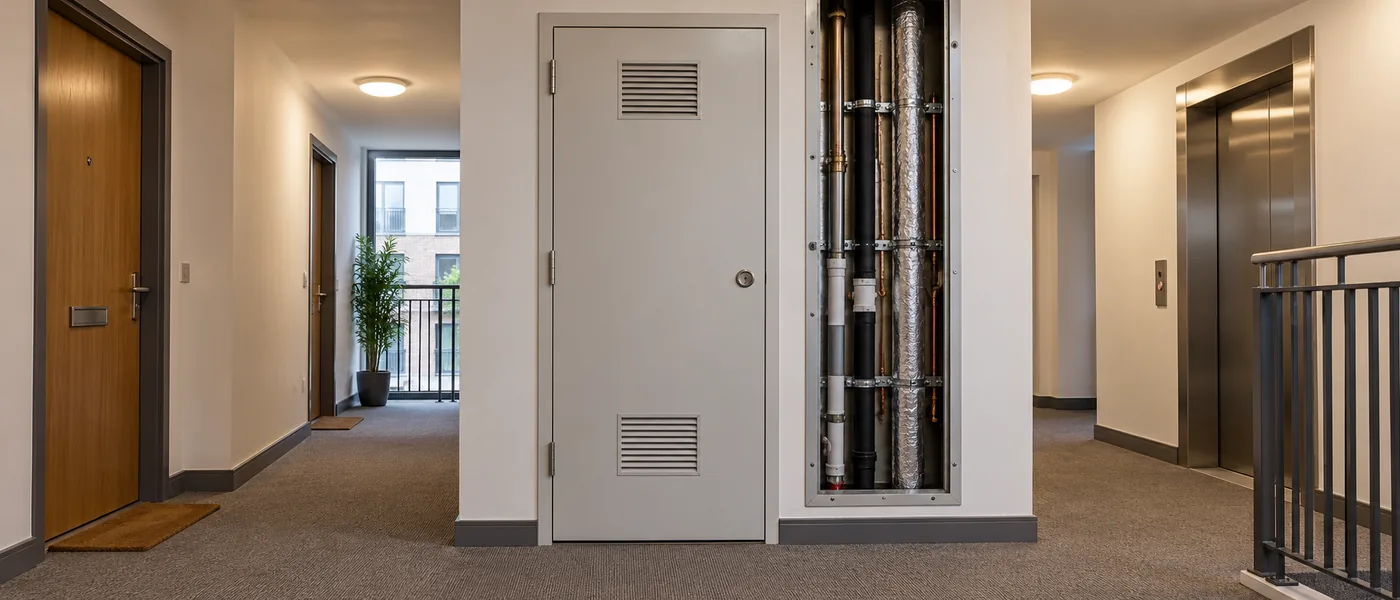
A mouse seen in one flat can make the problem feel private, but the route may run through a shared riser, corridor, ceiling or service cupboard. That is common in buildings where pipes and cables pass between homes. Treating only the room where a mouse appears may leave the access open. A coordinated response begins with accurate evidence and a clear account of which spaces are private and which belong to the building.
Draw a simple map of the sightings
Write down where and when you saw a mouse or found fresh signs. Mark the kitchen, bathroom, utility cupboard and front door on a sketch of the flat. Add pipe penetrations, ventilation grilles and any gap around a shared service riser. A map need not be technical; it helps an inspector see whether the evidence follows one wall or several separate routes.
Photograph droppings, gnawed packaging and openings before cleaning. Record the date. If you have heard activity but seen nothing, describe where the sound seems to come from without treating it as proof of a particular route. The goal is to distinguish an indoor feeding spot from the opening that leads there.
In a block, a mouse may travel through a void before entering at a small gap beside a pipe. A door threshold or corridor cupboard can be another route. An inspection can assess those possibilities and identify which areas need access from the managing agent.
Check your flat's accessible spaces
Look beneath the sink, behind reachable cupboard contents and around visible service penetrations. Check the gap beneath the front door and the condition of kitchen plinths. Do not dismantle fixed panels, interfere with fire-stopping or block ventilation. Some openings have a safety function even if they look untidy. A tradesperson or competent proofing specialist should handle them.
Protect food immediately. Move dry goods and pet food into sound containers, clean crumbs and make sure the bin closes. That reduces the reward for a mouse entering the flat, but it will not repair a shared route. Avoid placing loose poison in a communal cupboard or corridor. The Health and Safety Executive says biocides must be used according to their labels and that general public users should use only products intended for them.
If you find droppings, avoid dry sweeping or vacuuming them. Follow current public health or local authority advice for safe cleaning and seek help where deposits are extensive. Take a dated photograph first if you need it for the building report.
Tell the right people early
If you rent, report the problem to the landlord or letting agent in writing, including your dates, photographs and locations. If you own a leasehold flat, tell the managing agent or freeholder about possible communal access. A tenant can also notify the building manager directly where there is a clear shared-area concern, while keeping the landlord informed.
Keep the message factual. Say what you saw, where and when; avoid accusing another resident. Ask whether neighbouring flats, the bin store or service risers have reported activity and whether a building-wide assessment is planned. An isolated complaint may be the first sign of a wider route. Coordinated access can save repeated visits to individual flats.
The mice control service may need to work alongside the person responsible for communal repairs. Clarify who can authorise opening a riser, replacing a door seal or completing fire-safe sealing around a service penetration.
Why one-flat treatment can disappoint
If a shared void remains open, removing mice from one room may simply create a short quiet period. The building may still offer food in a communal bin store and shelter in service runs. Equally, it would be wrong to assume every flat has the same issue. Inspection should establish where activity exists and where work is required.
Ask for a plan that separates control, proofing and housekeeping. Control addresses current animals. Proofing closes suitable access points after occupancy and timing are understood. Housekeeping reduces accessible food and waste. In a multi-flat property, those tasks may belong to different parties. A written list with locations and owners is more useful than a vague instruction to “keep clean”.
Be cautious about closing a gap before the route has been assessed. Trapping an animal inside a cavity can create another problem. A pest-proofing assessment should also protect the building's ventilation and fire safety details. Ordinary filler is not a substitute for an appropriate fire-stopping material.
Document the follow-up
After treatment, continue a brief log at the same observation points. Photograph any fresh sign and note whether a shared-area repair has been completed. Ask the managing agent to confirm the date of work in writing. If an inspector identifies a route in another flat or common space, the building may need staged access to several locations.
Do not assume a mouse crossing a corridor came from a particular neighbour. Animals can move along hidden routes that bypass the nearest door. Clear evidence protects relationships as well as the quality of the repair.
If a contractor has used traps or bait in shared areas, ask who will check and remove them. Equipment should not be abandoned in a riser after the visit. Residents should also know how to report a new sighting without interfering with equipment.
Consider the building's waste arrangements
Overflowing communal bins, damaged store doors and food left in corridors can sustain activity. Photograph defects and report them to the responsible manager. Waste storage can be improved without blaming residents: a fitted lid, timely collection and a door that closes are practical measures.
Where the flat is above a restaurant or shop, the building may contain several separate occupancies and access rights. The route should be investigated professionally rather than assuming the business is the cause. A shared plan may need to involve the freeholder, commercial occupier and flat residents.
A practical route to resolution
Map the signs, protect food, clean cautiously and report the evidence in writing. Ask for an inspection that can access both your flat and relevant shared spaces. Confirm who will arrange control, who will repair building gaps and how progress will be monitored. Keep the same record after work is done.
The most useful question is not merely “How do I remove the mouse I saw?” It is “Which connected spaces allowed it to reach my flat, and who can close that route safely?” In a block, that change in perspective often makes the response both fairer and more effective.
If several residents report sightings, compare the dates and locations through the managing agent rather than circulating photographs of neighbours' homes. A simple building plan with affected risers, corridors and bin areas can reveal a pattern without exposing private details. Ask the agent to keep one action list so repairs are assigned once and checked after completion.