
An itchy row of marks noticed on waking can make bed bugs seem like the obvious answer. It is an understandable suspicion, particularly after travel or a second-hand furniture purchase. Yet skin marks are a poor way to identify an insect. People react differently to bites, and several other causes of irritation can look similar. Some people sharing a bed may have no visible reaction at all.
The useful question is therefore not “does this bite look exactly like a bed bug bite?” but “what physical evidence can I find where an insect would live?” A short, careful search can help you decide whether to call a pharmacist, arrange a pest inspection, or investigate another possible cause. It can also spare you the cost and disruption of treating a bedroom on an assumption.
Why the pattern on skin is inconclusive
The NHS describes bed bug bites as potentially raised and itchy, sometimes grouped or in a line. That description can guide suspicion; it does not confirm the source. The timing of a reaction also varies, so a mark first noticed in the morning need not have been caused that night. Exposed arms, neck and face may be affected, but the location of a mark alone cannot identify the insect either.
Photographs of bites on the internet add another difficulty. Lighting and skin tone change their appearance, and images usually omit the information needed to identify the insect: a specimen, a harbourage and the context of the room. Even a clinician may treat the skin reaction without being able to say which insect caused it. It is reasonable to seek medical advice for the symptoms while investigating the home separately.
Do not use a friend's bite history as a comparison test. One person may itch badly while another shows nothing after the same exposure. Conversely, two people with similar marks might have entirely different causes. A confident pest diagnosis needs evidence beyond skin.
Start at the sleeping area, not every room
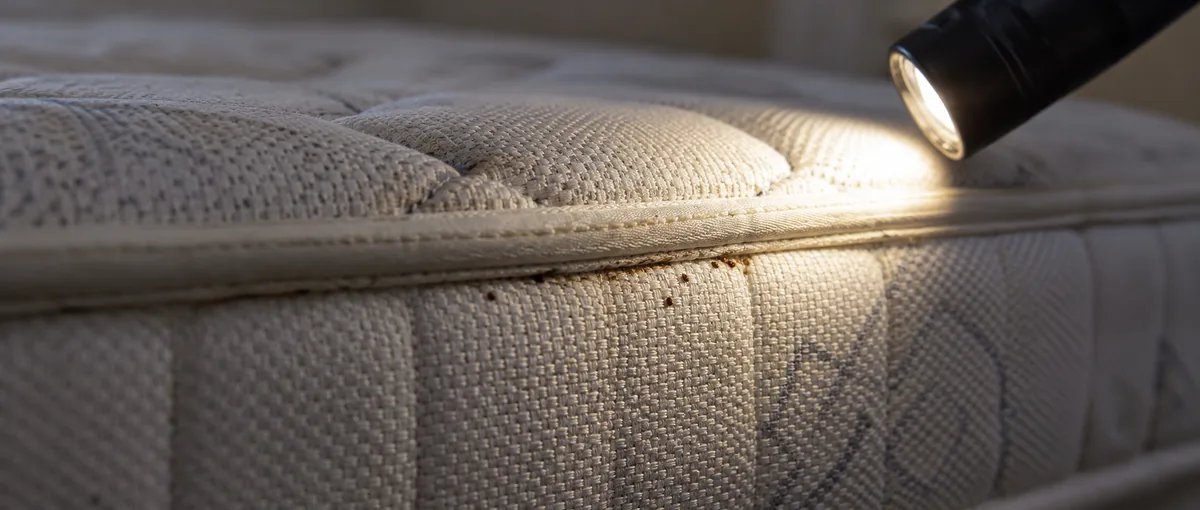
Use a torch and check the accessible seams and piping of the mattress, especially near the head. Look at the bed frame joints, headboard edges, bedside furniture and any nearby upholstered furniture. Bed bugs prefer narrow, sheltered spaces. You do not need to remove fixed fittings or dismantle electrical items; unsafe searching can cause damage without improving the diagnosis.
The NHS lists several physical signs: a live bed bug, small brown marks on bedding or furniture, and blood spots on sheets. Adults are around 5 mm long and can be dark yellow, red or brown. Shed skins or eggs may also be found by a trained inspector, but small pale objects are easy to misidentify. Record what you see before cleaning it away. Clear photographs should include a close image and a wider image showing exactly where the object was found.
One isolated dark speck may be ordinary dirt. A beetle in a room does not establish a bed bug infestation. Look for a cluster of consistent signs in places where bed bugs hide. If you can safely collect a suspected insect in a sealed clear container, that specimen can be more useful than dozens of bite photos. Avoid crushing it, which can make identification harder.
Check recent movements and belongings
Think back over recent travel, overnight guests and furniture brought into the home. These events can point an inspector towards likely introduction routes, but none proves where an insect came from. Bed bugs can enter clean properties, and assigning blame to a visitor or hotel without evidence is unfair. Keep a factual timeline: the date of the first marks, where people slept, any insect sighting and when belongings entered the room.
If you recently stayed away, inspect suitcase seams and pockets in a clear area rather than setting the case on the bed. Keep uncertain items contained while you decide what to launder. The NHS advises hot washing affected bedding and clothing at 60°C and tumble drying on a hot setting for at least 30 minutes. Follow textile labels and seek advice for items that cannot tolerate heat. Washing everything in the house without a confirmed source may create work while missing the real issue.
Second-hand bed frames and upholstered furniture deserve attention to seams, joints and undersides before they come indoors. If the item is already inside, inspect it where it stands. Do not carry it through the house or leave it in a shared corridor solely because of an unverified mark; moving suspect furniture can spread a genuine problem and inconvenience neighbours.
What if the search is negative?
A negative five-minute search does not prove there are no bed bugs. Low numbers and hidden harbourages are hard to find. It does mean you should avoid declaring an infestation on bites alone. Continue to record any new physical signs and consider other explanations for the skin reaction, such as fleas, other biting insects or a non-insect skin condition. A pharmacist or GP can advise on symptoms; a pest professional can assess the property.
If suspicious marks keep appearing but you find no insect, arrange an evidence-led inspection. All Pests Gone has a pest inspection service for identifying the issue, and its bed bug control service is relevant once bed bugs are confirmed. Tell the inspector which rooms have been used and show photographs or a specimen. Ask what evidence supports the conclusion before committing to treatment.
Sticky devices or interceptors may help monitoring in some settings, but their absence of catches is not a definitive clearance certificate. Likewise, a shop-bought spray can kill an exposed insect while leaving others concealed. The NHS warns that bed bugs are difficult to eliminate yourself because they can be hard to find and may resist some insecticides. The specific treatment plan should follow the inspection and the condition of the property.
Care for the person while checking the property
Itchy marks deserve care regardless of the cause. The NHS suggests a cool, damp cloth, keeping the skin clean and avoiding scratching. A pharmacist can discuss options such as an antihistamine or a suitable cream, taking age, pregnancy and other circumstances into account. Seek GP advice if pain, swelling or itching remains troublesome after trying pharmacy advice, or if redness or swelling spreads. Severe allergic symptoms call for urgent medical help.
Try not to scratch through the night while trying to solve the pest question. Broken skin can become infected. Nor should a person sleep on a sofa in another room as an improvised “test”; if bed bugs are present, moving sleeping locations may complicate the search and spread the problem. Ask an inspector for a plan that fits the household.
A better threshold for action
Treat bites as a prompt to investigate, not as a verdict. Photograph and manage the symptoms, examine the bed and nearby furniture, save any specimen, and record a short timeline. If physical signs are present or the problem persists without an explanation, obtain an inspection. A reliable diagnosis protects both your health and your home from the consequences of guessing.