
Inspect living furniture
Sofa beds and upholstered chairs enter scope when used for rest.
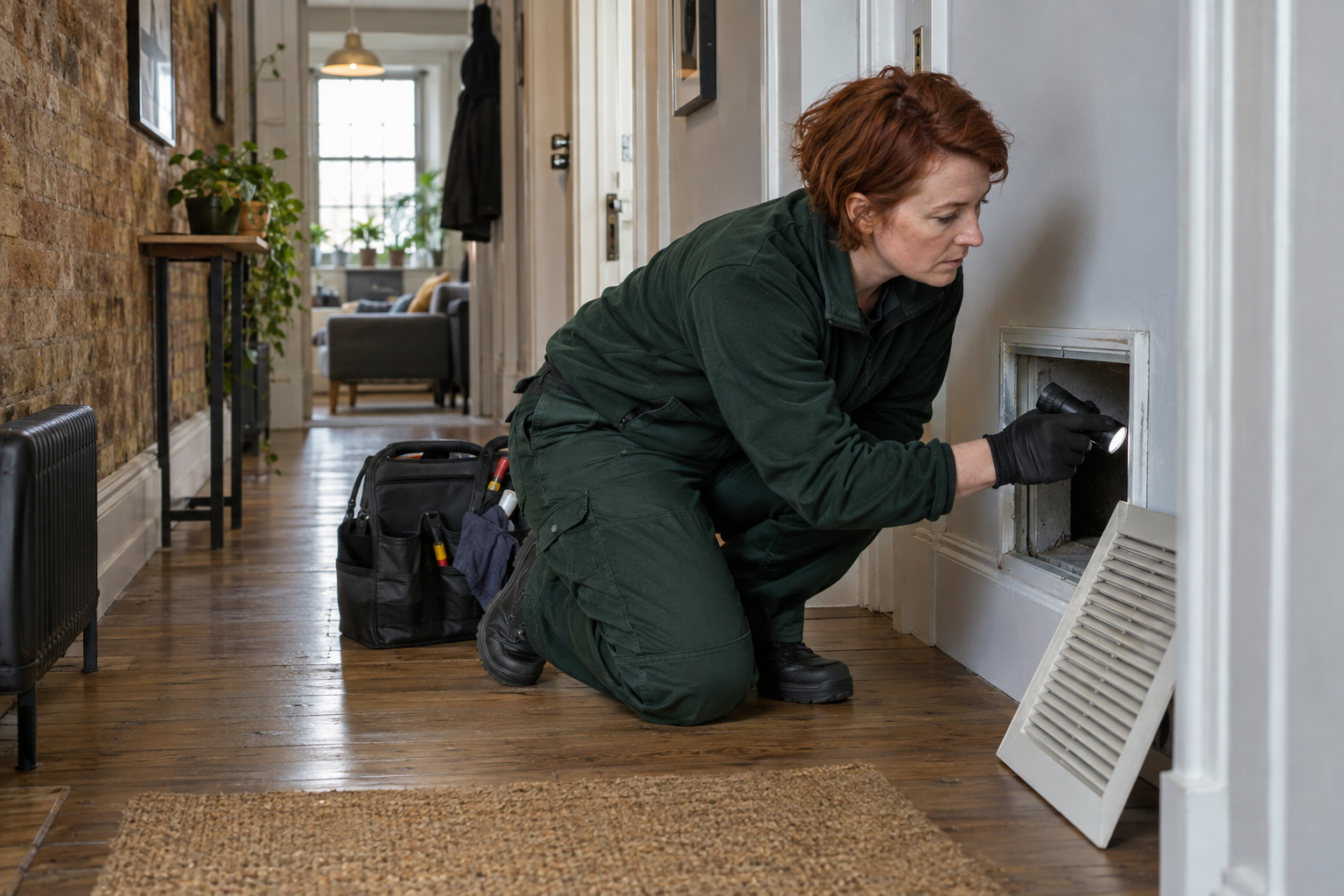
STRATFORD · SERVICED-APARTMENT RESPONSE
A same-day turnover creates pressure to clean quickly, yet stripping the room before inspection can remove or redistribute useful bed bug evidence. We pause linen movement, review the guest’s sleeping and luggage positions, inspect the bed and nearby furniture, and classify findings. Treatment and adjacent-room checks follow physical evidence rather than the booking schedule alone.
LOCAL CONTEXT
Stratford includes managed apartments, retail and commercial premises. In this operation, reception records, housekeeping routes and building access shape the inspection. The local setting does not itself indicate bed bug presence. The reported bed and luggage position are examined first for live insects, eggs, skins or spotting; a guest’s skin marks alone cannot confirm the cause. Linen movement is paused and recorded so evidence is not transferred through clean rooms. Adjacent accommodation enters scope only when layout or findings justify a separate inspection. Management controls room status and access, while the technician defines pest preparation, treatment limits and re-entry guidance. Furniture is not discarded automatically. Follow-up returns to named harbourage points and records physical evidence, giving the operator a basis for its own release decision without promising a universal clearance date.
The technician reconstructs the guest’s stay from bed, seating and luggage placement, then checks the nearest harbourage under suitable light.
Keep the apartment out of turnover, bag used linen inside the room and leave furniture in place. Housekeeping should retain pre-clean photographs and identify which trolley or vacuum entered. Do not transfer spare bedding to another unit. Provide maintenance records for recent headboard or skirting work.
Management handles accommodation, but belongings should not be moved into a clean room without a controlled plan.
Seal recovered evidence, stop linen transfer and hold the room from use. Significant skin reactions require medical advice rather than broader pesticide treatment.

Sofa beds and upholstered chairs enter scope when used for rest.
Bags, trolleys, laundry holding and cleaner equipment are mapped for movement risk.
Live stages, eggs, cast skins or characteristic spotting support room-specific preparation and a treatment cycle.
Jumping specimens and animal exposure require a floor-level host history rather than bed bug application.
Larval skins in natural fibres can cause irritation and need debris-source cleaning.
Kitchenette insects are identified and managed around warmth or moisture as a separate harbourage.
Droppings around appliances lead to an independent service-entry investigation.
Guest dates and actions already taken are recorded.
The bed and immediate harbourage receive detailed checks.
Linen, luggage and equipment routes are reconstructed.
Evidence is stated as confirmed, inconclusive or absent.
Only supported areas and furnishings enter the method.
Management receives the named points and restrictions to assess.
The operator has a guest complaint and an urgent turnover, but no retained insect or completed physical survey.
Movement is contained, the room is inspected in a fixed sequence and treatment or monitoring follows the classification.
Fresh spotting, live stages and interceptors are reviewed at the recorded bed and seating points. A clear check documents what was found at that time; it cannot guarantee another apartment or the guest’s luggage.
No automatic treatment is added; proximity and physical findings determine inspection priorities.
Preserve the room when possible because cleaning can remove insects, spotting and shed skins.
Serviced-apartment scope depends on rooms inspected, furniture complexity, confirmed treatment, preparation support and scheduled reviews.
| Service | Starting price | Scope factors |
|---|---|---|
| Pest inspection | From £62 | Property, access and areas inspected |
| Wasp treatment | From £89 | Nest position, height and safe access |
| Rodent control | From £184 | Activity, monitoring and visits |
| Bed bug control | From £204 | Rooms, preparation and method |
| Squirrel control | From £273 | Loft access, visits and proofing |
Final scope can change with access, activity, property size, treatment method, specialist equipment and the number of visits. Confirm the current price and inclusions before booking.
No, commercial claims and pest identification require separate evidence processes.
Usage history and luggage placement decide whether its seams need examination.
Not without evidence that the packaging or storage position was exposed.
Management combines findings with monitoring, treatment restrictions and its own operating policy.
Capture scale and detail without crushing the insect, then seal and label it if safe.
Steam may form part of a method but does not automatically reach every harbourage.
Share the guest dates, luggage position and housekeeping movement.
Request a room evidence check