
RICHMOND · PEST CONTROL
Pest Control Richmond
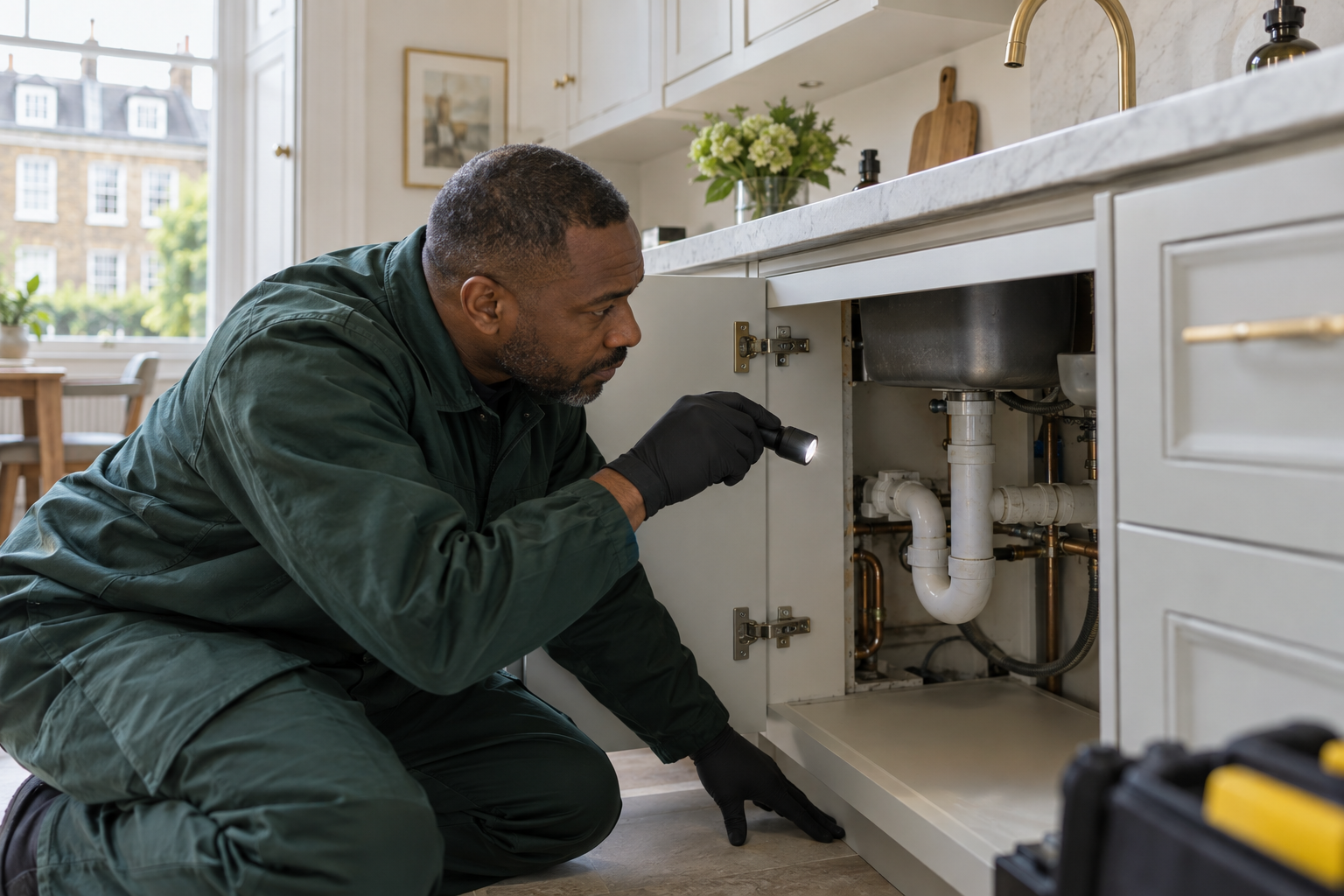
Droppings in a lower-ground utility space can reflect a door threshold, service penetration or route that continues beyond the room. At a Richmond property, we map the freshest evidence, compare internal and external levels and use monitoring before committing to repairs that could redirect activity.
- Lower-ground signs mapped before closure
- Drainage considered only where evidence supports it
- Restaurant and residential scopes kept separate
LOCAL CONTEXT
Rebuild the lower-ground evidence after cleaning
Richmond is a south-west London town beside the Thames, with period and modern homes, converted flats, riverside developments, shops and restaurants. These are broad property contexts rather than claims about local pests. The featured call involves droppings in a basement utility room after heavy cleaning removed older signs. We inspect remaining track position, food or water access, service entries and the outside level nearest the room. A riverside location does not by itself prove rats came from water, and drainage is not blamed without a recurring pattern or relevant evidence. Monitoring can rebuild a timeline before proofing. In a restaurant, waste and delivery operations require their own risk-managed placement; a private home uses different controls. Major damp, drain or masonry work is referred to the correct trade. Contextual links lead to rat control, proofing and commercial preparation.
What the inspection needs to establish
Fresh marks remaining after the last clean Pipe entries at the utility-room level Door thresholds compared with outside ground height Accessible drain evidence only when relevant Food and waste routes specific to the occupier
- Fresh marks remaining after the last clean
- Pipe entries at the utility-room level
Prepare the relevant access
Avoid washing the entire utility perimeter again before inspection if it is safe to leave. Mark where the newest sign remained, provide access to service cupboards and disclose any drain issue or building work. Keep food sealed and pets out of the lower-ground room. Do not pour pesticides into drainage points.
Does a riverside address prove the rat route?
No. The actual building evidence must connect an outside source to the room.
When the response should move faster
Contact us promptly if rodents reach a kitchen, foul stored food or damage lower-ground electrical services. Keep the room closed if practical and avoid wet cleaning near live electrical risk. Flooding or sewage requires the relevant emergency contractor independently of pest attendance.
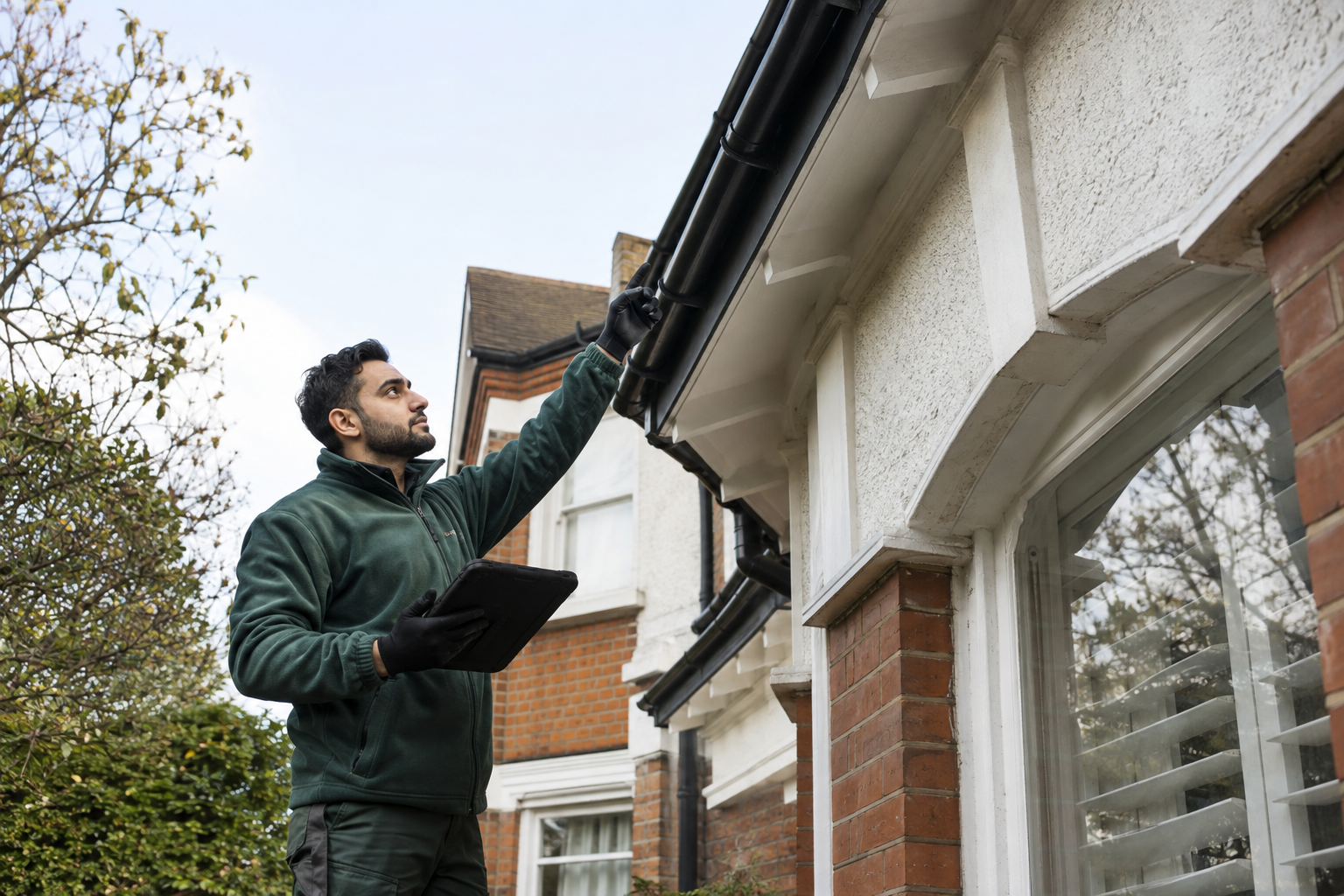
Compare room level, services and thresholds
Accessible drain evidence only when relevant
Food and waste routes specific to the occupier
Control matched to the evidence
Rats
Lower-level movement is tested through tracks and secured monitoring. Proximity to water is not treated as a diagnosis.
Mice
Fine droppings around services may reveal a smaller internal route needing distinct control.
Cockroaches
Basement warmth and moisture matter only after the insect is identified.
Wasps
Balcony or roof flight lines are assessed as a separate high-level access question.
Pigeons
Fouling on ledges can require a survey, cleaning controls and permission before deterrent work.
Restore a reliable timeline with monitoring
Reconstruct the cleaned evidence
Photographs and remaining marks rebuild the first location map.
Compare inside and outside levels
Thresholds and services are checked against plausible movement.
Use monitoring to restore timing
Fixed points show whether the route remains active.
Select protected control
Placement reflects the room use and non-target risk.
Sequence structural tasks
Proofing or specialist repairs follow supported findings.
Review the lower-ground boundary
Fresh evidence determines whether scope should contract or expand.
A cleaned room with a new evidence baseline
Before
Old signs have gone and the suspected entry exists mainly as an assumption.
Work
Remaining marks, levels and services are mapped before fixed monitors test current movement.
After
New tracks reveal whether the proposed boundary remains credible; repair scope changes with evidence rather than a guarantee.
Current starting prices
Separate control, drainage and masonry work
| Service | Starting price | Scope factors |
|---|---|---|
| Pest inspection | From £62 | Property, access and areas inspected |
| Wasp treatment | From £89 | Nest position, height and safe access |
| Rodent control | From £184 | Activity, monitoring and visits |
| Bed bug control | From £204 | Rooms, preparation and method |
| Squirrel control | From £273 | Loft access, visits and proofing |
Final scope can change with access, activity, property size, treatment method, specialist equipment and the number of visits. Confirm the current price and inclusions before booking.
Practical local answers
Can a basement be monitored before treatment?
Yes, particularly when cleaning or repairs have removed the original trail.
Will a restaurant basement need different controls from a home?
Yes, because food operation, public access and documentation change the risk assessment.
Nearby coverage
Related services
Questions before booking
Why photograph Richmond lower-ground signs before cleaning?
Images preserve position and scale when hygiene requires the area to be cleared before attendance.
Can a damp patch identify where rodents enter?
No. Moisture may affect the room, but tracks and structural evidence must establish a route.
When is a drainage inspection a sensible next step?
Recurring rat evidence near relevant services can justify it after ordinary access points are assessed.
Should every air brick be covered?
Only suitable openings on a supported route should receive a ventilation-safe proofing solution.
Richmond lower-ground inspection answers
Pest control in Richmond for period homes, flats, restaurants and modern developments. Lower-ground rodent inspection, monitoring and proofing advice.
Call 020 3318 2099