
Carpet beetles
Source cleaning, suitable textile care and focused structural treatment address larvae and harbourage.
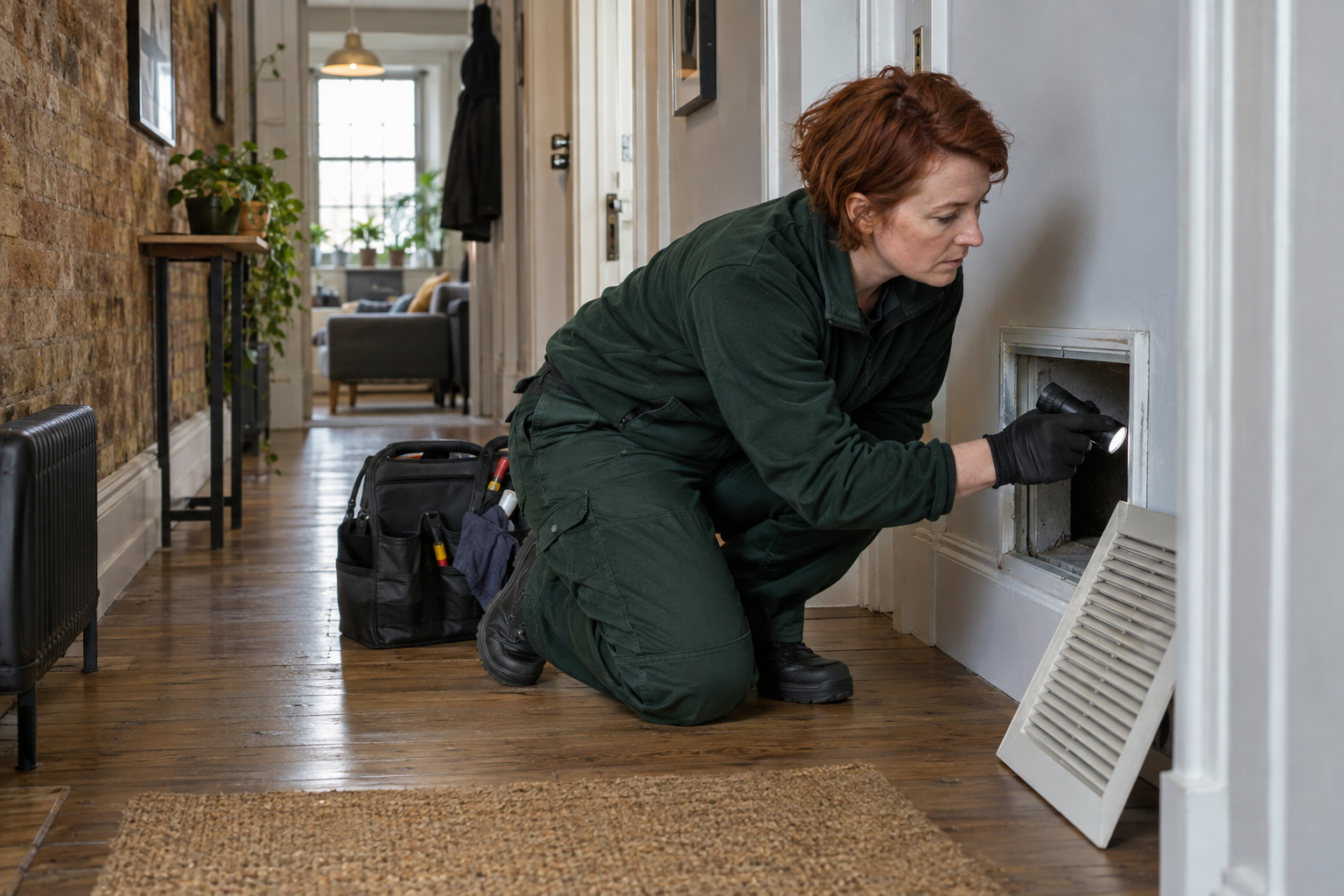
CATFORD · CARPET BEETLE INVESTIGATION
Larvae beneath stored blankets can feed on wool, hair, feathers and accumulated lint, while the adult beetles may appear at windows far from the source. We identify the insect, inspect damaged textiles and quiet floor edges, and plan cleaning plus targeted crack treatment. Unaffected rooms are monitored according to fibre and debris risk rather than sprayed automatically.
LOCAL CONTEXT
This Catford inspection is bounded by the stored textiles, furniture and places where suspect insects, shed skins or fabric damage were actually found. We examine natural-fibre blankets, garment folds, carpet edges, under-bed dust and undisturbed storage seams in a clear sequence, keeping clean and unchecked items separate. Irregular holes alone do not identify the pest; larvae, cast skins, frass and the pattern of feeding are retained or photographed where possible. Boxes are not carried to other rooms before their contents and original positions are recorded. Built-in cupboards and accessible floor edges enter the survey, while sealed structural voids require separate evidence and permission before opening. The resident decides access to personal possessions and identifies delicate fabrics needing specialist conservation or cleaning. Pest control addresses confirmed harbourage and advises containment, vacuuming or heat and laundering appropriate to each material. Follow-up revisits labelled storage points and monitors rather than assuming every textile in the house is affected.
The technician examines fibre type, grazing pattern and shed skins, then searches protected dust and lint where larvae may continue feeding.
Bag visibly affected blankets separately, retain care labels and avoid carrying them into clean wardrobes. Preserve one larva or skin in a sealed clear container. Vacuum accessible lint after photographs, empty the machine safely and identify feather-filled or natural-fibre items nearby.
Only accessible evidence and construction determine whether further disassembly is useful.
Isolate affected heirlooms or delicate fabrics without applying household insecticide to them. Conservation-grade items may need specialist textile advice before cleaning.

Source cleaning, suitable textile care and focused structural treatment address larvae and harbourage.
Webbing, cases and adult moths require another monitoring and garment-control approach.
Bristly larvae and fibre holes do not indicate bed bugs, which need resting-area evidence.
Jumping adults and animal exposure call for host-centred floor preparation instead.
Gnawed blankets accompanied by droppings lead to a separate rodent route inspection.
Skirting gaps, carpet margins and radiator recesses receive attention.
Wool, felt, leather and feather-filled goods are prioritised without emptying the whole house.
Larvae and skins are distinguished from moth evidence.
Affected fibres and storage positions are recorded.
Lint and hidden organic material are located.
Items receive suitable cleaning or isolation advice.
Confirmed empty cracks receive the selected method.
Adults and new larval signs are compared by room.
Blankets contain damage of uncertain age, and adult beetles have occasionally appeared at a sunny window.
Specimens are identified, storage and lint sources are inspected, and affected textiles remain labelled while harbourage is cleaned.
Fresh skins, larvae and damage are checked at the original bed and room edges. No new evidence supports the source plan; another cluster directs inspection elsewhere and does not guarantee every stored fibre remains untouched.
Follow each care label or a textile professional to avoid heat or moisture damage.
No automatic clearing is needed unless fibres, larvae or adult patterns connect it.
Home textile-pest scope depends on rooms inspected, storage access, treatment area and review monitoring. Specialist garment cleaning is priced separately by the chosen provider.
| Service | Starting price | Scope factors |
|---|---|---|
| Pest inspection | From £62 | Property, access and areas inspected |
| Wasp treatment | From £89 | Nest position, height and safe access |
| Rodent control | From £184 | Activity, monitoring and visits |
| Bed bug control | From £204 | Rooms, preparation and method |
| Squirrel control | From £273 | Loft access, visits and proofing |
Final scope can change with access, activity, property size, treatment method, specialist equipment and the number of visits. Confirm the current price and inclusions before booking.
Adults are attracted to light and may travel away from the larval food source.
Lint containing hair, skin, feathers or natural fibres can support feeding.
They do not feed on people, though larval hairs can irritate sensitive skin.
Not if larvae remain in furniture, textiles or structural debris.
Blends, soiling and nearby natural material can still make storage relevant.
Photographs and item logs establish a baseline for later comparison.
Species, fibre and storage location guide the correct response.
Request textile pest identification