
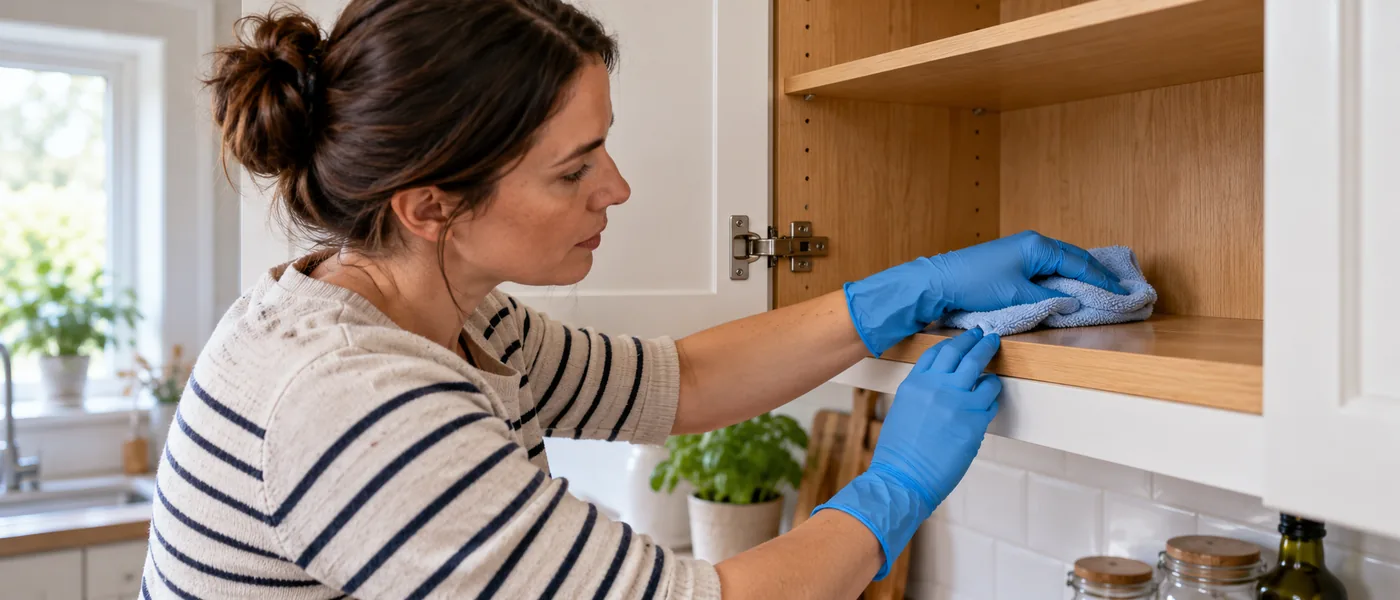
Mouse droppings in a cupboard are unpleasant, but rushing in with a vacuum can make the cleanup less safe. Dried material can become airborne when it is brushed or blown about. The sensible first response is to protect people from the affected area, document where the droppings were found and clean them with a damp method. You also need to address the mouse activity, or the cupboard may be contaminated again.
Pause before cleaning
Keep children and pets away. If droppings are beside food, leave the cupboard closed until you can work carefully. Photograph the location before removing the evidence, especially in a rented property or where you may need a pest professional to trace the route. A close photograph of one dropping is less useful than a picture showing the shelf, pipe gap or wall corner around it.
Look at the scale of the problem. A few deposits in an accessible cupboard are different from extensive contamination in a loft, behind fitted units or around electrical equipment. Do not dismantle a kitchen, climb into an unboarded loft or open a service void simply to clean it yourself. Arrange an inspection if the source is hidden or activity appears widespread.
If you are unwell after contact with suspect material, seek medical advice and explain the exposure. This article cannot diagnose infection. The UK Health Security Agency explains that rodents can carry infections and advises against sweeping or vacuuming urine, droppings and nests because particles may enter the air.
Prepare the area and yourself
Ventilate where it is practical to do so without spreading dust through the home. Wear household gloves. UKHSA guidance for cleaning rodent housing also recommends a suitable face mask in relevant circumstances. Cover cuts and avoid touching your face while cleaning. Keep food, crockery and clean utensils away from the contaminated surface.
Have damp disposable towels or wipes, a suitable household cleaning product, waste bags and handwashing supplies ready before you begin. Follow the product label for dilution, contact time and surfaces. Never mix cleaning chemicals. A disinfectant used incorrectly can create more risk than benefit, particularly in a poorly ventilated cupboard.
Do not use a dry brush, dustpan or vacuum cleaner on droppings. Even a quick pass with a handheld vacuum can disturb fine material. The UKHSA's advice is to use wet wipes or damp kitchen towel for urine or droppings outside rodent housing. That principle is relevant to a small household deposit too, while a large or unusual contamination problem deserves tailored advice.
Remove contaminated items carefully
Discard food with gnawed, opened or visibly contaminated packaging. Do not attempt to save a bag of rice by pouring the apparently clean portion into another container. Check nearby packets for damage. Hard containers that remain intact can be cleaned on the outside before being returned to the cupboard.
Use damp material to lift the droppings rather than scraping them across the shelf. Put used wipes and disposable gloves in a bag, close it and follow local waste guidance. Clean the surface according to the product instructions, including any required rinse for a food-contact area. Let it dry before replacing food or utensils.
Wash hands thoroughly with soap and water after removing gloves. If reusable cleaning tools were used, clean and dry them before storage. Do not use a kitchen sponge that will later touch dishes. If the material is on upholstery, insulation or other porous surfaces, ask for specific cleaning advice; the method for a sealed shelf may not be appropriate.
Record whether contamination returns
Once the area is clean, photograph it and note the date. Check it again over the next few days without continuously disturbing the area. New droppings show continuing activity; old staining alone does not. If fresh material appears, tell the mice control team exactly where and when it appeared.
Droppings can indicate a travel route as well as a feeding spot. A recurring line along the back of a cupboard may lead to a pipe penetration or service void. Do not put your hand through the gap to investigate. A professional can assess the route and whether a repair is needed.
If the area is shared, such as a communal store, report it to the managing agent or building owner. Cleaning one shelf will not solve an access route that belongs to the wider building.
Prevent the next deposit
Move dry goods into sturdy containers with close-fitting lids. Empty crumbs from cupboard corners and check the waste bin. Look for water leaks or food stored behind appliances. These steps make the area less attractive, but do not substitute for a proper control plan.
A pest-proofing assessment can identify gaps around pipes, doors or vents once activity is understood. Do not close a hole before checking whether mice are still inside a void. A hurried seal can divert them to another room. Repairs must also preserve ventilation and the safety function of service penetrations.
Avoid placing loose rodenticide in the cupboard. The Health and Safety Executive warns that biocides carry risks to people, pets and non-target animals. Public users should only use products intended for them and should follow the label. Where food preparation and hidden voids are involved, professional advice is particularly useful.
When to get more help
Seek pest-control help if droppings recur, you see a mouse, you cannot identify the entry route or contamination extends into inaccessible spaces. Seek a suitable cleaning specialist if deposits are extensive or in porous materials that cannot be cleaned with a simple damp wipe. Call an electrician if wiring appears damaged, and a plumber if there is a leak at the access point.
For a rented home, send dated photographs and a short description to the landlord or agent. Report any structural gap or leak you found. In England, landlords have responsibilities for specified repairs to structure and services, while tenants are expected to take care of the home and allow access for repairs. Responsibility for pest treatment can depend on the cause and circumstances, so document the facts rather than assuming the answer from the presence of droppings alone.
Keep the response proportionate
A small deposit deserves careful cleaning and a check for fresh activity. It does not require dismantling the entire room. A repeated deposit deserves investigation, because cleaning without identifying the route will become a cycle. Damp removal, sound food storage and a clear route assessment are practical steps that work together.
Keep the photographs, cleaning date and any pest report. They help you judge whether the problem has ended and give a professional useful information if it has not.