
Finding a cockroach in a flat creates two questions at once: what is happening inside your home, and could the source be connected to the rest of the building? Flats share service routes, waste areas and sometimes poorly sealed pipe openings. A sensible response therefore combines a careful check of your own rooms with clear reporting to whoever manages the building.
One insect does not tell you how many are present or where they came from. It does justify documenting the sighting. If the insect is still visible, take a photograph that shows its size and location. Record the date and time. If you can collect it without touching it, place it in a sealed container for identification. Do not start by spraying the entire kitchen or accusing a neighbour; both actions can make a coordinated response harder.
Inspect the area where you saw it
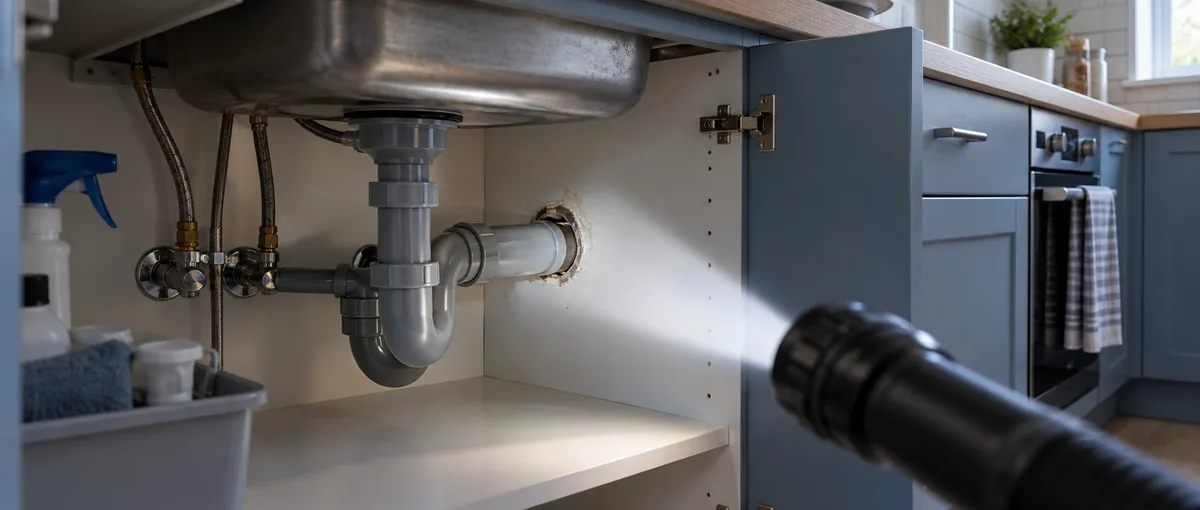
Look at accessible kitchen and bathroom areas near the sighting. Check behind loose plinths if they can be removed safely, under sinks, around pipe penetrations and beside appliances. Avoid moving heavy connected equipment or opening electrical covers. Use a torch, photograph anything suspicious and note damp patches or leaks. Cockroaches favour shelter, and some species use warmth and moisture in different ways, so the exact location helps an inspector.
The BPCA advises that cockroaches are often nocturnal and can be difficult to control because they hide where insecticide may not readily reach. A daytime sighting is worth prompt attention, but it cannot by itself establish the scale of an infestation. Check for repeated activity, droppings, shed skins or egg cases, while remembering that small dark marks can be other household debris. Preserve a specimen or image where possible rather than making a diagnosis from a single mark.
Keep food in sealed containers, remove rubbish frequently and clean spills. Report leaks for repair. These steps reduce resources for cockroaches and make signs easier to see. They do not prove that poor housekeeping caused the problem. An insect can move through shared spaces or arrive with goods even in a clean flat.
Tell the managing agent exactly what you know
Send a short written report to the landlord, freeholder or managing agent according to your tenancy or building arrangement. Include the flat number, the sighting location, date, photograph and any recurring signs. Ask whether other units or shared areas have reported activity and who will arrange an inspection. Factual wording is better than “the whole block is infested” when you have seen one insect.
If another resident independently reports cockroaches, share the information with the manager rather than posting photographs of their doorway or making assumptions about cleanliness. Privacy and access matter. Coordinated inspections may be needed where service risers, bin stores or adjoining units are involved, but residents should not enter one another's flats or apply products in communal voids themselves.
Make a note of who was contacted and when. If access is needed for a technician, clarify how appointments will be arranged and which areas they need to see. Missing access to a likely source can undermine a treatment programme. At the same time, ask the provider to explain the evidence for treating each area so occupants understand the plan.
If the building has a concierge or caretaker, give them the same factual description and ask whether the bin room or shared service cupboards have been checked. Do not ask staff to apply insecticide without a proper assessment. A building manager can coordinate access and repairs, while the pest professional identifies the species and treatment boundaries. Keeping those roles clear helps residents receive consistent instructions.
Avoid moving the problem between rooms
It is tempting to empty cupboards into the bedroom while cleaning the kitchen. Keep belongings contained near the inspection area until you know what needs moving. Check boxes and reusable bags before carrying them elsewhere. Do not leave suspect appliances or furniture in a hallway, where they may be taken by another resident or obstruct a fire route.
If you have found an insect in a delivery carton, seal the carton and show the specimen or photograph to the inspector. That may be a relevant introduction route, but it does not rule out established activity elsewhere. A professional survey should follow the evidence across the flat and any building areas to which access is authorised.
Do not attempt to treat a pipe riser through a small opening or block ventilation gaps without building advice. Services may need access and fire safety requirements may apply. Repair obvious, non-essential gaps only after the source and treatment plan are understood. The right proofing detail depends on the building fabric and the pest route.
Decide on treatment from the building picture
All Pests Gone offers cockroach control for a confirmed problem, and its pest inspection service can help identify species and the extent of activity. Ask the technician whether the evidence suggests activity confined to your flat or warrants checking shared routes. No responsible provider can guarantee a building-wide answer from one photograph alone.
A treatment may combine cleaning, repair of moisture problems, monitoring and targeted pest control. The details depend on the species, location and access. Follow written safety and aftercare instructions for any products used. Do not add your own aerosols to treated surfaces, as this may interfere with the plan or create unnecessary exposure. Keep a log of any later sightings so the provider can judge progress.
If a food business operates within the building, tell the responsible manager promptly. The business may have a separate pest-management and food-safety procedure. If you rent, continue to report observations in writing rather than withholding rent or making legal assumptions based on one sighting; tenancy responsibilities depend on facts and the agreement, and legal advice is separate from pest identification.
A useful report is more than a complaint
An effective first report includes a clear image, the exact position of the insect, the date, and any visible moisture or shared service route. It asks for inspection and a coordinated response if evidence points beyond one flat. Follow up with new observations rather than repeating the original report without details. This approach gives both the resident and the building manager a record on which to act.
The aim is to stop a possible pest problem from becoming a blame dispute. Document what you found, keep your own kitchen in a condition that allows inspection, and bring the building manager into the process early. Cockroaches do not respect tenancy boundaries; an evidence-led response should not stop at the front door if the evidence points elsewhere.