
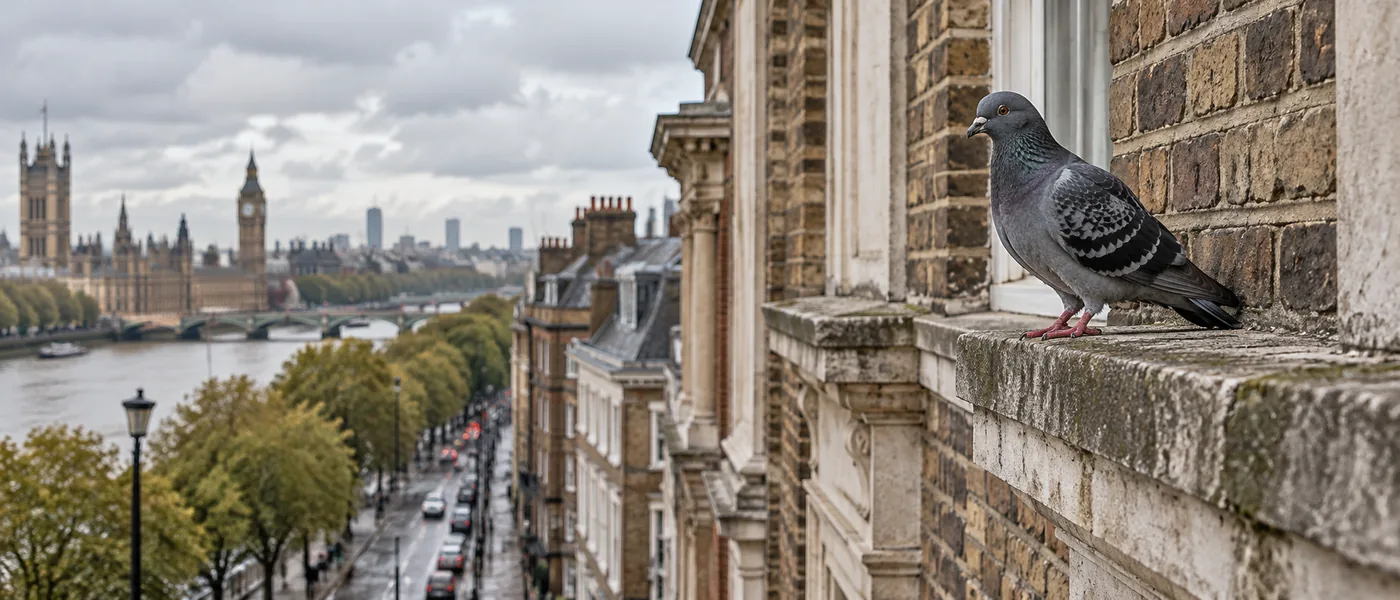
Roof repairs, gutter cleaning and façade maintenance are often booked weeks ahead. Finding pigeons nesting at the work area can change the job. A manager may be tempted to remove the nest before the contractor arrives, particularly if access equipment is already hired. That is exactly when a careful check matters. In England, wild birds, their eggs and nests are protected. Natural England states that intentionally damaging or destroying a nest while it is being used or built is an offence.
The question is not simply whether pigeons are common or whether the work is urgent. It is whether the proposed activity would affect a protected bird or active nest, what can be done safely elsewhere, and whether a lawful route exists for any genuinely unavoidable intervention. A site-specific assessment is more useful than a blanket “all work must stop” or “pigeons are pests, so remove them”.
Establish what is happening before changing the site
Ask someone competent to observe from a safe distance. Note where birds enter, whether they carry material, whether adults sit consistently at one location and whether eggs or young can be seen without approaching the nest. Photograph the general location from the ground or another safe vantage point. Do not climb to inspect a high ledge without suitable access arrangements, and do not pull out material to see what is underneath.
A few loose twigs are not conclusive, but they are a reason to pause the work that would disturb that exact area. The status of the nest matters more than the calendar. Natural England recommends timing work to avoid breeding where possible, but an active nest can occur outside the period a contractor has informally labelled “nesting season”. A site inspection can document the affected area and help the manager brief the relevant wildlife specialist if needed.
Record the planned work precisely. Cleaning a drain at ground level may be unrelated to a nest beneath an eave. Replacing the soffit that supports that nest plainly is not. A written scope lets the contractor separate tasks that can proceed from tasks that must be delayed or redesigned.
Protect the nest and maintain a safe work site
Tell all contractors and occupiers where the suspected nest is. Mark the exclusion area in the work plan, not on the nest itself. Avoid placing ladders, scaffold components or stored materials where they might cause disturbance. Review noise and vibration as well as direct contact. A bird may abandon a nest if the surrounding work is disruptive, although the legal and ecological assessment must be made for the specific circumstances.
If droppings create a slip hazard at an entrance, cordon or redirect access and arrange cleaning of an area that can be reached without disturbing the nest. If a vent or essential plant is affected, involve the building’s facilities lead and an appropriate specialist promptly. Public safety issues deserve urgent assessment, but urgency does not automatically remove wildlife protections.
Do not put up netting around an occupied area. Poorly timed netting can trap adults or young, and an installation that lacks escape provisions can create continuing welfare risks. Pigeon management advice should cover occupancy, lawful timing, the proposed deterrent and future maintenance.
Decide what can wait and what can be redesigned
Work that would directly remove or damage an active nest will usually need to wait until the nest is no longer in use, unless a relevant legal permission or exemption applies. Ask the project team to identify temporary measures that protect the building without touching the nest. These might include isolating a small work zone, redirecting pedestrian access or repairing another section first. A roofer can often perform unrelated tasks while the affected area is deferred.
The programme should allow a fresh check immediately before deferred work starts. An old survey is not proof that a nest remains inactive weeks later. New birds can begin building, and a location may be reused. Record the date, observations and person making the check. If there is doubt, stop the affected task and seek advice rather than guessing under time pressure.
Do not assume a contractor can obtain a licence merely because a scaffold is booked or a deadline is inconvenient. Natural England says licences for activities affecting wild birds are available for limited purposes, such as preserving public health and safety. The authority and legal test depend on the specific action and reason. An ecological or specialist adviser should determine whether an application is appropriate; a pest control blog cannot grant permission.
Use the delay to plan a durable solution
Once lawful, the same access equipment may allow cleaning, repair and carefully designed deterrents in a single coordinated job. Start by asking why pigeons selected the location. A deep ledge sheltered from weather may need a different design from a narrow pipe or sign. Check that any netting, spikes or wires can be fixed to sound material without interfering with drainage, ventilation, fire safety or access for later maintenance.
The proposal should explain how the installation will be inspected and what happens if a bird becomes trapped. A deterrent that cannot be maintained may create a worse problem than the original roost. Discuss aesthetic and property constraints with the owner, particularly on a prominent façade or heritage building. Bird work is a building-management project as much as a product choice.
Clean accumulated droppings after the nesting issue has been resolved lawfully, with suitable protection and a method that avoids unnecessary dust exposure. Do not leave soiled material behind a new barrier where it cannot be checked. Photograph the cleaned and finished condition to establish a useful baseline for later inspections.
Keep the decision trail clear
The building manager should retain the initial report, photographs, contractor instructions, survey findings and any licence or specialist advice. Record which tasks continued, which were postponed and why. This helps staff on later shifts avoid accidentally restarting work at the affected ledge. It also makes the handover to the next contractor much easier.
An active pigeon nest is not a reason to ignore property damage. It is a reason to plan the response lawfully and precisely. Confirm occupancy, protect the affected spot, continue unrelated safe work where possible, obtain specialist advice for urgent conflicts and schedule cleaning and deterrence when they can be completed without harming birds.
Build a realistic return date into the contract
Ask the contractor to price and describe a return visit if the affected work must pause. The team may be able to complete other roof sections now and come back for one ledge later. Put the deferred task on the project schedule with a fresh occupancy check as a condition, rather than guessing a fixed date when a nest will be empty. Birds and weather do not follow a construction programme exactly.
If scaffolding is already present, keep it only where safe and contractually sensible; do not assume its presence permits work near the nest. Discuss access costs openly with the owner so that no one is pressured into removing birds to avoid another hire charge. A written variation can state which surfaces remain untouched, who will commission the later check and how the contractor will be notified that work may resume. This is more reliable than a verbal promise made at the end of a site meeting.