
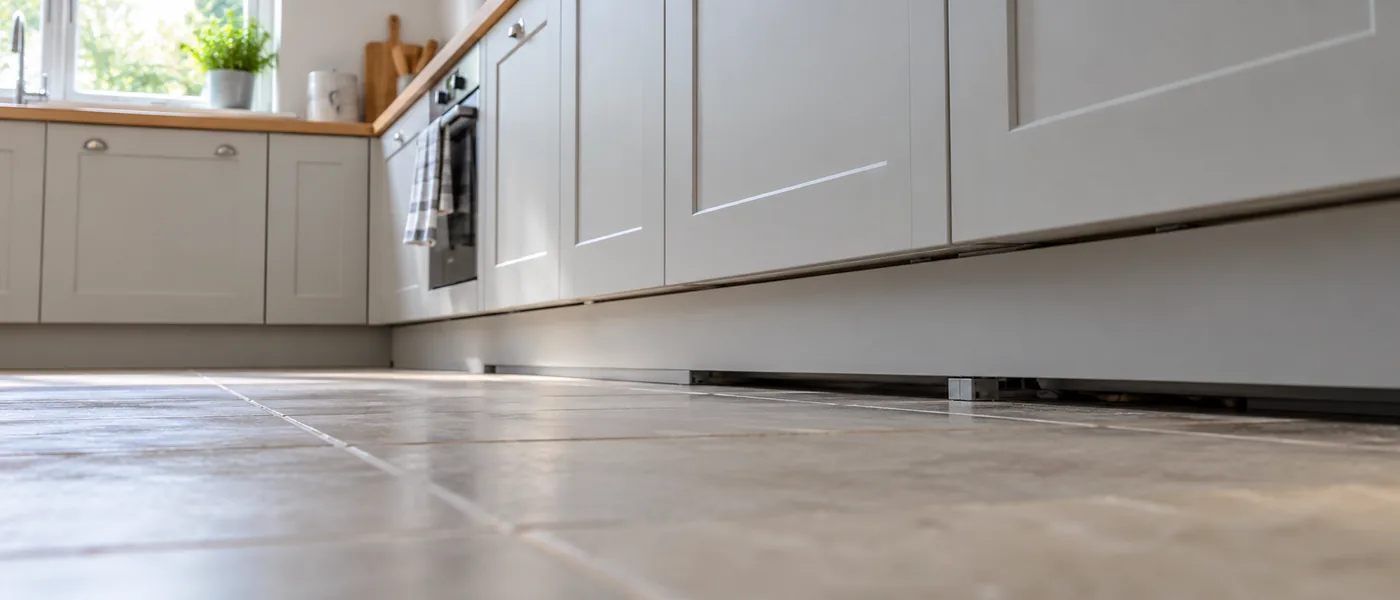
The first clue may be a rustle behind the plinth after the lights go out. The temptation is to pull every cupboard apart, but a kitchen has many hidden voids and several ways for a mouse to travel through them. A focused check can reveal where activity is concentrated without dismantling the room or disturbing electrical and plumbing services.
Why kitchen units conceal activity
Base cabinets sit above a narrow recess closed by a plinth. Pipes, cables and appliance connections often enter through the wall or floor behind them. A mouse can use those sheltered spaces while leaving only brief traces in the visible kitchen. Warmth from appliances and reliable crumbs or stored food make the area more attractive.
Mice do not need to live directly behind the cupboard where a sound is heard. They may pass along a wall void, under the floor or through a service riser before emerging at one opening. The visible sign can be a waypoint rather than the nest. That is why a mice control assessment should consider the wider route, not only the cupboard in which a dropping appears.
Check without taking the kitchen apart
Begin by clearing accessible cupboard floors and looking at the rear corners. Photograph any droppings, gnaw marks or damaged packaging before cleaning. Check around the waste bin, food cupboards and pet feeding area. Use a torch to look beneath units where there is an existing opening. Do not put your hand into an unseen void.
If a plinth is designed to unclip and you can remove it without force, inspect from the front. Stop if the trim is fixed, the appliance needs moving or pipes and wires are exposed. A heavy cooker or fridge can damage flooring or a supply line if shifted casually. An inspection is preferable where the likely route is behind fitted appliances.
Pay attention to pipe penetrations beneath the sink and behind the dishwasher. A gap around a water or waste pipe can connect a kitchen cupboard to a larger void. Water staining may also indicate a leak that needs a plumber. Record both issues; do not confuse proofing a gap with repairing a pipe.
Work out whether the signs are fresh
Old droppings can remain in a hidden recess long after activity ends. A new observation point helps. After documenting the area, clean safely, then check at a consistent time and note whether new marks appear. Do not dry sweep or vacuum droppings; that can spread dust. Follow current public health or local authority advice for contaminated material, and ask a professional about extensive deposits.
Listen for patterns rather than a single noise. Does rustling follow meal preparation, happen mainly at night or occur near the same appliance? Are food packets newly damaged? Do you see movement at the skirting board? Keep a concise log with dates and locations. A phone photograph taken from the same position each day is more useful than a dramatic description without a place or time.
If a mouse is seen, do not chase it around the kitchen. Shut the door if practical, keep pets and children away and note where it disappeared. That route is valuable evidence.
Make food less accessible immediately
Discard contaminated food and clean the cupboard before restocking. Move cereals, grains and pet food from thin bags into robust containers with close-fitting lids. Wipe crumbs from drawer corners and beneath reachable appliances. Empty the bin regularly and make sure its lid closes properly.
These changes reduce attraction but will not close a hole in a wall. A spotless worktop can coexist with active mice behind units if the building access remains. Conversely, a soundly sealed kitchen can still be attractive if food is routinely left out. A durable solution addresses both.
Avoid placing loose poison where it could contaminate food, be reached by children or pets, or become inaccessible behind cabinets. The Health and Safety Executive says members of the public should use only biocidal products intended for general public use and follow their labels. It also advises considering non-chemical methods. A professional can assess whether trapping, exclusion or another method is appropriate for the property.
Think about neighbouring spaces
In a house, inspect the adjacent utility room, cupboard and exterior wall. In a flat, pipe risers or shared service voids may connect more than one dwelling. Tell the managing agent or landlord what you have seen, especially if the route appears to pass through communal fabric. One household may not be able to close a shared opening alone.
For a kitchen on the ground floor, also look at the building exterior: gaps around service pipes, poor-fitting doors and damaged vents can connect directly or indirectly to the under-unit space. Do not block a designed vent or a drainage opening. A pest-proofing plan should use suitable materials while preserving airflow and access for maintenance.
What to ask a professional to check
Ask for a route map: where is activity visible, which gaps are likely entrances and what evidence supports that view? Ask whether the plinth or appliance needs to be removed by a suitable tradesperson. If there is a plumbing leak or electrical damage, seek the right trade as well. Pest control can identify an access issue, but it does not replace an electrician or plumber.
The treatment plan should also explain when proofing will be fitted. If an active mouse is still inside a void, a premature seal can divert it further into the property. A follow-up should establish whether signs are fresh and whether all temporary equipment has been dealt with.
A useful order for the household
Photograph and log the evidence. Clear and protect food. Inspect accessible cupboards, plinth edges and pipe gaps without forcing fittings. Arrange help if fresh signs continue or the route is hidden. Complete the recommended control and proofing, then check the same locations for renewed activity.
The purpose of the first check is not to find every mouse yourself. It is to give a precise description of the problem and avoid damaging a fitted kitchen in the process. A small, well-documented clue behind one unit can lead to the correct repair for the whole route.
Keep the dated photographs and repair notes together. They are useful if the same cupboard shows activity months later or the kitchen is altered during future work.
If the kitchen is due for refurbishment, share the inspection findings with the fitter before new units cover the wall. Ask that pipe routes and the backs of cabinets are photographed while visible. A small identified opening is easier to repair at that stage than after the worktop and appliances are installed. Keep the fitter's work within their trade: a damaged cable needs an electrician, and an active mouse route needs the control sequence agreed first. Good timing can save another round of dismantling later.