
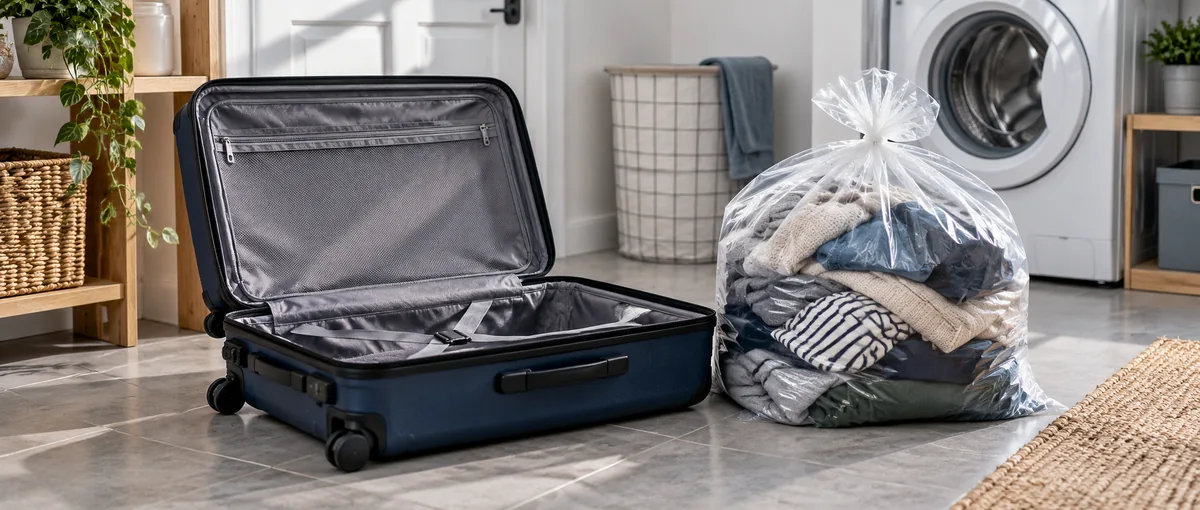
Discovering a suspicious insect in a hotel room can make the journey home feel longer than the holiday. The temptation is to tip the suitcase into the washing machine, spray everything, or throw away the case. A calmer sequence is safer and more useful: keep the contents contained, decide what can be laundered, inspect what cannot, and watch for actual evidence at home.
This guide assumes you have a reason for concern, such as a verified sighting or credible signs near a bed. It is not a routine for every traveller after every trip. Bed bugs can travel in luggage and clothing, but a stay in a room where they were present does not automatically mean that every possession contains them. Treat the risk seriously without turning an uncertain exposure into an expensive clear-out.
Choose an unpacking place before opening the case
If you can, carry your closed suitcase to a utility room, bathroom or another uncluttered area with a hard floor. Keep it away from beds, sofas and piles of clean laundry. If your only suitable space is carpeted, put the case on a large, light-coloured sheet that you can later handle separately. Good lighting will help you see seams and small insects.
Prepare clean bags for laundry and a separate container for items that cannot go straight into a wash. You do not need specialist equipment. The point is to make one controlled route for possessions rather than carrying loose clothes through several rooms. Keep children and pets away from the open case while you work, especially if you intend to inspect small objects on the floor.
Take a photograph if you find an insect or physical sign. A sharp image of its shape and size can help a professional decide whether it is a bed bug or another insect. Bites by themselves are weak evidence; the NHS advises looking for physical signs such as insects, blood spots on bedding and small brown spots on fabric or furniture.
Deal with washable clothing in one batch
Place travel clothes directly into a bag or washing basket that you can carry to the machine without brushing them against furniture. The NHS recommends a 60°C wash for affected bedding and clothing, followed by a hot tumble dry for at least 30 minutes. The heat guidance matters more than simply adding detergent. Check care labels first, because a hot wash can damage delicate fabrics.
Do not overload the machine. Items need to move and heat evenly. Seal the bag used to transfer clothing and dispose of or wash it appropriately. If a garment cannot tolerate 60°C, do not improvise by using a cooler wash and assuming it has the same effect. Keep it contained while you ask a pest professional or the fabric-care provider about suitable alternatives. Dry cleaning may be an option for some items, but alert the cleaner to the concern before handing over a bag.
Shoes, books, electronics and toiletries call for different treatment. Inspect exterior seams, folds, cases and packaging under good light. Do not put electronic devices in an oven, tumble dryer or freezer. Household appliances are not reliable pest treatment chambers and may damage batteries or create a fire risk. If an item is valuable or difficult to inspect, isolate it and obtain professional advice instead of applying chemicals to it.
Inspect the suitcase itself
Once emptied, check the zip track, fabric piping, wheel housings, handle recesses and pockets. Use a torch and look for live insects, dark spotting or shed skins. A vacuum with a crevice tool can help remove loose debris, but it is not a substitute for inspection or a complete treatment. Empty the vacuum into a sealed bag promptly and follow the manufacturer's instructions for cleaning the appliance.
Keep the case apart from everyday storage until you are satisfied there is no evidence or a technician has advised what to do. A hard-sided case may be easier to inspect than a soft bag, but neither type is immune to hitchhiking insects. If you find a convincing bed bug specimen, do not rely on a single home remedy. Request identification and a plan for your particular belongings.
Do not spread uncertain evidence around the home
One common mistake is to move from room to room checking every bed while carrying the suspect case. Another is to place the case on the spare-room bed “for now”. Complete the luggage and laundry check in one place, then inspect sleeping areas separately if there is a reason to do so. If you slept at home before realising the hotel concern, check the bed seams and frame calmly rather than emptying every cupboard.
Avoid using insecticide aerosols on bags or clothes unless the product label expressly permits that use and you can follow every instruction. Products intended for general crawling insects may not reach a hidden bed bug population, and spraying near people or pets adds avoidable exposure. The NHS says bed bugs are difficult to eliminate yourself because they hide well and may resist some insecticides. A professional assessment is sensible when you find physical evidence at home.
All Pests Gone's bed bug control page describes the relevant service if your home needs treatment. Its pest inspection service is the more appropriate first step when the insect has not yet been identified. Tell the technician where you travelled, what you saw, which items have been washed, and where the suitcase has been stored. That history can make the inspection more focused.
Watch for evidence, not every itch
After an exposure, ordinary skin irritation can suddenly seem suspicious. Bed bug bites may be itchy, but similar-looking marks have several causes, and reactions vary between people. Keep any photographs of suspected insects and note the date and location of new physical signs. If you see nothing, avoid repeatedly treating the house “just in case”. A measured follow-up inspection is more useful than spraying every room.
If bites cause significant discomfort, a pharmacist can advise on itch relief. The NHS recommends GP advice if symptoms remain painful, swollen or itchy after pharmacy treatment, or if the affected area spreads. Seek urgent help for severe allergic symptoms. Managing your health and identifying a pest are separate tasks; neither should wait for the other.
If you stayed with someone else
Tell other travellers what you found without declaring that they have an infestation. Each household can use a similar contained unpacking routine. Share clear photographs of the suspected insect, not rumours about a hotel. If you were in a shared holiday rental, send the property manager a factual report with dates, room location and evidence so they can arrange an inspection before the next guest.
A sensible return-home routine is short enough to follow even when tired: closed case to a clear space, laundry contained and heat-treated where fabric permits, non-washables inspected, case seams checked, and evidence documented. If a bed bug is confirmed or signs appear in the home, seek a proper survey. The earlier the evidence is localised, the easier it is to make a targeted decision.