
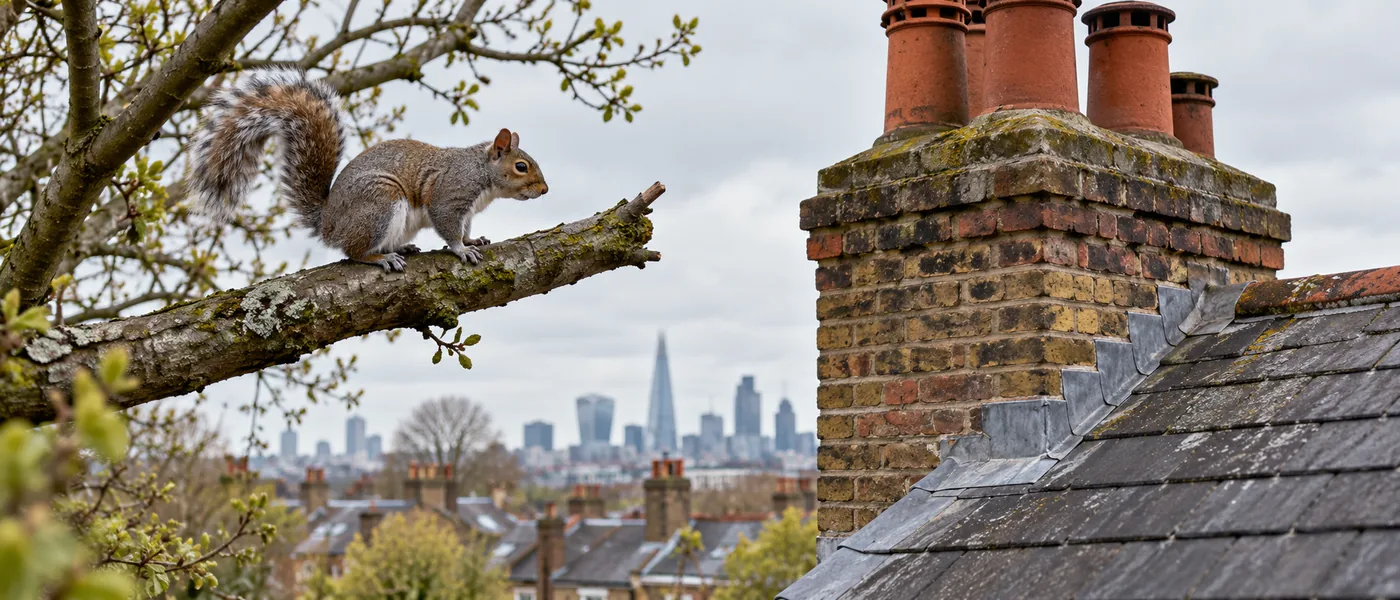
A grey squirrel that runs across a roof and disappears behind a chimney stack can make it look as though the chimney itself is the entry point. Sometimes the animal is using a gap in flashing, an adjacent tile or a sheltered roof junction. Sometimes it is merely crossing the roof to another destination. The right first step is observation, not blocking the nearest visible opening.
The area around a chimney combines several building details: masonry, flashing, roof covering and sometimes an old flue. Damage to any one may admit rain as well as wildlife. A repair must preserve weatherproofing and ventilation where needed. A pest-control assessment can identify animal activity; a roofer or chimney specialist may then be needed to repair the actual fabric.
Record repeated movement before deciding where the squirrel goes
Watch from a safe place on the ground or from inside an upstairs window without leaning out. Note the time, direction of travel and whether the squirrel vanishes at the same point more than once. A single sighting on a chimney is weak evidence of entry. Repeated movement beneath a particular flashing edge is stronger. Short video clips can help an inspector understand the route without requiring a householder to climb.
Listen for sound beneath the nearby ceiling, but treat it as a clue rather than proof. Noise can travel through roof timbers and flues, and birds or rodents may make similar sounds. Record when it occurs and whether it coincides with the outside observation. If the sound is a flutter or repeated tapping rather than scurrying, mention that distinction.
Photograph any visible slipped tile, gap or vegetation touching the roofline. Avoid pushing a camera, pole or hand into an opening. Disturbing an occupied space can cause animals to move deeper into the building or damage material that a roofer needs to assess.
Consider what else uses the chimney area
Birds may nest in or near a chimney, and bats can use roof and chimney features. In England, active wild bird nests are protected, and bats and their roosts have strict legal protection. Grey squirrels themselves have different legal restrictions. Correct identification is therefore essential before any roof or chimney work. A general assumption that all noises near a chimney come from squirrels can lead to the wrong intervention.
If the flue is in use, treat any obstruction, smell or smoke problem as a chimney safety issue and seek advice from a competent chimney professional. Do not light a fire to drive an animal out. If you suspect a bird or other animal is trapped inside, obtain specialist help rather than opening the fireplace or trying to sweep it yourself. The safety and wildlife position depends on the species and the condition of the flue.
An unused flue may still require appropriate ventilation or capping. Do not seal it with an improvised plug based only on an outside sighting. A chimney specialist can advise on the building function; a pest inspection can establish whether there is current animal activity nearby.
Check the junction, not only the stack
Squirrels can exploit weak points adjacent to a chimney. Flashing can lift, tiles can slip and mortar can deteriorate. The entry route may be behind the stack rather than through a flue. A competent roofer should inspect with safe access equipment and photograph the finding. From the ground, a homeowner cannot reliably judge the size or depth of a hidden gap.
Ask the inspector to state which sign is confirmed. Is there fresh debris or gnawing? Was an animal actually seen entering? Are there old stains from a previous roof leak? A report should separate those observations. This prevents paying for a chimney cap when the true route is an eave several metres away.
In a terrace, the chimney stack may be shared or sit on a party wall. Check ownership before commissioning alterations. A repair on one side may affect neighbouring weatherproofing. The roofer and property owner may need to coordinate access and consent. Keep photographs and written scope so all parties know which joint is being repaired.
Do not seal an active route too early
If a squirrel is occupying a roof void, sealing the gap can trap it inside, push it into living space or leave dependent young behind. A squirrel control plan should explain how the animal and occupancy will be confirmed, how control will be carried out lawfully and when the roofer may close the route. The two trades should agree that handover explicitly.
GOV.UK states that it is an offence to keep or release a captured grey squirrel in England and recommends professional advice when people are unsure of lawful control. A household live trap is not a simple relocation solution. Do not place poison in a flue or roof void; it can pose risks to other animals and leave inaccessible remains. If other protected wildlife is found, the plan must change.
After the space is clear, the roofer should repair the cause rather than merely cover the apparent hole. Sound flashing, masonry and roof covering matter for weather resistance. Any cap or guard should be suitable for the chimney’s use and allow necessary ventilation. A pest barrier that creates a damp or smoke problem is not successful proofing.
Check the outcome after repair
Keep dated photographs of the completed work and note when the squirrel activity stopped. Watch the roofline from the same safe location for a short period. A squirrel crossing the roof later is not automatically evidence of failure; repeated entry at the repaired junction or new noise inside deserves another inspection. Check after heavy weather, because wind and rain can reveal a poorly secured repair.
Ask who will inspect adjacent weak points. If the chimney junction was the only repaired area but a nearby soffit is loose, a second route may remain. A thorough close-out should describe what was checked, what was repaired and what could not be accessed. If a roofer recommends further work, keep it on an action list rather than assuming the pest visit completed everything.
The safest route from sighting to solution is to observe, identify and assess occupancy, then repair the confirmed building defect with the right trade. That sequence protects wildlife, avoids trapping an animal and gives the chimney a durable, weatherproof repair.
What to give the roofer and pest professional
Share the same photographs and timeline with both contractors. Mark the suspected route on a wide shot of the roof so the roofer can orient themselves; send the pest professional the movement video and any inside observations. Ask each to record what they could see and what remained hidden. If a chimney sweep has recently reported a blocked flue, include that information too. It may change the inspection order or the access equipment needed.
Before approving a repair, ask whether the stack is still serving an appliance and whether another professional must assess the flue. A chimney cap chosen for an unused opening may be wrong for a working one. Clarify how the roofer will protect neighbouring tiles and leave the flashing watertight. Request a photograph of the finished junction from the same angle as the defect. That makes later monitoring more reliable and avoids arguing from memory about what was actually changed.