
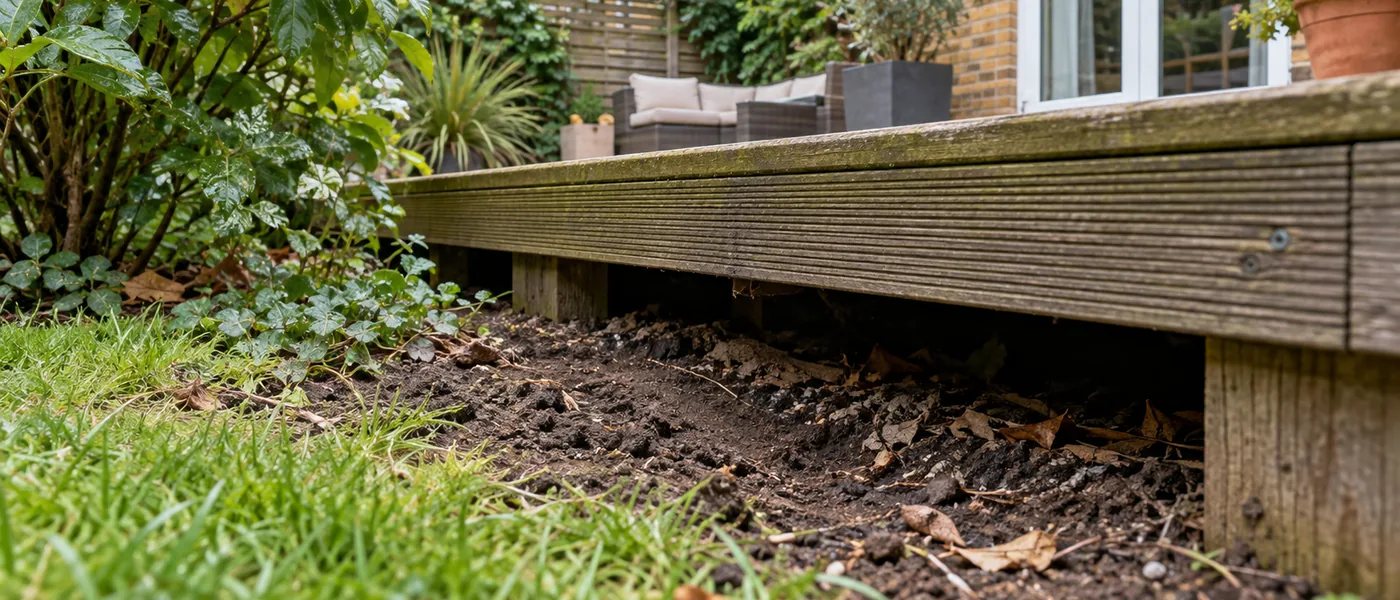
A raised deck can make a garden easier to use, but the space beneath it is easy to forget. If you notice a narrow run through the planting, fresh soil at a board edge or movement after dusk, the deck may be offering rats a sheltered route. That does not mean the whole structure has to come out. It means the ground, access points and nearby sources of food deserve a careful look before anyone starts lifting boards or closing gaps.
Why the space beneath a deck appeals to rats
Decking creates a dry, shaded void with protection from wind and disturbance. Joists and support posts form boundaries that animals can follow. Where a deck meets a fence, shed, wall or dense planting, the route may continue almost unseen across the garden. A low deck with an open perimeter can also give access to soil suitable for burrowing.
Shelter alone is rarely the whole explanation. An overflowing bin, spilled bird seed, pet food left outdoors or an accessible compost heap can make the same garden worth visiting repeatedly. The rat may be travelling through rather than nesting there. That distinction matters: blocking a visible gap without understanding where the animal feeds and travels may only divert it to another opening.
Signs worth checking before you disturb the deck
Start with observations you can make from a safe position. Look along the deck perimeter for worn routes in grass or soil, fresh excavated earth and openings beneath edge boards. Check for gnawing around stored items and for droppings in sheltered corners. A smear or rub mark along a frequently used edge can be another clue, but no single mark proves a rat is present. Other wildlife may use a garden too.
Time your observations. Rats are often most noticeable around dusk and at night, although daytime sightings can occur. Record the date, time and location of a sighting rather than relying on memory. A photograph of an opening with an everyday object nearby for scale can help an inspector assess it without repeated disturbance. Keep children and pets away from suspicious holes or droppings.
Avoid reaching under the deck or pulling up boards to investigate a suspected nest. Hidden nails, unstable boards, contaminated material and a startled animal all create avoidable risks. If the evidence is unclear, an inspection of the garden and building can establish whether the deck is the main harbourage or simply part of a larger route.
Follow the route beyond the decking
Walk the outside of the property in daylight. Does the deck join directly to a wall? Are there gaps at the base of a door, around a pipe or beside a drain? Are climbers, bins or stored materials concealing part of the wall? The aim is to understand how a rat could move from a garden refuge towards the house.
Pay attention to the edges of the property as well. A hole beneath a fence can be a passage between gardens; a damaged drain or gully may point to a different source. If several properties share a boundary, the useful solution may involve neighbours. It is sensible to document what you see and discuss any work that would affect a shared fence or structure.
At this stage, avoid sealing an opening that might contain active animals. Trapping rats under the deck or inside the building can cause a separate problem. A professional rat control assessment can sequence treatment and exclusion so that one step does not undermine the next.
Remove the attractions you can control
Secure household waste in a sound bin with a closing lid. Clear spilled food around bird feeders and consider pausing feeding while activity is investigated. Store pet food indoors or in a robust sealed container. Do not leave bowls outside overnight. If compost is part of the garden, avoid putting cooked food or meat in it and examine whether its construction gives rodents easy access.
Reduce undisturbed cover where practical. Move stacked pots, spare timber and bags away from the deck edge so the perimeter can be inspected. Trim back dense vegetation enough to see the ground and wall. This is not a call to strip the whole garden: wildlife-friendly planting and a tidy, inspectable route can coexist. The most useful change is often a clear line of sight around the deck and near the house.
Cleaning should be cautious. Do not dry sweep or vacuum suspected rodent droppings, which can put dust into the air. Follow current local authority or public health guidance for contaminated material, and ask a professional if the area is extensive or difficult to reach. Wash hands after garden work and keep tools used in contaminated spots separate from food preparation areas.
Why filling every gap immediately can backfire
A common impulse is to pack mesh or expanding foam into every opening. Foam alone is not a reliable barrier against gnawing and may conceal an active route. More importantly, closing the exit of an occupied space can leave animals trapped. The correct detail also depends on the construction of the deck. Timber needs suitable clearance and airflow to dry; a badly planned skirt can retain moisture and make future inspection harder.
Successful pest proofing starts with an assessment of activity and the surrounding structure. Once control has been addressed, robust exclusion materials can be fitted to the right places while preserving drainage, ventilation and maintenance access. The job may involve a combination of perimeter work, building repairs and changes to waste storage. There is no universal strip of mesh that solves every deck.
If the deck is close to an air brick or other designed vent, do not block the airflow. A vent needs to perform its original purpose. Ask a competent tradesperson or pest-proofing specialist to specify protection that leaves ventilation working.
Decide whether the deck is the source or a symptom
Fresh soil reappearing after it has been levelled, repeated sightings, droppings near the house or evidence inside a shed or kitchen are reasons to seek help promptly. An inspector should be able to identify likely routes, places of activity and practical next steps. Ask for the findings to be explained in terms you can check later: where was activity seen, what needs repairing and what should be monitored?
A bait or trap placed without a property assessment may reduce one sign while leaving the access route intact. The Health and Safety Executive lists hygiene, physical barriers and traps alongside biocidal products as possible rodent-control measures. It also warns that rodenticides can harm people, pets and other animals if misused. If a product is proposed, its use should fit the location and its label. Do not put poison under a deck as a quick experiment, particularly where children, pets or wildlife may reach it.
After treatment, agree on a reasonable monitoring period and make sure any temporary equipment is dealt with as instructed. Keep a short log of sightings or fresh marks. If a previously quiet area becomes active again, that evidence helps distinguish a missed entry point from a new visit.
A practical order of work
First, observe and photograph the signs without entering the void. Next, check waste, feeding and stored materials for easy attractions. Then inspect the deck perimeter and the building exterior in daylight. Arrange help if there are clear rat signs, multiple possible routes, a suspected drain fault or activity close to the house. Complete proofing after the route and timing have been established. Finally, keep the perimeter visible enough for occasional checks.
This sequence avoids a dramatic but ineffective response. It also gives you a way to judge whether the situation is improving. The goal is to make the garden less useful to rats and prevent a sheltered route from becoming access to the home. A deck can remain an enjoyable part of the garden once the underlying conditions have been addressed.