
Homes provide warmth, water, food and shelter, so occasional pest pressure is normal. An infestation is not a verdict on cleanliness: access routes, neighbouring activity, travel, deliveries and building defects all play a part. This practical guide introduces ten household pests seen in the UK and explains the evidence that helps distinguish them. Identification comes before treatment.
Rodents: rats and mice
1. Rats
Rats may use gardens, drains, basements and service routes before entering a building. Look for larger droppings, gnawing, soil disturbance and repeated noise. Because drainage or shared-space issues can be involved, effective rat control combines inspection, targeted control and proofing recommendations.
2. Mice
Mice can exploit remarkably small gaps and live close to kitchens, cupboards or warm voids. Small scattered droppings, damaged packets and sounds at night are common clues. Do not seal suspected routes until activity has been assessed; our mice control service maps evidence before repairs.
Blood-feeding and biting pests
3. Bed bugs
Bed bugs travel in luggage, furniture and belongings. Bites alone cannot confirm them. Dark spotting around mattress seams, cast skins and live insects are stronger evidence. Avoid moving beds or spraying random products, as this may spread activity. Follow the preparation advice supplied with professional bed bug treatment.
4. Fleas
Fleas are often associated with cats and dogs, but vacant properties can also show activity when dormant stages respond to movement. Small jumping insects and bites around ankles are typical reports. Veterinary care and environmental treatment may both be needed; neither replaces the other. See our flea control guidance.
Crawling kitchen and bathroom pests
5. Cockroaches
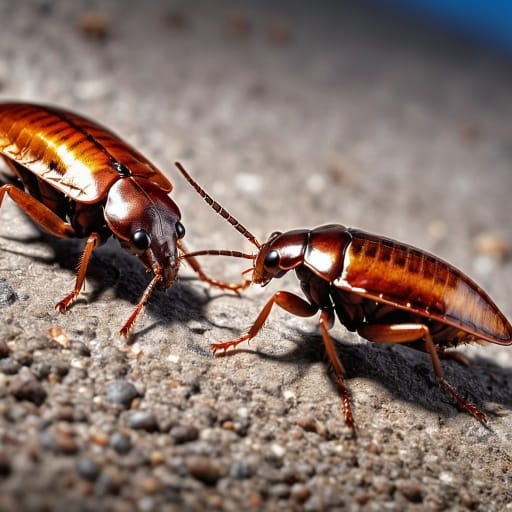
Cockroaches favour warm, sheltered locations near food and water. Night-time sightings, droppings resembling dark specks and egg cases warrant prompt inspection, particularly in flats or food premises. Connected services mean one room may not be the full extent. Professional cockroach control uses monitoring to define activity.
6. Ants
Ant trails often lead from an entry point to a food source. Wiping the visible trail may be useful housekeeping but does not necessarily address the colony. Record where ants enter, reduce accessible food and avoid combining products. Species and nest location influence the ant control plan.
7. Silverfish
Silverfish are fast, silvery insects found in humid bathrooms, kitchens and stores. They may feed on paper, adhesives and starchy material. Their presence can point to persistent moisture, so ventilation or leak repair may be as important as targeted control.
Fabric and stored-product pests
8. Clothes moths
The damaging stage is the larva, which feeds on natural fibres. Irregular holes, webbing or cases in undisturbed wardrobes and carpet edges are useful clues. Isolate affected textiles, follow their care labels and arrange identification before treating an entire room.
9. Carpet beetles
Carpet beetle larvae are hairy and may occur beneath furniture, along skirting edges or near natural-fibre items. Adults are often noticed at windows. Thorough, careful cleaning and locating the breeding material matter. The approach differs from moth treatment even when the damage looks similar.
Seasonal flying pests
10. Wasps
Wasps become conspicuous in warmer months. A steady stream entering one point can indicate a nest. Do not obstruct the entrance or approach a nest at height. Keep people clear and use a trained wasp control professional, especially beside doors, windows or play areas.
Safe first steps for any suspected pest
- Photograph evidence and note dates, rooms and times.
- Store open food in robust sealed containers.
- Keep children and animals away from droppings, nests and unknown products.
- Do not mix pesticides or rely on unlabelled online remedies.
- Check whether neighbouring or shared areas show related activity.
Cleaning can reduce food sources, but avoid removing every trace before an inspection. Evidence helps the technician identify routes and measure progress.
When to arrange an inspection
Book a pest inspection when identification is uncertain, fresh evidence keeps returning, several rooms are involved or the property includes shared services. Restaurants, landlords and facilities teams should act early where hygiene, stock or occupants could be affected.
All Pests Gone serves homes and businesses across London. Call 020 3318 2099 with your postcode and the signs you have noticed. We will help identify the useful next step without asking you to diagnose the pest yourself.