

UXBRIDGE · PEST CONTROL
Pest Control Uxbridge
Mouse droppings in an office kitchenette can reflect one local opening or movement along services shared with other rooms. In Uxbridge, we map where staff actually found evidence, check accessible connections and give facilities a plan that separates immediate control from repair and cleaning responsibilities.
- Staff sightings converted into a location map
- Control planned around occupied workplaces
- Facilities repairs linked to supported routes
LOCAL CONTEXT
Explain why the kitchenette signs return
Uxbridge is an outer west London town close to Buckinghamshire and the western M25. Offices, retail premises, student accommodation, managed flats and suburban homes create different access rules, without proving any local pest pattern. This record focuses on a workplace where signs recur after weekend cleaning. We ask staff to identify exact cupboards and dates, then inspect appliance edges, cable entries, water services and nearby storage. Cleaning history is considered because removal of droppings can obscure whether activity is new. Secured monitoring helps compare weekdays with quiet periods. Treatment is chosen around food preparation and continued office use, while any wider riser access goes through facilities management. A home enquiry receives a domestic risk assessment rather than copied office placement. Links to mice control, pest inspection and proofing provide deeper preparation detail.
What the inspection needs to establish
Cupboards where weekend evidence reappears Water and cable entries behind kitchenette units Food drawers and appliance voids Adjacent stationery or dry storage Authorised ceiling or riser connections Door gaps supported by track location
- Cupboards where weekend evidence reappears
- Water and cable entries behind kitchenette units
Prepare the relevant access
Ask staff and cleaners to stop removing the newest evidence only where it is safe to preserve. List the cupboard, date and shift for each report. Arrange keys for relevant stores or risers, disclose food policies and tell us which cleaning chemicals were used. Keep the kitchenette operational only within the site’s hygiene procedure.
Can cleaners continue around monitors?
Yes when they follow the aftercare instructions and do not move recorded devices.
When the response should move faster
Fresh contamination of shared food, activity around electrical equipment or a rodent loose during occupied hours justifies prompt contact. Close the kitchenette if the organisation’s hygiene plan requires it. Do not let staff improvise exposed bait or dismantle powered appliances.
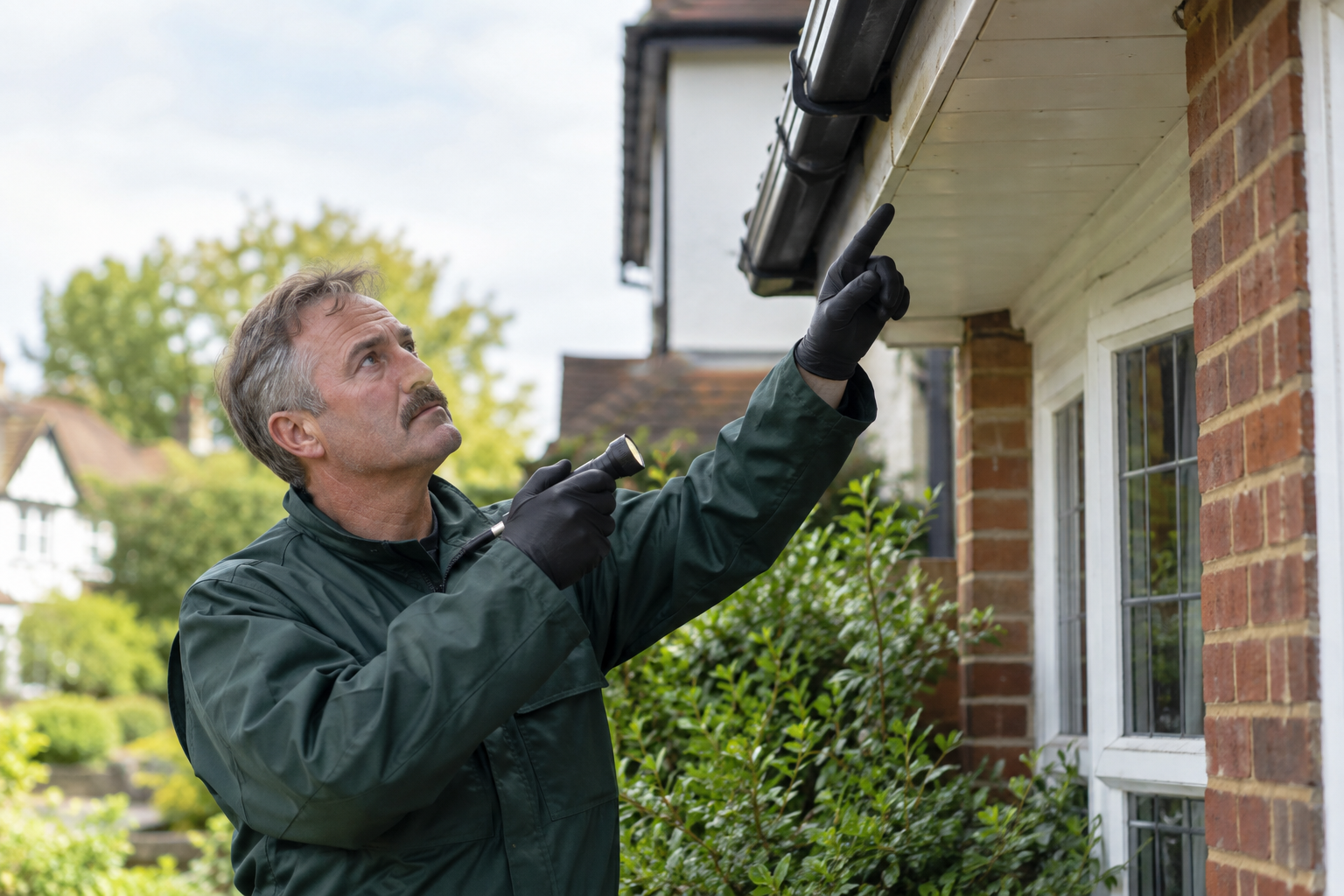
Follow services without assuming the whole floor
Adjacent stationery or dry storage
Authorised ceiling or riser connections
Door gaps supported by track location
Control matched to the evidence
Mice
Dated droppings and monitor results reveal whether activity follows occupancy or quiet periods. Placement remains secured around staff and cleaners.
Cockroaches
Specimens are identified before warm appliance and moisture points are targeted; routine cleaning alone may not reach harbourage.
Bed Bugs
Student or managed sleeping rooms require physical evidence and room-specific preparation, not assumptions from neighbouring reports.
Ants
A visible trail is followed toward food, moisture and the entry point before bait or exclusion is considered.
A log that survives the weekend clean
Compare working and quiet periods
The log shows whether evidence appears after particular occupancy patterns.
Inspect the named kitchenette
Services, storage and appliances are checked around confirmed positions.
Test adjoining access
Only authorised connected areas supported by the map enter scope.
Install accountable control
Each point has a purpose, position and instruction for cleaners.
Send fabric tasks to facilities
Repair actions name the opening and suitable timing.
Review with the same log
New evidence is added consistently so the response can be adjusted.
A weekend pattern facilities can verify
Before
Cleaning removes signs before their time and position have been compared.
Work
The kitchenette route is inspected, controls are labelled and staff use one reporting method.
After
New entries can be checked against occupancy and device activity, revealing whether the plan needs extension without guaranteeing closure.
Current starting prices
Define rooms and managed access first
| Service | Starting price | Scope factors |
|---|---|---|
| Pest inspection | From £62 | Property, access and areas inspected |
| Wasp treatment | From £89 | Nest position, height and safe access |
| Rodent control | From £184 | Activity, monitoring and visits |
| Bed bug control | From £204 | Rooms, preparation and method |
| Squirrel control | From £273 | Loft access, visits and proofing |
Final scope can change with access, activity, property size, treatment method, specialist equipment and the number of visits. Confirm the current price and inclusions before booking.
Practical local answers
Will every office on the floor need treatment?
No. Additional areas need evidence or a plausible connected route before scope expands.
Can access be planned outside staff hours?
Discuss this when booking; availability, security and safe lone-working arrangements all matter.
Nearby coverage
Related services
Questions before booking
Why do Uxbridge weekend sightings need dates rather than estimates?
Exact timing lets the review compare cleaning, occupancy and monitor activity without relying on memory.
Can food be returned to a kitchenette immediately after work?
That depends on the selected method and label restrictions, which are explained before treatment.
What if cable routes disappear behind fixed office furniture?
The access limit is documented and facilities can arrange safe removal if later evidence justifies it.
Should staff report every insect found near a window?
They should record repeat or unusual activity, while identification decides whether it relates to an indoor harbourage.
Can an office mouse plan cover student accommodation upstairs?
No. Sleeping accommodation requires separate access, risk assessment and evidence.
Office access answers for Uxbridge
Pest control in Uxbridge for offices, student rooms, shops and homes. Service-route inspection, targeted mouse control and accountable aftercare.
Call 020 3318 2099