
ST ALBANS · PEST CONTROL
Pest Control St Albans
Droppings found in a hospitality dry store need a documented response before deliveries and cleaning erase the route. In St Albans, we map the affected shelf, inspect staff, delivery and waste connections and place protected controls that can be reviewed without disrupting food safety procedures.
- Stock evidence recorded before movement
- Hospitality controls protected and labelled
- Building repairs separated from hygiene actions
LOCAL CONTEXT
Protect stock and preserve the route
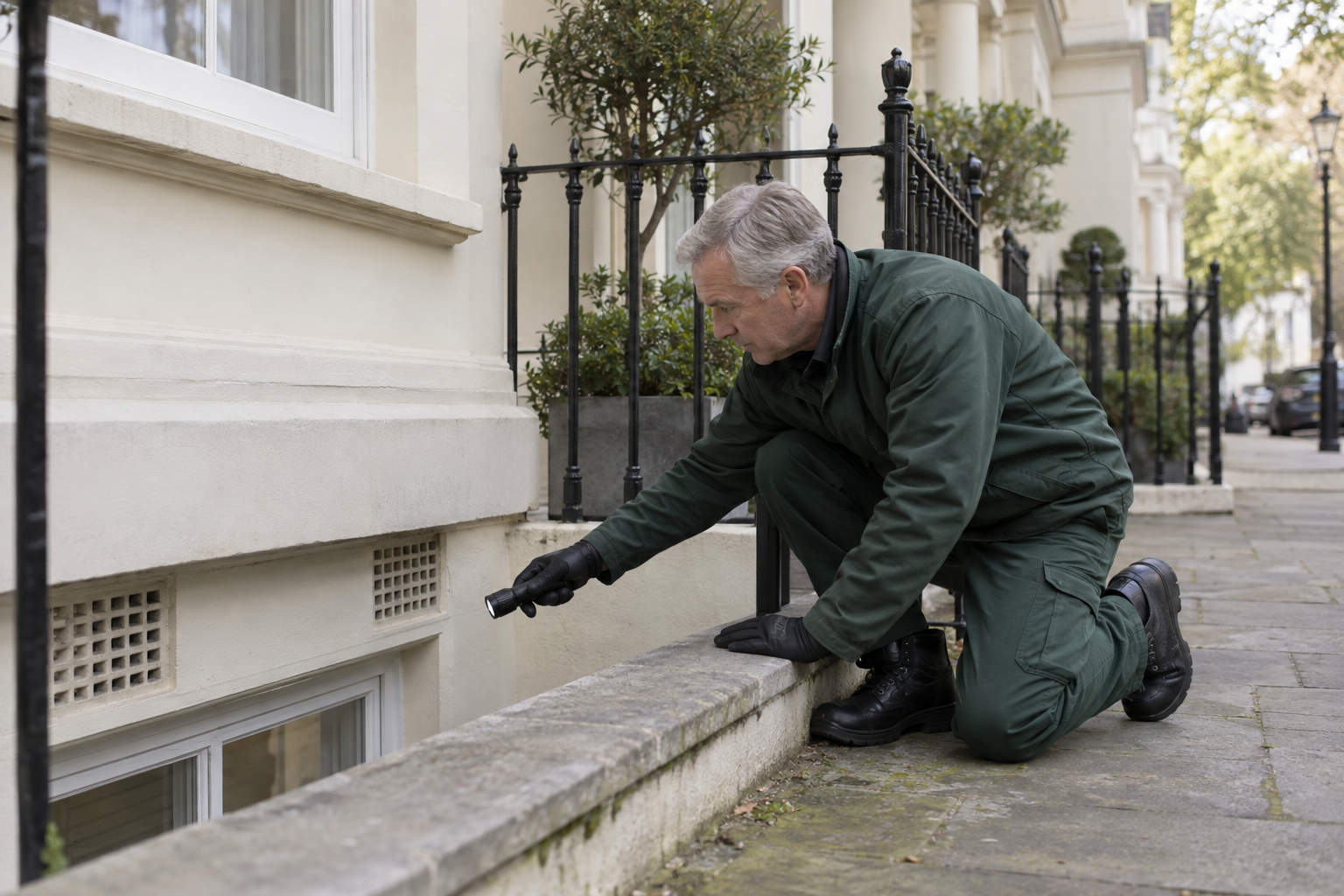
St Albans is a Hertfordshire city north of the M25, with historic and modern homes, flats, hospitality venues, shops and offices. That broad context shapes access but does not indicate a local pest rate. This record focuses on fresh mouse evidence in a restaurant dry store. The operator isolates affected packages under its food-safety procedure and records their batch and shelf. We inspect racking edges, staff food points, delivery thresholds and accessible wall services in the order supported by tracks. Waste movement is considered separately and connected only through physical evidence. Control points remain secured, numbered and included in the site record. Cleaning teams receive instructions that preserve monitoring while removing contamination safely. Door, masonry or drainage defects are sent to the appropriate contractor. A residential call uses household risk controls rather than copying the commercial placement. Contextual links provide mice control, commercial inspection and proofing guidance.
What the inspection needs to establish
The exact shelf holding fresh package damage Racking edges aligned with droppings Delivery thresholds used before the discovery Staff food storage kept apart from sale stock Waste routes only when tracks support a connection
- The exact shelf holding fresh package damage
- Racking edges aligned with droppings
Prepare the relevant access
Record product, batch, shelf and discovery time before safe removal. Protect unaffected stock, keep the newest track visible where possible and provide delivery and collection schedules. Nominate the manager who can approve treatment. Do not place loose bait or spray equipment voids before inspection.
Can the store operate during monitoring?
That depends on the affected stock, safe segregation and the operator’s food-safety decision.
When the response should move faster
Confirmed contamination of open food, a live rodent in preparation space or gnawing near electrical equipment requires prompt operator action. Isolate affected goods under the business procedure. Electrical, drainage or structural hazards need their own competent specialists.

Trace shelving before blaming waste
Staff food storage kept apart from sale stock
Waste routes only when tracks support a connection
Control matched to the evidence
Mice
Small package damage and racking tracks guide protected monitoring and treatment.
Rats
Larger signs require a lower-level route and possible drainage assessment.
Cockroaches
Warm equipment and moisture are inspected only after insect identification.
Flies
Breeding material is located before chemical control is considered.
Bed Bugs
Sleeping accommodation receives its own evidence-led room inspection.
A back-of-house chain of evidence
Secure the stock trail
Product and shelf details preserve the first evidence.
Inspect the store route
Racking and services are checked from confirmed signs.
Compare operational doors
Delivery and waste paths remain separate until tracks connect them.
Install protected measures
Every point has an identity and handling instruction.
Coordinate cleaning and repair
Tasks are timed so they do not erase the control record.
Review around deliveries
Fresh evidence is compared with stock movement and device results.
A stock report tied to fixed positions
Before
Packages are damaged, but delivery timing and the active store route remain uncertain.
Work
Stock identifiers, shelving signs and controls are documented before hygiene and repair actions.
After
New damage can be compared with deliveries and fixed devices; the review informs changes without guaranteeing clearance.
Current starting prices
Define stock, rooms and access
| Service | Starting price | Scope factors |
|---|---|---|
| Pest inspection | From £62 | Property, access and areas inspected |
| Wasp treatment | From £89 | Nest position, height and safe access |
| Rodent control | From £184 | Activity, monitoring and visits |
| Bed bug control | From £204 | Rooms, preparation and method |
| Squirrel control | From £273 | Loft access, visits and proofing |
Final scope can change with access, activity, property size, treatment method, specialist equipment and the number of visits. Confirm the current price and inclusions before booking.
Practical local answers
Must the waste area be included?
Only when access is authorised and evidence gives a reason to connect it.
Can cleaners move numbered controls?
No. They should follow the written restrictions and report disturbance.
Nearby coverage
Related services
Questions before booking
Why do St Albans batch details matter to pest work?
They help distinguish incoming damage from activity that occurred during storage.
Can one damaged package identify mice?
Droppings, gnawing form, tracks and monitoring are considered together.
When should a door contractor attend?
After the active route and suitable repair timing have been established.
How is a hospitality follow-up measured?
Fresh damage, numbered-point activity and completed repairs are compared with the original map.
St Albans hospitality answers
Pest control in St Albans for homes, flats, shops and hospitality premises. Back-of-house inspection, targeted treatment and practical prevention.
Call 020 3318 2099