
Identify food preference
Sugary and protein attraction helps guide bait selection.

SOUTHGATE · KITCHEN ANT INVESTIGATION
A visible trail from patio to sink offers useful evidence, but the nest may sit outside, within a wall edge or somewhere unrelated to the first ants seen. We observe direction and feeding, identify the species where possible, remove competing food and moisture, and place targeted bait safely. The threshold is proofed only after colony activity has been addressed.
Sugary and protein attraction helps guide bait selection.
Cracks, planters and paving edges are checked from safe accessible ground.
LOCAL CONTEXT
Southgate includes suburban houses, flats and high-street premises. For this home, the relationship between paving, threshold and sink determines the useful survey. General local property character cannot identify the colony or treatment. We follow the active worker trail in its strongest period, checking species, direction and where it crosses the door or pipework. Food and water sources are noted without removing the route before treatment. Outdoor nests are not assumed from ants on the patio; bait position depends on observed movement and the identified species. Contact spray can scatter workers or interrupt bait transfer, so earlier products are recorded. Failed sealant or a leak may need maintenance after the control plan is established. Review compares activity at the same trail and feeding point, while unrelated garden ants remain outside the indoor treatment measure.
The technician watches where ants emerge, what attracts them and how they return. Cleaning remains important, but removing the trail immediately can hide the route needed for treatment.
Wipe food spills and store ingredients securely, but avoid repellent spray, boiling water or sealant at the entry point. Empty the sink cupboard, report leaks and keep pets or children away from the trail. Note whether activity changes after rain or garden watering.
Only a confirmed nest, persistent moisture or a direct trail would justify changing them.
Protect infant food, sterile items or electrical equipment if ants reach them. A leaking appliance or unsafe socket requires the relevant qualified trade.
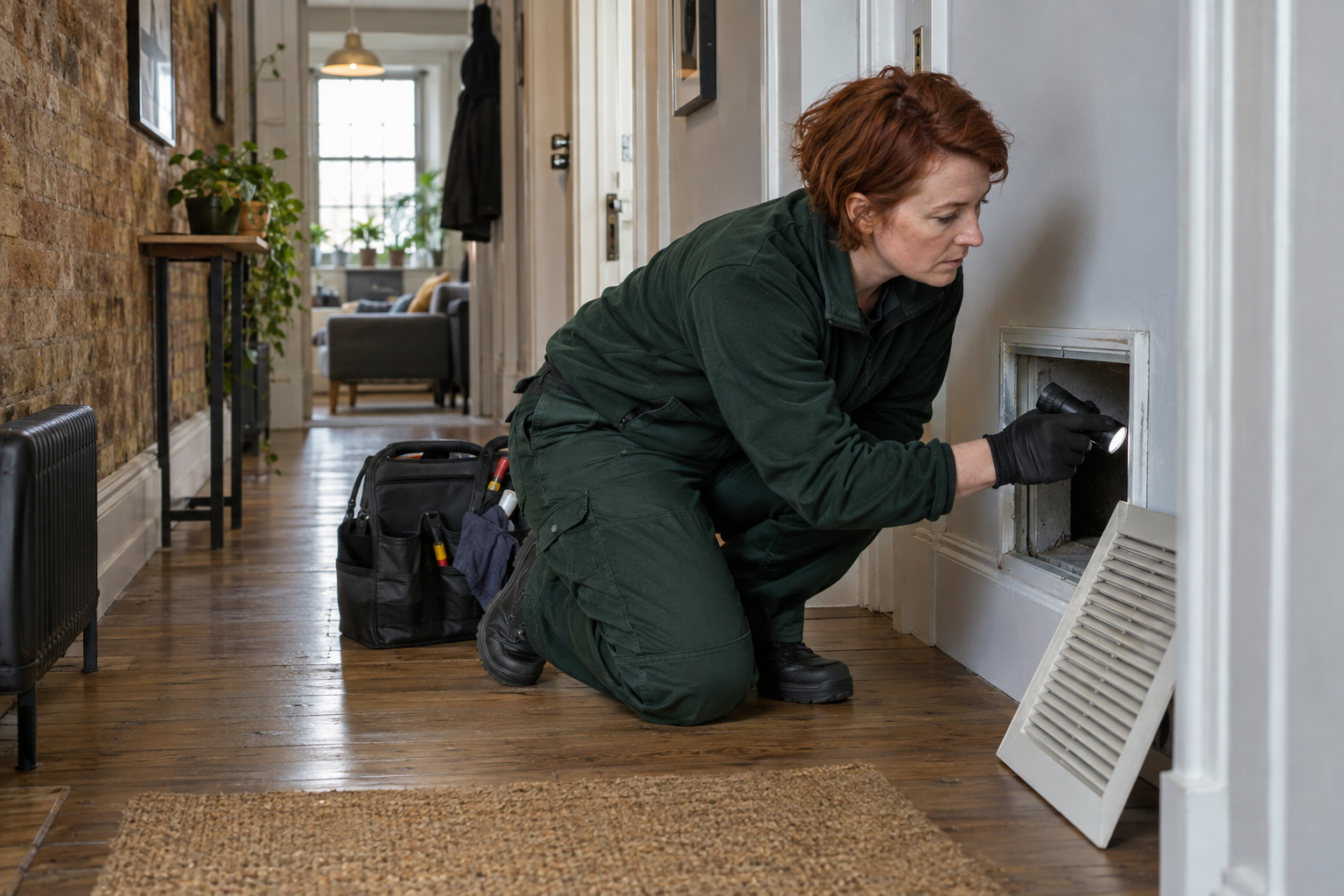
Species and active feeding determine bait formulation, placement and whether external nest work is proportionate.
Nocturnal insects beside a sink require specimen identification and warm-harbourage monitoring.
Moisture-loving insects around cupboards indicate a different humidity and leak problem.
Larger flying insects entering wall gaps are assessed through nest-flight observation rather than ant bait.
Droppings beneath the sink trigger an independent service-gap and rodent control plan.
Direction, number and peak timing are recorded.
A sample and behaviour guide the method.
Accessible food and moisture are reduced.
Small placements follow established travel safely.
The household avoids disrupting active bait points.
Closure follows a decline and route reassessment.
Ants appear predictably beside the sink, yet repeated wiping removes the trail before its origin is examined.
Direction and food preference are observed, moisture is corrected and species-suitable bait is protected along the route.
The household records worker numbers and feeding at the original time. A gradual decline supports bait transfer; a new emergence point prompts adjustment, while no promise is made that every outdoor ant leaves the garden.
Yes, while keeping bait points dry and following the technician’s cleaning boundaries.
Early sealant may divert workers inside another gap before control reaches the source.
Ant-control cost reflects identification, internal and patio access, number of active routes and whether a review or external treatment is justified.
| Service | Starting price | Scope factors |
|---|---|---|
| Pest inspection | From £62 | Property, access and areas inspected |
| Wasp treatment | From £89 | Nest position, height and safe access |
| Rodent control | From £184 | Activity, monitoring and visits |
| Bed bug control | From £204 | Rooms, preparation and method |
| Squirrel control | From £273 | Loft access, visits and proofing |
Final scope can change with access, activity, property size, treatment method, specialist equipment and the number of visits. Confirm the current price and inclusions before booking.
Workers follow colony routes and can find remaining moisture or food traces.
Weather changes foraging, but established colonies may remain protected below ground.
Yes, which makes specimen identification more useful than colour alone.
Follow the stated review schedule because formulation and feeding pattern determine replacement.
Strong repellent cleaning across the trail can disrupt feeding and redirect movement.
Direction and feeding behaviour make the treatment more precise.
Arrange an ant-control visit