

POTTERS BAR · PEST CONTROL
Pest Control Potters Bar
A loft is not ready for proofing simply because one opening is visible. At a Potters Bar home, we first establish what is using the space, whether activity remains current and which safe access points can be inspected. Control and exclusion are then arranged in the order that protects the property.
- Species considered before loft closure
- Safe access limits explained before work
- Roof repairs separated from pest-control tasks
LOCAL CONTEXT
Identify the loft visitor before closing the roof
Potters Bar is a Hertfordshire town beside the northern M25 and Greater London boundary. Calls may concern houses, low-rise flats, high-street units or light commercial premises, yet no diagnosis follows from those descriptions. This page addresses a homeowner who has discovered damaged insulation and an outside roof gap. The technician examines fresh material, droppings, gnawing and the reported activity period to distinguish possible squirrels, rodents or birds. Only safe visible roof junctions are included; tiles, high access and structural repair may require a roofing contractor. If control is needed, its purpose and review period are agreed before the entrance is closed. Kitchen or garage mouse signs are traced as a separate route rather than folded into the loft assumption. Prevention advice covers relevant vegetation, stored feed and durable repair priorities. Contextual links lead to squirrel control, mice treatment and proofing guidance.
What the inspection needs to establish
Freshly disturbed insulation and nesting material Gnawing strength and height within the void Visible daylight or damage at accessible roof edges Branches or structures touching the building where relevant Garage and kitchen services if separate mouse signs exist
- Freshly disturbed insulation and nesting material
- Gnawing strength and height within the void
Prepare the relevant access
Do not climb onto the roof or cover the suspected hole. Leave a stable path to the loft hatch and note the hours when sounds occur. Keep children and pets out of the void, identify electrical cables near damage and mention any solar, insulation or roofing work that changes safe access.
Can insulation stay in the loft during inspection?
Usually yes; disturbance patterns may be useful, provided a safe route from the hatch remains.
When the response should move faster
Seek quick advice when heavy gnawing is beside cables, an animal enters a bedroom or damaged roof material creates an immediate hazard. Isolate the loft rather than chasing wildlife. Electrical danger or an unsafe structure requires the appropriate emergency professional as well as pest assessment.
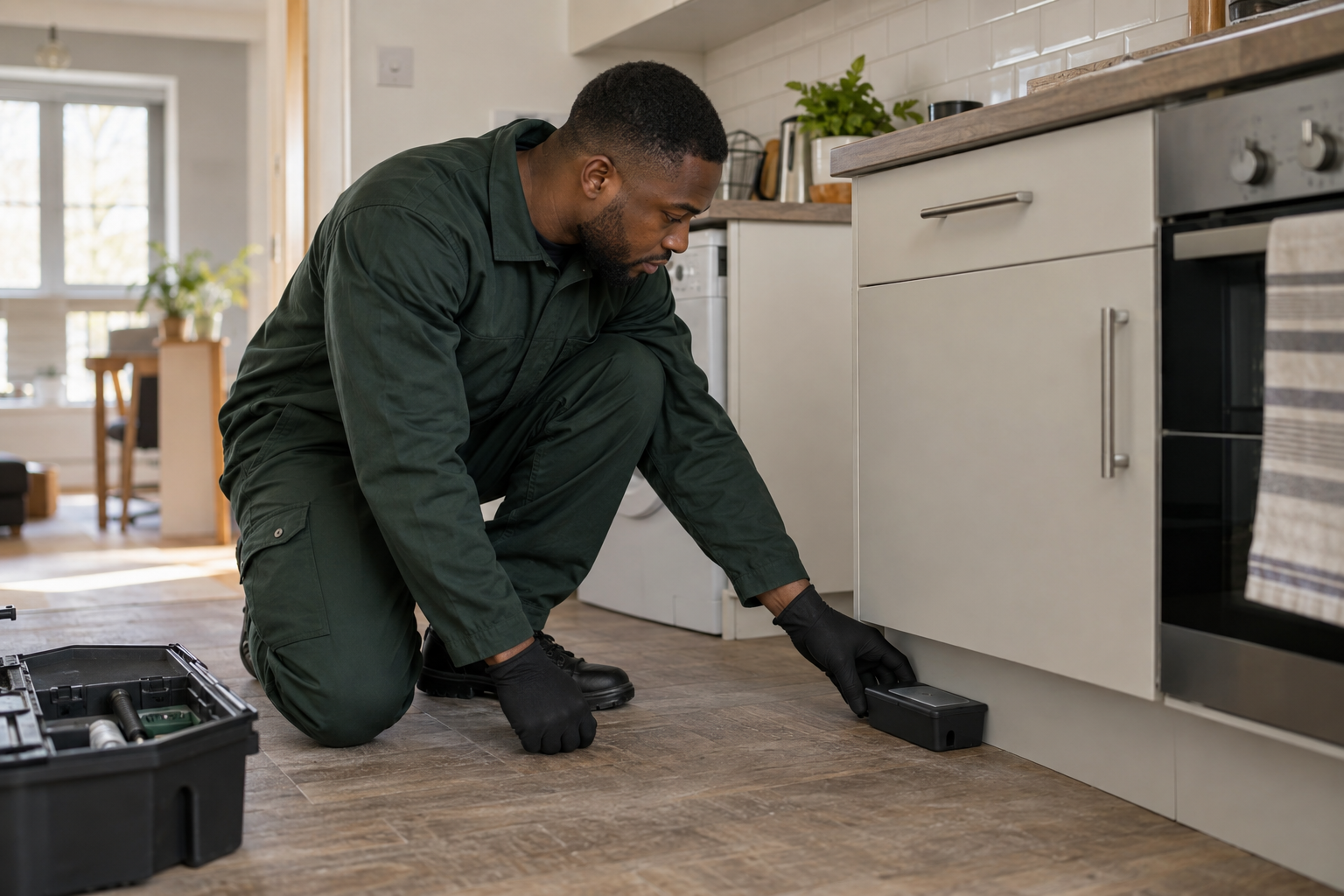
Read fresh evidence inside the void
Branches or structures touching the building where relevant
Garage and kitchen services if separate mouse signs exist
Control matched to the evidence
Squirrels
Daytime sounds and robust gnawing are checked against the loft evidence. Exclusion waits until active occupancy has been resolved.
Mice
Fine droppings near food or garage storage indicate a smaller route that needs its own monitoring and proofing plan.
Wasps
A roof flight line is observed without blocking the entrance. Safe height and nest location govern treatment.
Rats
Ground-floor evidence is assessed through thresholds, services and waste arrangements rather than attributed to a roof opening.
Control first, exclusion at the right time
Listen to the history
Timing and location narrow the useful loft checks.
Inspect the void safely
Fresh signs are examined within stable accessible areas.
Compare possible animals
Evidence is weighed before a species-specific response is chosen.
Control active occupancy
Suitable work precedes permanent closure of a used entrance.
Specify lasting exclusion
Minor proofing or roofing requirements are separated clearly.
Recheck the evidence
New sound and disturbance are compared with the recorded starting point.
From one visible hole to an evidence-based exclusion plan
Before
The opening is obvious, but the animal, current use and internal damage remain unconfirmed.
Work
Accessible loft signs are documented, appropriate control is chosen and repair timing is agreed.
After
Fresh disturbance and the condition of the eventual exclusion are reviewed together; absence of one noise is not presented as a guaranteed outcome.
Current starting prices
Separate pest work from roofing scope
| Service | Starting price | Scope factors |
|---|---|---|
| Pest inspection | From £62 | Property, access and areas inspected |
| Wasp treatment | From £89 | Nest position, height and safe access |
| Rodent control | From £184 | Activity, monitoring and visits |
| Bed bug control | From £204 | Rooms, preparation and method |
| Squirrel control | From £273 | Loft access, visits and proofing |
Final scope can change with access, activity, property size, treatment method, specialist equipment and the number of visits. Confirm the current price and inclusions before booking.
Practical local answers
Will the technician replace broken roof tiles?
Roofing work is normally a separate trade, while we explain the pest-control sequence and relevant entry position.
Can sounds continue after control begins?
Some methods require a review period, so expected observations and warning signs are explained for that job.
Nearby coverage
Related services
Questions before booking
Can a Potters Bar loft be assessed without external ladder work?
Useful internal evidence can often be checked first; any high-level external survey is scoped separately.
Why should a suspected squirrel hole remain uncovered initially?
Closing an occupied route can trap the animal, increase damage or move the problem elsewhere.
Do birds and rodents leave different loft evidence?
They can, but material, droppings, noise and access must be interpreted together by the inspector.
What makes a roof proofing material durable?
It must suit the opening, surrounding construction and animal pressure rather than merely fill visible space.
Loft access answers for Potters Bar
Pest control in Potters Bar for houses, flats and local premises. Focused roof-space, kitchen and service-entry checks with treatment and proofing advice.
Call 020 3318 2099